

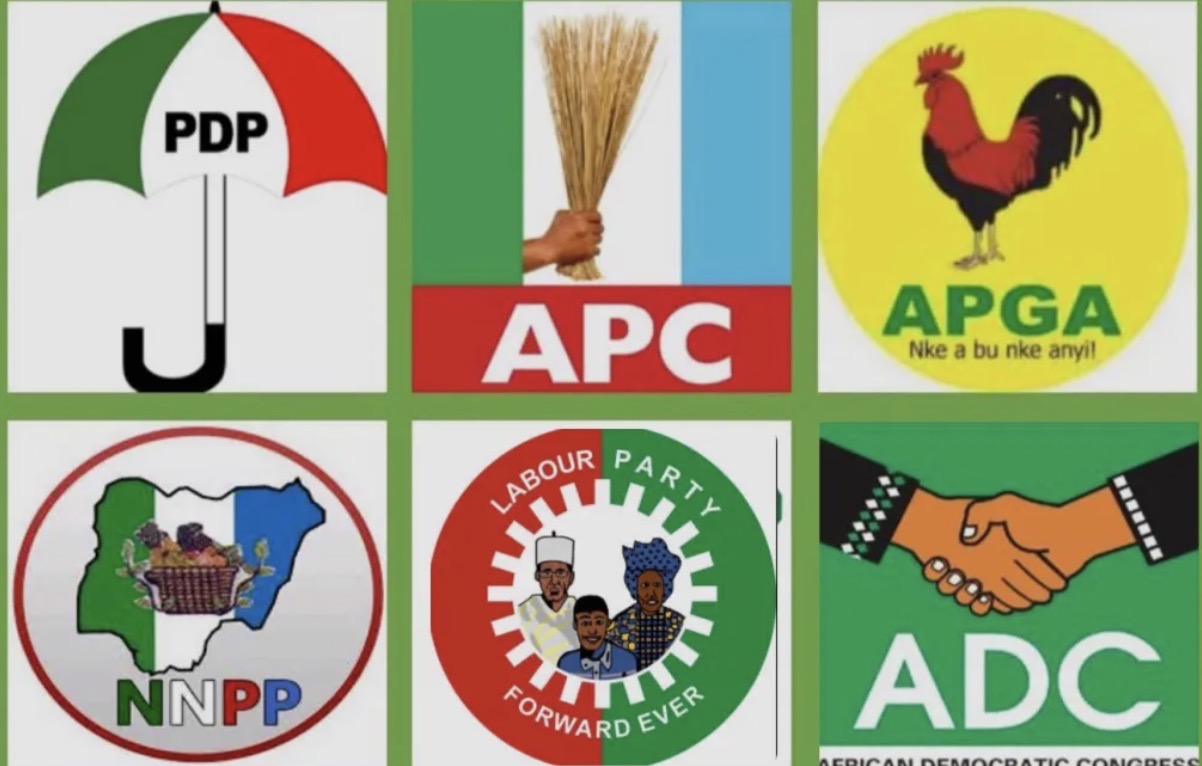
Party primaries in Nigeria are frequently misunderstood. Most public attention focuses on the general election, while the primaries which determine who actually appears on the ballot, receive less scrutiny.
With the All Progressives Congress (APC) conducting its House of Representatives primaries on May 16, 2026, and Senate, governorship, and presidential primaries to follow in the coming days, it is worth clarifying how the process is supposed to work.
How do they work?:
Legal Framework
Nigerian political parties are required by law to conduct primary elections if they intend to nominate and field a candidate for an elective position. The governing law is primarily the Electoral Act, supplemented by the Constitution and INEC guidelines. The Electoral Act 2022 significantly reformed how primaries are run.
INEC’s Role
Party primaries are administered by the parties themselves but must be monitored by the Independent National Electoral Commission (INEC). INEC’s functions include monitoring the organisation and operation of political parties, including their finances, conventions, congresses, and party primaries.
Types of Primaries
The law stipulates that primaries be conducted in either a Direct or Indirect format. In both cases, the party has to convene to vote, either as a Convention (for a presidential seat) or a Congress (for governorship and legislative seats). Parties typically utilise the indirect format, but it is not unheard of that they conduct less-consequential primaries using the direct format. It is up to the National Executive Committees (NECs), the highest organ of political parties, to determine which format is used.
Direct primaries are straightforward: every registered member of the party in a given constituency is eligible to vote. It is the most democratic format in principle, since it gives the full party membership a say in who emerges as candidate.
Indirect primaries work through a delegate system. Instead of all members voting, a small group of delegates votes on behalf of the membership. These delegates come from two categories:
• Ad hoc delegates are elected specifically for the primary through ward congresses. Party members in each ward vote to select a representative who will then go on to vote at the primary proper. • Statutory delegates are people who hold voting rights automatically by virtue of their position — typically current and former elected or appointed officeholders within the party.
The indirect format is far more common in practice because it is easier for party leadership and wealthy aspirants to manage. Instead of persuading or mobilising thousands of ordinary members, a candidate only needs to secure the support of a much smaller pool of delegates. This is what makes delegate-buying the dominant strategy in Nigerian primaries — the system structurally concentrates the decisive vote in few enough hands that it becomes financially feasible to purchase.
The Electoral Act also allows a third route, consensus, where no vote is held at all if all aspirants agree in writing to a single candidate. If that agreement cannot be secured, the law requires the party to fall back to a direct primary — though in practice parties often fall back to indirect instead.
Delegates
Under the indirect format, parties produce two types of delegates. “Ad Hoc delegates” are picked through ward congresses by registered party members to represent them at local, state, and national congresses. There are also “Statutory delegates”, party members who are former or current public office holders.
Consensus Candidates
The Electoral Act 2022 introduced a provision for consensus candidates. If written consent is secured from all aspirants, a special convention or congress is held to ratify the consensus candidate. Where this consent cannot be secured, the party must use direct or indirect primaries.
Who Can Participate
Under the Electoral Act 2022, no political appointee at any level can be a voting delegate or be voted for at a party convention or congress. Political appointees must relinquish their positions before they can participate either as a candidate or as a delegate.
Validity of Primaries
It is settled law in Nigeria that only a primary election conducted by a party’s National Working Committee, or a body appointed by it, is valid and authentic. A primary conducted by a state chapter or any other unauthorised body is deemed illegal, invalid, and void.
Challenging Results
Where a political party fails to comply with the provisions of the Electoral Act in conducting its primaries, its candidate shall not be included in the election for that position. An aspirant must first exhaust the internal dispute resolution mechanisms of their party before filing a legal action over disputes arising from primary elections, subject to the mandatory 14-day limitation period to file pre-election matters.