

When a sitting governor invokes ‘Operation Wetie‘ in a public address, and the ruling party responds by accusing him of inciting violence, something has broken in the country’s political discourse. What we are witnessing in the exchange between Governor Seyi Makinde of Oyo State and the All Progressives Congress is not a policy disagreement or a partisan squabble. It is a dangerous escalation of rhetoric at a time when Nigeria’s democratic institutions are under measurable strain.
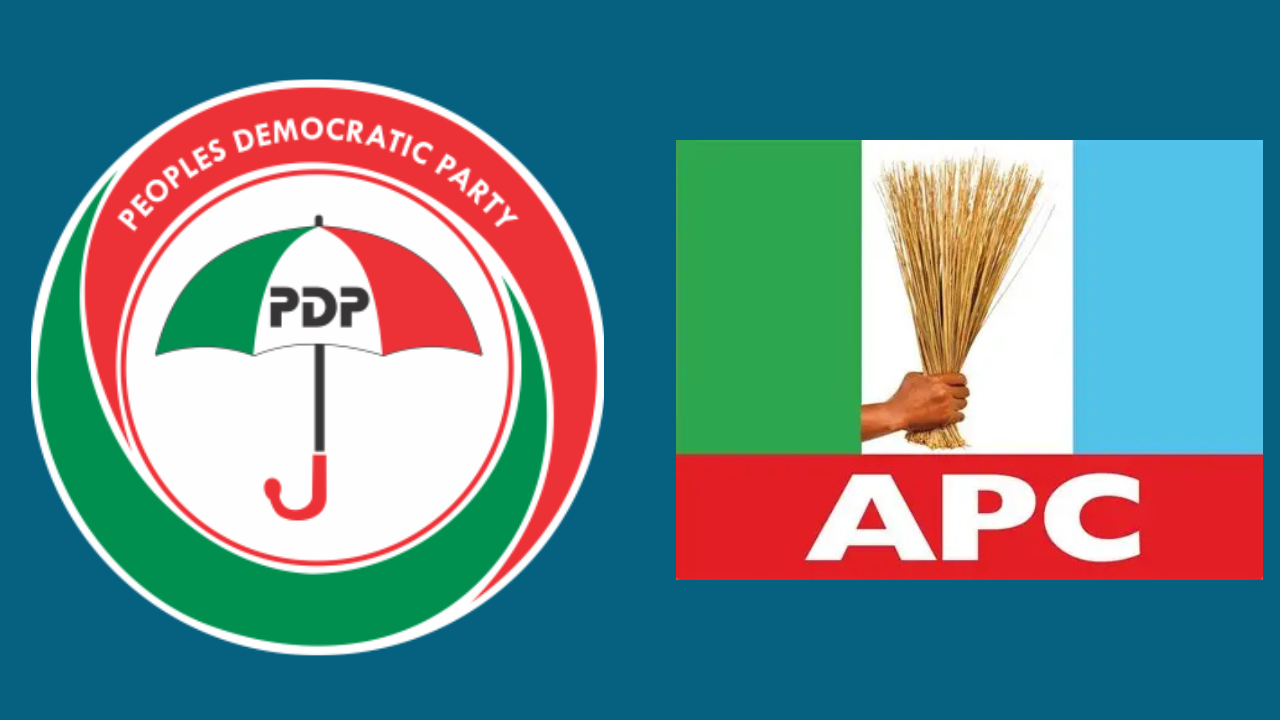
The facts are straightforward. At an opposition summit in Ibadan on Saturday, Governor Makinde referenced one of the bloodiest episodes in Nigeria’s political history to warn against the concentration of power and the marginalisation of opposition voices. The APC responded by accusing him of threatening violence and declaring him unworthy of office. The Peoples Democratic Party, in turn, accused the APC of engineering an “elected totalitarianism” and said any future violence would be the ruling party’s responsibility.
Both sides are now committed to a narrative in which the other is the aggressor and they are the victim. This is a well-worn path in Nigerian politics, and it has never led anywhere productive.
Let us be direct. Governor Makinde’s choice of historical reference was inflammatory. Operation Wetie was not a cautionary tale. It was a catastrophe. It was arson, assassination, and anarchy, and it took military intervention to restore order. To invoke that period in a charged political environment is to flirt with forces no responsible leader should be willing to unleash, regardless of intent. A historical warning can also be a threat, depending on who hears it and in what context. Makinde is experienced enough to know this.
At the same time, the APC’s response is not a defence of civility. It is a deflection. The party has not addressed the substance of the opposition’s grievance, which is that Nigeria’s political system is being reconfigured to entrench single-party dominance. The defections of opposition governors, the collapse of legislative resistance, the judiciary’s inconsistent rulings on electoral disputes, and the Independent National Electoral Commission’s compromised credibility are not invented complaints. They are documented patterns that opposition leaders, civil society groups, and even some APC members have acknowledged in private.
The PDP’s retort, meanwhile, is no better. To say that the APC “lacks moral capacity” to complain because it once threatened to make Nigeria ungovernable is to justify present recklessness with past recklessness. Two wrongs do not produce accountability. They produce a race to the bottom in which every party feels entitled to match the other’s worst behaviour.
What this entire exchange reveals is that Nigeria’s political elite, on both sides, has lost confidence in the institutions that are meant to mediate their competition. They no longer believe that elections will be credible, that courts will be impartial, or that the rules will be applied evenly. And so they have turned to the language of existential threat, because if the system cannot be trusted, the only alternative is to prepare for confrontation.
This is where the danger lies. Not in any single statement, but in the accumulated loss of faith in democratic process. When political actors stop believing that they can win through persuasion, organisation, and fair competition, they begin to prepare for other outcomes. And when both sides are preparing for breakdown, breakdown becomes more likely.
Here is what must happen. First, President Bola Tinubu and his government must take seriously the accusation that opposition space is being deliberately narrowed. If the opposition’s concerns are unfounded, the evidence of that should be transparent and incontrovertible. If there is validity to the critique, the administration has a responsibility to correct course before the 2027 elections, not after. A democracy cannot function when one side believes it has been locked out of the contest before voting begins.
Second, opposition leaders, including Governor Makinde, must recognise that inflammatory historical analogies are not strategy. They are substitutes for strategy. If the PDP and its allies believe the system is rigged, their response should be litigation, coalition-building, voter mobilisation, and international scrutiny. Threatening that citizens will be “pushed to the wall” until they have “no other direction to go but forward” is not political organising. It is an abdication of leadership.
Third, Nigeria’s institutions like INEC, the judiciary, the security services, and the National Assembly must prove that they are capable of acting as neutral arbiters. Words will not restore confidence. Only performance will. The 2027 general elections are now less than a year away. If the electoral process is perceived as credible, the temperature will drop. If it is not, no amount of post-election appeals for calm will matter.
Finally, Nigeria’s citizens deserve better than this. They deserve leaders who compete on ideas, not threats. They deserve a ruling party that governs and an opposition that opposes, both within a shared commitment to constitutional order. What they are getting instead is two camps of elites who have decided that the other cannot be trusted, and who are now speaking as if violence is inevitable.
It is not inevitable. But it becomes more likely every time a leader chooses provocation over persuasion, and every time an institution chooses political expedience over impartiality.
The political class is playing with fire. It is the rest of Nigeria that will burn.