

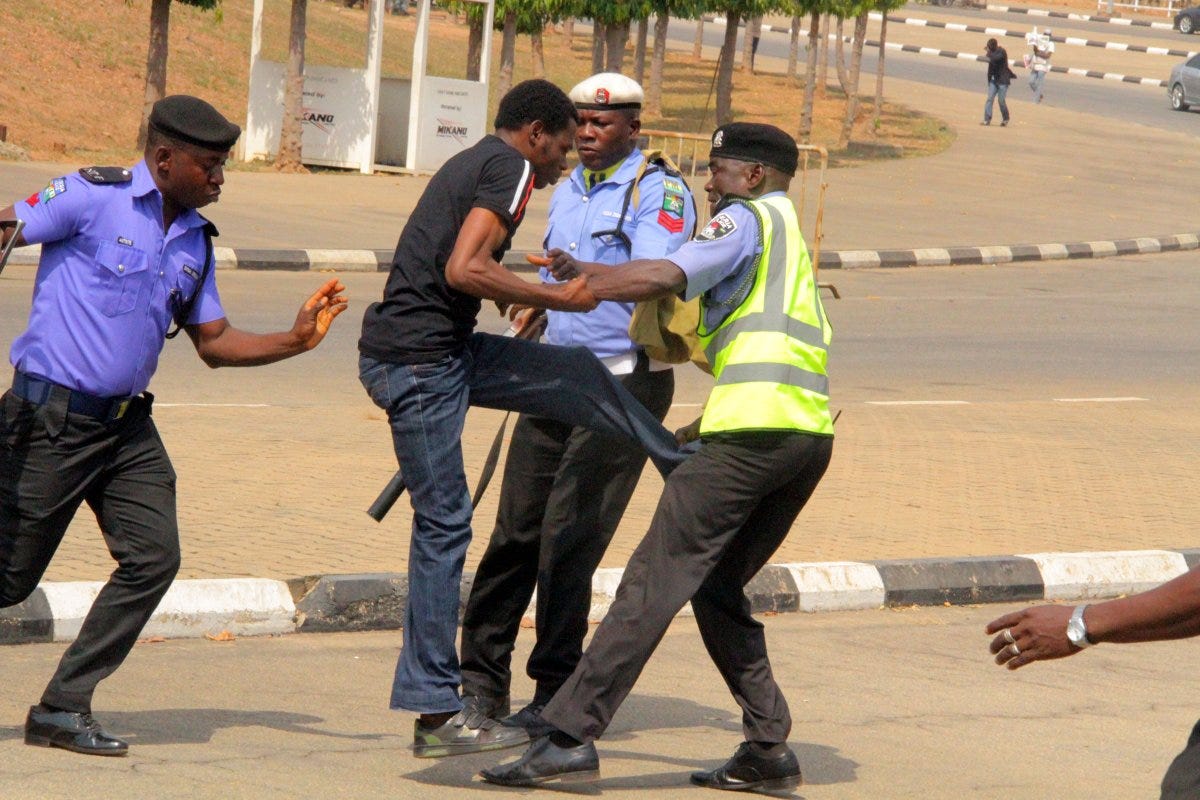
A social media influencer was arrested by the Nigerian Army over the weekend, handed to the Department of State Services (DSS), and arraigned Monday on cybercrime charges, all for posting soldiers’ welfare complaints online.
The influencer, known as “Justice Crack,” faces three counts: circulating “false information” under the Cybercrimes Act and publishing content likely to cause a “breach of peace” under the Criminal Code. The third count accuses him of attempting to commit a felony by circulating what prosecutors called “derogatory” content about the Army. He pleaded not guilty. No written bail application was filed, and he remains in DSS custody until May 25.

The case raises a constitutional question the charges don’t address: can the Army legally arrest a civilian in the first place? Here’s what Nigeria’s Constitution says:
Your Basic Right
The Constitution begins from a simple position: you are free. No one can take away that freedom unless there is a specific legal basis, such as reasonable suspicion of a crime, a court order, or the need to prevent an offence. The responsibility lies with the state to justify restricting your liberty, not with you to justify retaining it.
The Clock Starts Ticking
Once arrested, the police cannot detain you indefinitely. You must be brought before a court within one day if a court is within 40 kilometres, or within two days if it is farther away. If no trial takes place within two to three months, you are entitled to release, either unconditionally or on reasonable terms to ensure your appearance later.
If the arrest was unlawful from the outset, you are entitled to compensation and a public apology from the appropriate authority. The Constitution does not permit the state to disregard such violations.
Who Can Actually Arrest You?
The Constitution establishes two main security institutions: the Nigerian Police Force under Section 214, and the Armed Forces under Section 217. It is the Police that the Constitution directly empowers, through enabling legislation, to arrest and detain civilians. Other agencies like the DSS, NDLEA, EFCC can be granted arrest powers by law, but the Police are the constitutional default for dealing with civilians.
The Constitution establishes two main security institutions: the Nigerian Police Force under Section 214 and the Armed Forces under Section 217. The Police are the primary agency responsible for law enforcement involving civilians, with their powers defined by laws such as the Police Act. Other agencies, including the DSS, EFCC, NDLEA, may also exercise arrest powers where provided by law.
Can Soldiers Arrest a Civilian?
Short answer: not really. The military’s constitutional role is primarily external defence, not domestic policing. There is no provision in the Constitution granting soldiers a standalone, everyday power to stop and arrest ordinary civilians, including ones who post things they don’t like on X.
The one military detention clause in Section 35(7) is actually about soldiers being detained within the military justice system, not about the army having power over civilians. Any domestic military involvement in civilian affairs requires presidential authorisation under a proper legal framework, and even then, it is meant to be exceptional.
In Justice Crack’s case, the Army made the arrest, then handed him to the DSS, who brought the charges. Whether the underlying arrest was constitutionally sound is now, in effect, a question for the courts, which is exactly where the Constitution says the legality should be determined.