

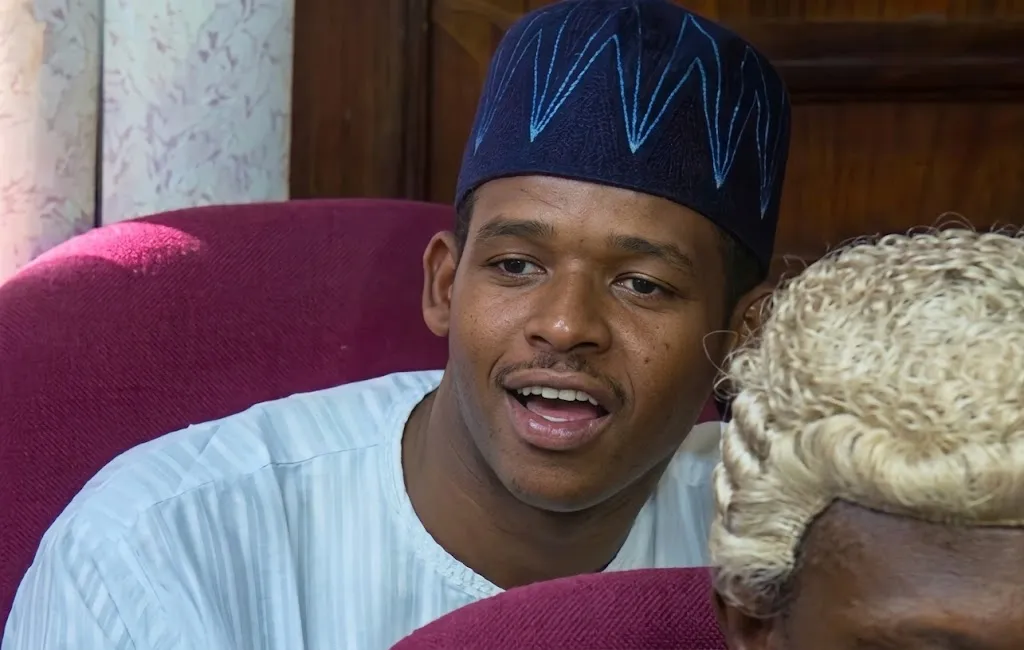
Faisal Maina, who was convicted of money laundering in 2021, was reportedly arrested in Abuja and handed over to the EFCC following his return to Nigeria.
The Department of State Services (DSS) has arrested Faisal Abdulrasheed Maina, son of former Pension Reform Task Team chairman Abdulrasheed Maina, six years after he reportedly fled Nigeria after breaching his bail conditions.
Faisal was arrested in the Karsana area of Abuja and subsequently handed over to the Economic and Financial Crimes Commission (EFCC), according to sources cited by TheCable.
“His arrest followed credible intelligence which indicated that Faisal had secretly returned to the country,” a source told the publication.
Faisal had been on the run since 2020 after the EFCC arraigned him on a three-count charge bordering on money laundering. His trial continued in his absence, culminating in his conviction by the Federal High Court in Abuja in October 2021.
The arrest follows years of efforts to enforce the court’s judgment against Faisal, whose conviction was upheld by the Court of Appeal in November 2022, although the appellate court reduced his prison sentence.
Court sentenced Faisal Maina to seven years
In October 2021, Justice Okon Abang of the Federal High Court in Abuja convicted Faisal on money laundering charges and sentenced him to 14 years’ imprisonment.
The court held that the EFCC had established that Faisal operated a fictitious bank account with United Bank for Africa (UBA), through which his father allegedly laundered ₦58.1 million.
According to the court’s findings, the money was deposited into an account operated under the name “Alhaji Faisal Farm 2” before being withdrawn by Faisal and his father between October 2013 and June 2019.
Faisal’s trial proceeded in his absence after he reportedly breached his bail conditions and left the country.
In November 2022, the Court of Appeal in Abuja upheld his conviction for conspiracy and money laundering but reduced his prison sentence from 14 years to seven years.
The appellate court held that the trial court should not have imposed the maximum punishment on a first-time offender.
The decision left the conviction intact while reducing the custodial sentence.
EFCC prosecuted Faisal over money laundering
The EFCC brought the three-count case against Faisal over allegations involving proceeds of unlawful activity and transactions linked to his father’s alleged diversion of pension funds.
The case formed part of the wider legal proceedings involving Abdulrasheed Maina, who headed the now-defunct Pension Reform Task Team, established to address problems in Nigeria’s pension administration.
The younger Maina’s conviction centred on the UBA account through which the court found that ₦58.1 million had been moved.
The appellate court’s decision in 2022 upheld the lower court’s findings but altered the sentence after considering his status as a first-time offender.
The latest arrest could facilitate the enforcement of the judgment against Faisal. However, the precise administrative and legal steps following his transfer to EFCC custody have not been publicly detailed in the reports available.
Abdulrasheed Maina’s own legal troubles
Faisal’s arrest comes amid renewed attention on the legal troubles of his father, Abdulrasheed Maina, the former chairman of the defunct Pension Reform Task Team.
Maina was convicted in 2021 over the laundering of pension funds estimated at ₦2 billion and sentenced to eight years’ imprisonment. He served his sentence at the Kuje Correctional Centre in Abuja before his release in 2026.
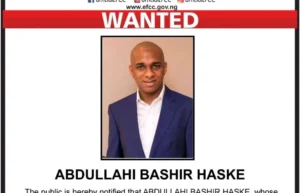
He was subsequently declared wanted over an alleged case involving the receipt of stolen property, according to reports published by TheCable and other Nigerian news outlets.
The cases involving father and son are separate legal matters, although both have featured in investigations and prosecutions concerning alleged financial crimes.
Faisal’s reported arrest marks a significant development in efforts to enforce the judgment against him after years outside the country. His transfer to the EFCC places him in the custody of the agency that prosecuted the original case.
Further details are expected to clarify the next steps in enforcing the seven-year sentence upheld by the Court of Appeal.