The new pay package, which took effect on September 1, gives increases of 30 to 80 per cent depending on rank.
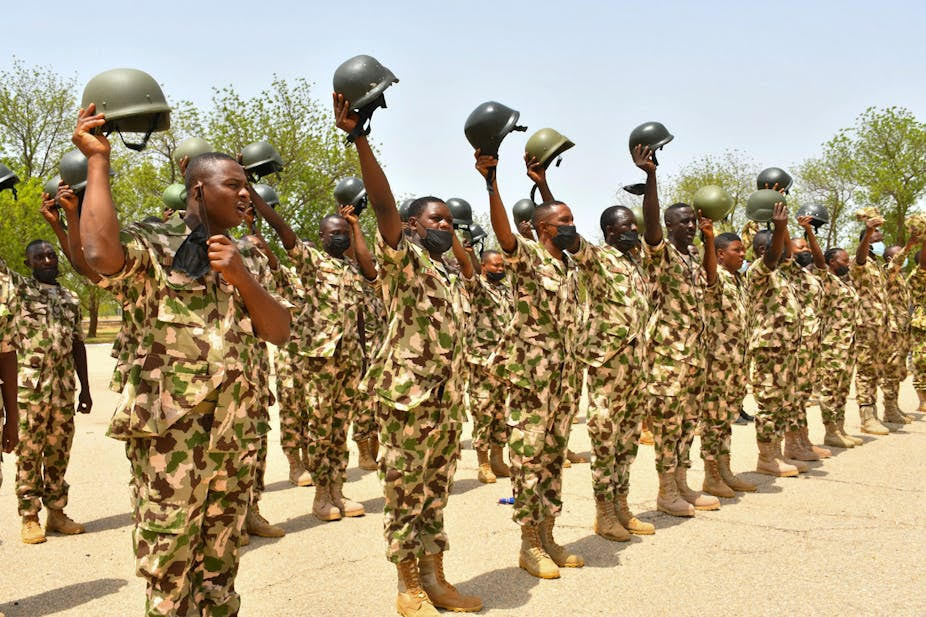
Personnel of the Nigerian Armed Forces have started receiving their September salaries with the salary increases approved by President Bola Tinubu now reflected in their payments, the Defence Headquarters has confirmed.
The development marks the implementation of the new remuneration package approved by Tinubu in August, after the Presidency announced increases of between 30 and 80 per cent for about 250,000 military personnel.
Military salary increase now reflected in September pay
Director of Defence Information, Maj-Gen Samaila Uba, confirmed that the revised salaries had begun reflecting in payments.
“The development represents the fulfilment of a promise by President Bola Tinubu to improve the welfare of military personnel,” Uba said, according to reports.
A separate confirmation came from Onyechi Anele, army spokesperson, while a source at Defence Headquarters also confirmed the development to TheCable.
Presidential aide Dada Olusegun had earlier announced the implementation on X, saying:
“I can categorically confirm that personnels of the Nigerian Military have now started receiving their newly increased salaries as approved by President @officialABAT in August.”
He said the adjustment was expected to improve the morale of personnel involved in the fight against insecurity.
Who gets the highest increase?
The new structure is tiered according to rank. Personnel from Private to Staff Sergeant are to receive an 80 per cent increase, while those from Warrant Officer to Colonel will receive 50 per cent.
Officers above the rank of Colonel, including Brigadier-Generals, Major-Generals, Lieutenant-Generals and Generals, will receive a 30 per cent increase.
The package took effect from September 1, 2026, meaning the September salary payments are the first to reflect the new rates.
The Presidency said about 250,000 personnel across the Armed Forces are expected to benefit.
It also projected that the annual personnel cost of the Armed Forces would rise from N660 billion to N924 billion, an increase of N264 billion.
Why did Tinubu approve the increase?
The Presidency linked the salary review to the welfare of personnel serving in Nigeria’s security operations.
When the increase was announced in August, the government said the higher pay was intended to recognise the sacrifices of troops confronting terrorism, banditry and kidnapping.
Tinubu said: “The men and women who help to keep us safe in our homes must be supported and appreciated in the course of their duties to our nation.”
He also said his administration would continue to prioritise troop welfare while providing the weapons and technology required by the Armed Forces.
Defence Minister Christopher Musa similarly described the package as a major boost to troop welfare, with the ministry saying the structure deliberately gave the largest percentage increase to junior personnel.
The timing also comes as the Federal Government continues broader efforts to restructure defence operations. In August, Tinubu ordered the preparation of a five-year Strategic Defence Operations Plan to identify security threats, operational priorities, capability gaps, equipment needs and future defence spending requirements.
What happens next?
The immediate issue is implementation across the Armed Forces and ensuring that the revised salaries continue to be paid as approved.
The increase also adds significantly to the government’s recurring personnel expenditure, with the projected annual wage bill rising by N264 billion.
For military personnel, however, the more immediate question is what the higher salaries mean alongside other aspects of welfare, including accommodation, allowances, equipment, healthcare and conditions of service.
The government has presented the pay increase as part of a broader effort to improve troop welfare and strengthen national security.
With the revised salaries now appearing in September pay, the focus shifts from the announcement to whether the wider welfare and operational reforms promised alongside it are also delivered.