

Every week, we throw 10 questions at someone whose mind we find fascinating — the thinkers, founders, innovators, policymakers, builders, and culture-shapers quietly changing how we see the world and inspiring us to do things not just differently, but better-differently. First thoughts only.
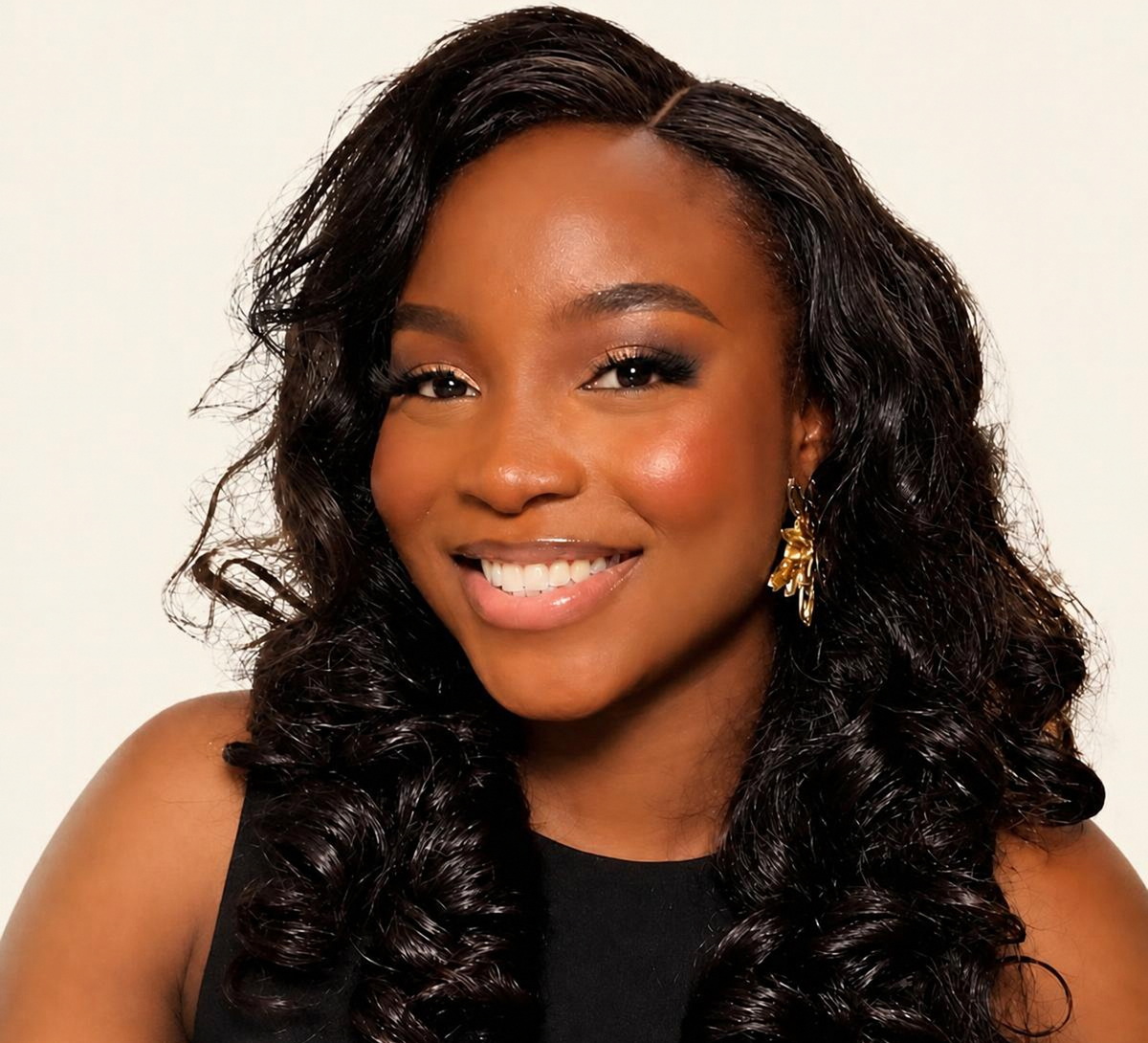
This week, we caught up with Adeleye Abisoye, the founder of Soye, a Nigerian footwear brand built around handmade shoes, African design and a growing vision for a full African fashion house.
She started out in fashion design before discovering that shoemaking suited her energy, creativity and working style better. Since launching Soye in 2019, she has served more than 300 customers, trained over 20 aspiring shoemakers and developed collections that explore how Nigerian cultural elements, including Aso-Oke, can translate into contemporary everyday footwear.
From travelling between Abeokuta and Lagos in search of quality leather to personally carrying shoes into offices and banks to find customers, her story is also one of building independently, learning through experience and refusing to compromise on quality. Her long-term ambition goes beyond footwear: she wants Soye to become a leading African fashion house and hopes to contribute to the development of leather processing in Nigeria.
Read as she shares her thoughts on shoemaking, building Soye, African fashion, independence and the future of the leather industry:
Table of Contents
How shoemaking became the craft that stuck

1. What was it about shoemaking specifically that pulled you away from clothing, and was there a single moment or experience that made the shift clear?
I actually started with fashion designing after secondary school, so clothing was my first introduction to making things with my hands. But I gradually realised that clothing didn’t suit my personality as much as shoemaking did.
I’m a very energetic person, and with clothing, once you’ve cut the fabric, a lot of the process involves sitting at the sewing machine for hours. I enjoyed the cutting, but I didn’t enjoy the stitching as much. Sometimes, after spending so much time sewing a piece, you put it on someone and realise it’s too tight, it doesn’t fit properly, or something wasn’t joined correctly. Then you have to take everything apart and start again. And if you’ve cut the fabric wrongly, you’ve potentially lost the material completely.
With shoemaking, I found the process much more engaging. You’re cutting, hammering, filing, sewing, stitching and working with your hands in different ways. There is a lot of movement and variety. Even though the process can be rigorous, I genuinely enjoy it.
So there wasn’t really one dramatic moment where I woke up and decided to leave clothing. It was more of a gradual realisation that I enjoyed shoemaking much more. Once I discovered it, I felt like, “This is something I can actually see myself doing.”
How Soye survived its first major test
2. You launched Soye in 2019, just before the pandemic. What did that period do to a business that was barely off the ground, and how did you survive it?
Interestingly, the pandemic didn’t destroy the business. In many ways, it was actually the period when I realised Soye could become a real business.
When I was in Part One, most of my classmates and roommates already knew that I was learning shoemaking. By the time I got to Part Two and moved off campus, my roommates and I were always looking for ways to make extra money. I remember telling them, “I know how to make shoes now.”
I had received some money from home for the month, so I took part of it, bought materials and made about five pairs of shoes. I showed them to my housemates, took them to school, showed my classmates and started carrying them around everywhere — to church, to class and to the hostels.
After lectures, I would literally approach people and tell them what I did. At one point, someone was even collecting my shoes and reselling them in the school hostels. So I was gradually building a customer base without really thinking of it as “building a customer base” at the time.
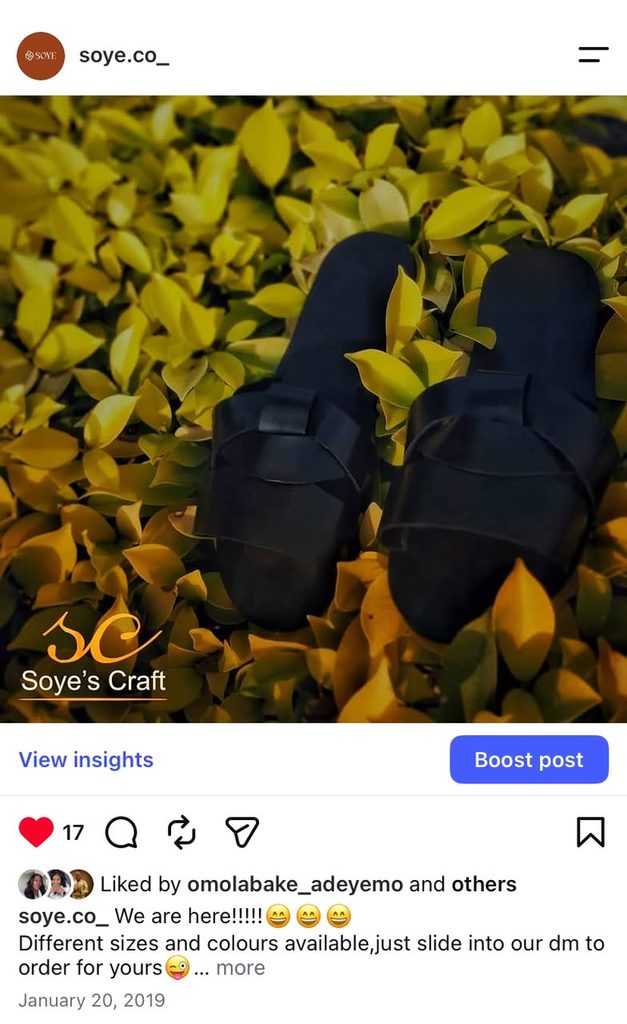
Then, on January 20, 2019, I posted my first shoe on Instagram. That was when I started taking Soye more seriously as a business.
Then 2020 happened. I was actually supposed to travel after finishing school, but the day we were meant to leave, the lockdown was announced. So I ended up staying back in school.
Thankfully, I already had materials in bulk. I couldn’t just sit around doing nothing, so I started making shoes. I created an African-inspired series, got one of my housemates to model the shoes, photographed them and posted them online.
People started ordering. They would say things like, “I’m going to wear this when lockdown is over.”
That period also gave me the opportunity to train two people who wanted to learn something during the lockdown. And surprisingly, 2020 became the year I made my first ₦100,000 in profit from the business.
So while the pandemic was a very difficult period for many people, for me, it was the period that proved to me that there was actually something here. I realised, “Oh, there is money in this. People actually want what I’m making.”


The customer who questioned Nigerian-made footwear
3. You have now served over 300 customers. Has a customer ever said something about a pair of your shoes that stopped you in your tracks
Yes, I remember one very clearly.
There was a particular person I was marketing to, and he looked me straight in the eyes and told me, “I don’t wear handmade footwear. I wear imported footwear.”
I remember just stopping for a moment.
My first thought was, “But these imported shoes are also made by people. Somebody somewhere is making them.”
I didn’t argue with him, though. Instead, I took it as a challenge.
It made me ask myself, “What would I have to do to make someone who normally prefers imported footwear trust a Nigerian-made shoe?”
That experience pushed me to take my craft even more seriously. It reminded me that sometimes people’s perception of handmade products can be as much of a challenge as the product itself.
So rather than being discouraged by what he said, I saw it as motivation to keep improving the quality of what I make.
Why training became part of the Soye story


4. You have trained over 20 aspiring shoemakers. Why did you make training part of the business so early, and what do you look for in the people you take on?
Training actually started from a very practical place for me.
In 2020, during the lockdown, I trained my first two people. They wanted to learn something useful during that period, and I realised that I could teach them what I knew while also making some income.
After school, I continued training. During my NYSC year, I trained someone as well, and when I finished NYSC, I was looking for ways to raise money to establish myself properly. Training became one of the ways I could generate income while also passing on a skill.
But as I’ve continued, I’ve realised that it is bigger than just making money from training. There is something fulfilling about watching someone who didn’t know how to make shoes gradually become confident with their hands.
I’ve even trained a special-needs child before. Unfortunately, I couldn’t complete the training because of the distance between our locations, but I remember how quickly the child was picking things up.
So today, when I think about training, I see it as both an income stream and a way of creating more people who can participate in this craft.
The struggle to source quality leather in Nigeria
5. Sourcing quality leather in Nigeria is notoriously difficult. What does that process actually look like for you, and what compromises have you had to make that you wish you did not have to?
Sourcing leather in Nigeria can be very challenging.
I’m based in Abeokuta, but there are times when a customer requests a particular type, colour or finish of leather and I simply cannot find it here. In those situations, I usually have to travel to Lagos, particularly Mushin Market, because there are far more options there.
I don’t really compromise on quality just to fulfil an order. If the exact leather isn’t available, I would rather tell the customer honestly that I don’t have that particular material and suggest another option that can still work with the design.
Sometimes the customer doesn’t want the alternative, and that can mean losing the order. But I would rather do that than give someone something they didn’t ask for or use a material I’m not confident in.
The real compromise is the limitation of availability. I wish we had easier access to a wider variety of quality, locally processed leather without having to travel or search so extensively for it.
Why African footwear deserves more attention

6. The Nigerian fashion conversation tends to centre on clothing. As a footwear founder, do you feel overlooked within your own industry, and how do you navigate that?
Yes, I think footwear can sometimes be overlooked, especially when we talk about African fashion and Afrocentric design.
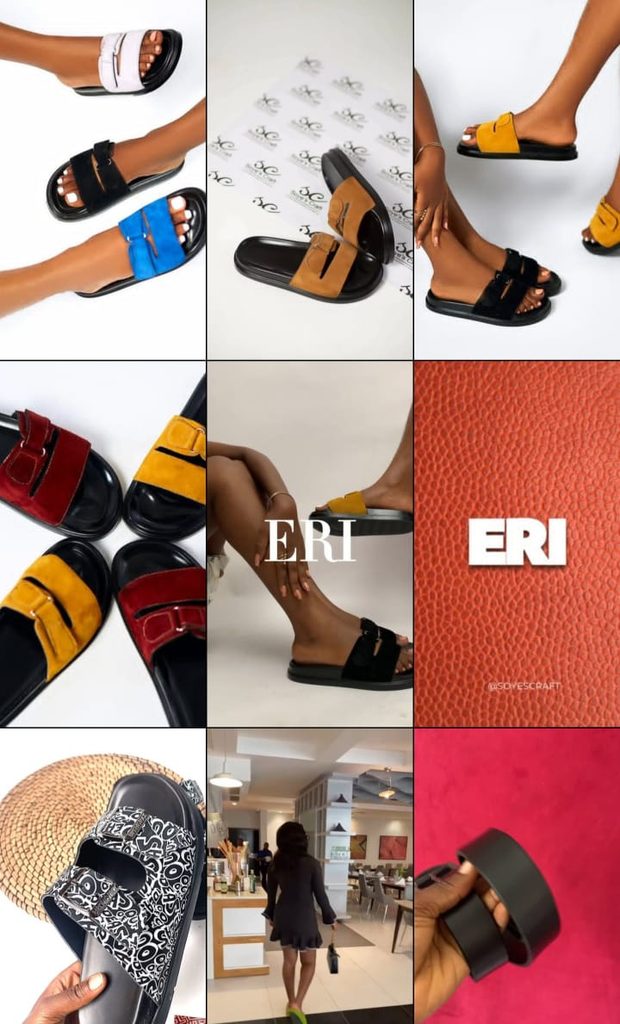
When people talk about African fashion, you immediately think about clothing — aso-ebi, Adire, Ankara, Aso-Oke and so on. But you don’t always see those cultural elements translated into footwear in a way that people can actually wear every day.
I noticed this even when I conducted research for my own brand. Some people were initially sceptical about Aso-Oke footwear because they felt it might be too flashy or difficult to style.
That feedback influenced how I approached my next collection, Orisun.
With Orisun, we’re blending Aso-Oke with leather in a more subtle way. The idea is to create footwear that carries that cultural identity but can still fit naturally into someone’s everyday wardrobe.
I don’t want African-inspired footwear to only be something you bring out for a celebration or special event. I want someone to be able to wear it to work, to church, to dinner or just on an ordinary day and still feel connected to where it comes from.
Being a woman in a male-dominated craft

7. Shoemaking is still a male-dominated craft in most of Nigeria. Has that shaped your experience building Soye, and if so, how?
Definitely.
When I started, there weren’t many women around me doing shoemaking, and I remember people being genuinely surprised that a woman could make shoes.
I’ve had people stop and stare when they saw me working. I’ve even had someone give me money simply because they were so encouraged and amazed to see a woman making shoes.
People would say, “Obìnrin ṣe bàtà?” — basically, “A woman makes shoes?”
But honestly, I didn’t let that stop me because I genuinely enjoyed the craft. In fact, I think being a woman in the space sometimes gave me an unexpected advantage. People became curious. They wanted to see what I could actually do, and that curiosity sometimes led them to patronise me.
Once they received the shoes and saw the quality, the conversation changed from “A woman makes shoes?” to “Oh, she actually knows what she’s doing.”
Today, more women are entering the industry, which I’m happy to see. So it doesn’t feel as unusual as it did when I started.
The hidden cost of building independently
8. You have built a customer base, trained artisans and launched multiple collections, largely on your own terms. What has that independence cost you that nobody sees from the outside?
It has cost me a lot — not just physically, but mentally.
People see the finished product, the photographs, the collections and the business, but they don’t always see the amount of thinking that happens behind it.
When I started, I didn’t have extra funding from anyone. A lot of the money I used came from my own savings. I used money I saved from NYSC to get my first workshop.
I was able to start very simply because I already had some things around me. My mum had gotten me a sewing machine when I was learning fashion designing. I had a shoe rack from when I was in school, my dad made me a cutting table, and I just brought these things together and started working.
I saved money, bought materials, made about ten pairs and put them in the workshop. Then I would literally go out and market them myself. I went to offices, banks and companies carrying my shoes around and telling people what I did.
At that stage, I was doing everything — sourcing materials, designing, making the shoes, marketing, delivering orders and dealing with customers.
So independence has given me freedom, but it has also come with a lot of pressure. There is the constant mental work of thinking about sales, growth, production, money and how to take the business to the next level.
What people see as independence can sometimes feel like carrying the entire business in your head.
Designing footwear people can live in
9. What do you want someone to feel the first time they put on a pair of Soye shoes, and has that answer changed since you first started?
The first thing I want someone to feel is comfort.
When you put on a pair of Soye shoes, I want you to immediately feel that it was made with you in mind. I want the insole to feel comfortable, I want the leather and sole to feel durable, and I want you to feel confident that this is something you can actually live in.
When I started, I was mostly focused on making a good, durable and comfortable shoe. But as Soye has evolved, I’ve realised that it is not only about comfort anymore.
I also want the person wearing Soye to feel a sense of identity and connection. I want the shoes to carry a piece of our culture without feeling like something you can only wear because you’re trying to make a cultural statement.
So today, I’m thinking about comfort, durability, identity and heritage all at once.
Building a leading African fashion house
10. You want to build a leading African fashion house. What does that actually mean to you in practice, and what does it need to be true for you to feel you have arrived?
For me, building a leading African fashion house means creating something much bigger than a footwear brand.
I started with shoemaking, but I also have experience in fashion design and bag-making, and I’ve always loved jewellery. These are all things that genuinely interest me, so I see Soye eventually becoming a fashion house that brings together footwear, bags, clothing and jewellery.
But beyond the products, I want Soye to be a house that tells African stories through design. I want us to be able to take elements of our heritage and translate them into pieces that feel modern, relevant and desirable anywhere in the world.
And there is also a much bigger vision for the industry itself.
One of my long-term goals is to contribute to the development of leather processing in Nigeria. I would love to see a standard leather refinery here where manufacturers can access quality processed leather locally instead of exporting raw materials, importing the finished material and then buying it back at a much higher cost.
So for me, “arriving” isn’t simply about Soye becoming a big brand. It would mean building a respected African fashion house, competing internationally, creating opportunities for other artisans and contributing to the development of the industry that made it possible for me to start in the first place.
Connect with Soye on Instagram: [soye.co_], TikTok: [soyescraft], Facebook Page: [soyescraft], Facebook: [Adeleye Abisoye] and X: [soyescraft].