

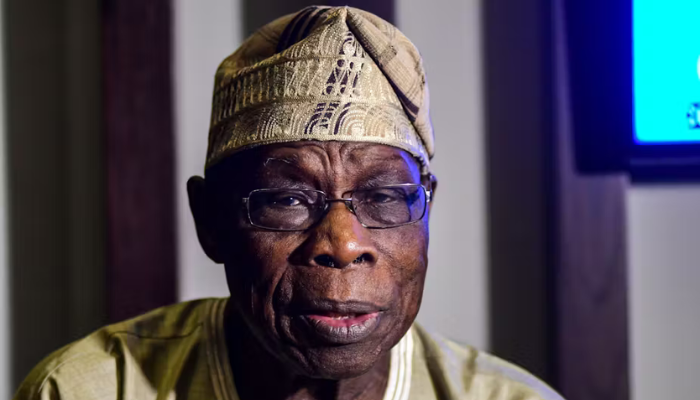
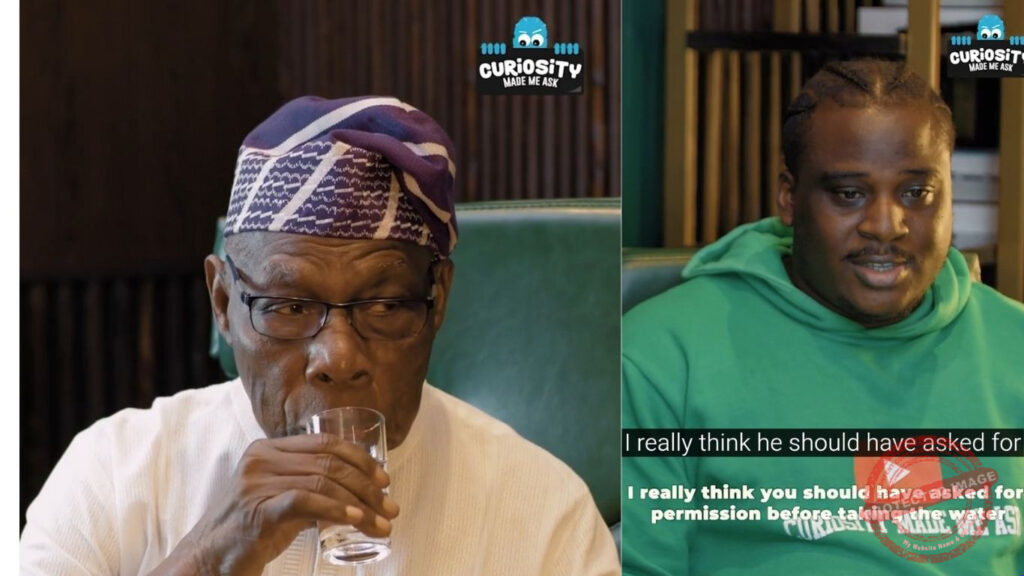
Former President Olusegun Obasanjo recently appeared on YouTuber Isbae U’s Curiosity Made Me Ask, a comedy interview show known for its sarcastic and unconventional questions.
The appearance sparked debate online, with some critics arguing that the light-hearted format could help launder or soften the public image of a former president whose administration remains controversial. Others viewed the interview as a way of introducing a major political figure to a younger, digital audience.
Beyond the jokes, however, Obasanjo’s presidency remains one of the most consequential periods of Nigeria’s Fourth Republic. He served as president from 1999 to 2007, overseeing major economic reforms while also facing serious criticism over human rights, political violence and his approach to power.
Here are some of the major highlights of the Obasanjo presidency.
1. Nigeria secured major debt relief
One of the biggest economic achievements of the Obasanjo administration was Nigeria’s 2005 Paris Club debt deal.
The agreement resulted in the cancellation of about 60 per cent of Nigeria’s eligible debt after the country made a substantial repayment. The World Bank described it as the largest debt relief secured through the Paris Club at the time.
The deal significantly reduced Nigeria’s external debt burden and created more fiscal space for government spending.
2. The EFCC and ICPC were established
Obasanjo’s government established the Independent Corrupt Practices and Other Related Offences Commission (ICPC) in 2000 and the Economic and Financial Crimes Commission (EFCC) in 2003.
The institutions were created to investigate corruption and financial crimes. The EFCC subsequently pursued several high-profile corruption cases, although the agency was later criticised over allegations that it was selectively used against political opponents.
3. The telecommunications sector was opened up
The Obasanjo years brought a major transformation to Nigeria’s telecommunications industry.
The introduction of GSM services and the liberalisation of the sector allowed private operators to compete in a market previously dominated by limited access to telephone services. The Nigerian Communications Act 2003 also strengthened the regulatory framework for the industry.
The reforms helped lay the foundation for the rapid expansion of mobile telecommunications in Nigeria.
4. The banking sector was consolidated
In 2004, the Central Bank introduced a major banking reform requiring commercial banks to increase their minimum capital base to ₦25 billion.
The policy triggered mergers and acquisitions across the industry. Between 2004 and 2007, the number of commercial banks fell from 89 to 25.
The reform was intended to create stronger banks and improve the stability of Nigeria’s financial sector.
5. Odi was destroyed by the military
One of the darkest episodes of Obasanjo’s first term was the Odi massacre in Bayelsa State in November 1999.
After armed men killed police officers, Nigerian soldiers entered Odi and destroyed much of the community. Human Rights Watch reported that hundreds of civilians may have been killed. It also criticised the lack of accountability for the military operation.
The incident became a major symbol of the federal government’s heavy-handed response to unrest in the Niger Delta.
6. More than 200 civilians were killed in Benue
In October 2001, 19 soldiers were killed in Benue State. The military subsequently carried out operations in several communities.
Human Rights Watch reported that more than 200 civilians were killed and described the operation as collective punishment. The organisation also criticised the government for failing to prosecute those responsible.
The Benue killings reinforced criticism of the government’s handling of military reprisals against civilian populations.
7. Political and electoral violence remained a major problem
Obasanjo’s presidency also witnessed significant political and communal violence.
Human Rights Watch documented widespread violence surrounding elections and reported that politically connected individuals and security forces were rarely held accountable for serious abuses. It also documented violence in Plateau State, Kaduna and other parts of the country.
The 2007 elections, in particular, attracted substantial criticism from observers and human rights organisations over violence, intimidation and alleged manipulation.
8. The Third Term controversy
Perhaps the biggest political controversy of Obasanjo’s second term was the attempt to change Nigeria’s constitutional rules on presidential tenure.
The proposal, popularly known as the Third Term agenda, would have allowed Obasanjo to remain in office beyond the constitutionally permitted two terms.
The proposal generated intense opposition and ultimately failed in the National Assembly in 2006. Obasanjo left office in 2007 after completing his second elected term. Human Rights Watch later cited allegations of political manipulation and election-related abuses surrounding the period.
9. Police abuses and human rights concerns
Military violence was not the only human rights controversy during Obasanjo’s presidency.
Human Rights Watch documented extrajudicial killings, torture and arbitrary arrests by Nigerian police during the period. The organisation also criticised the government’s failure to consistently prosecute security personnel accused of abuses.
These concerns complicated the image of an administration that was simultaneously promoting democratic governance and institutional reform.
Obasanjo’s complicated legacy
The recent Isbae U interview offers a much lighter portrayal of Obasanjo than the historical record alone might suggest. But the former president’s legacy is more complicated than either a comedy interview or a list of achievements can capture.
His administration oversaw major debt relief, telecommunications and banking reforms, anti-corruption institutions and economic reforms. At the same time, the Odi and Benue killings, political violence, police abuses and the Third Term controversy remain significant parts of his presidency.
For anyone discussing Obasanjo’s presidency, both sides of that record matter.