

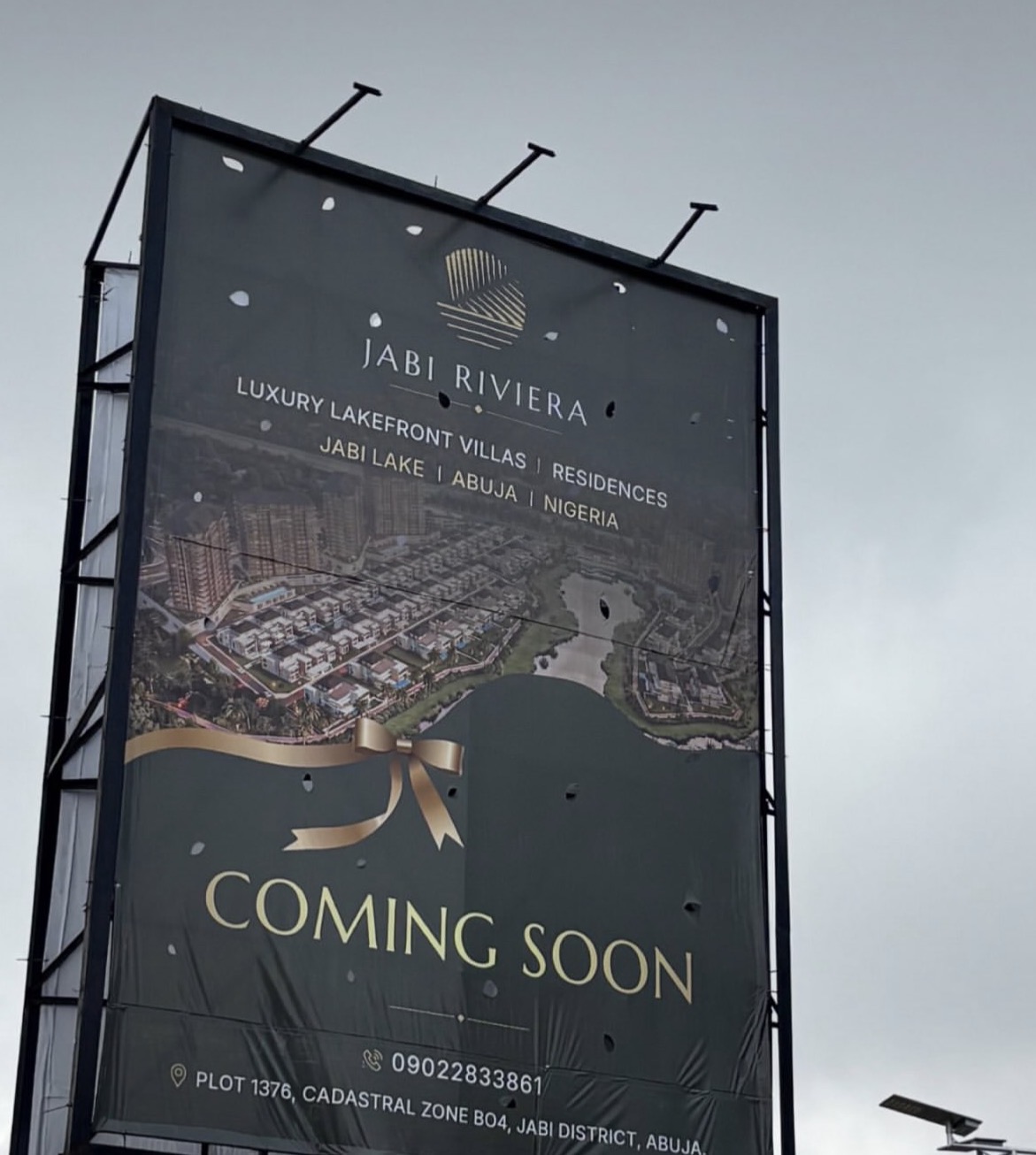
Jabi Lake Park has been Abuja’s most famous public park for nearly two decades: a free, green space home to boat clubs, football pitches, jogging paths, and hundreds of small businesses that cater to over 3,000 visitors a week.
Some vendors have run stalls there for more than a decade, paying annual rents to maintain their spots. In February 2026, Wike signed a Memorandum of Understanding with two private firms, Suburban Broadband Limited and Akida Hills Limited, handing them development rights over the lake.
His spokesperson said the completed project would be comparable to Times Square in New York and the Dubai Fountain Water Show. By March 2026, demolitions had begun, and vendors who had received quit notice were ordered to leave. The controversy only grew from there: by May 2026, residents and community were publicly appealing to the minister to reverse course, describing the recreation area as one of the few places left where ordinary Abuja residents gather for exercise and community life. While some parts of the park are still open to the public, vendors and regular visitors have complained that this might only be for the time being, and once construction begins fully, the park’s entrance could be closed off completely.
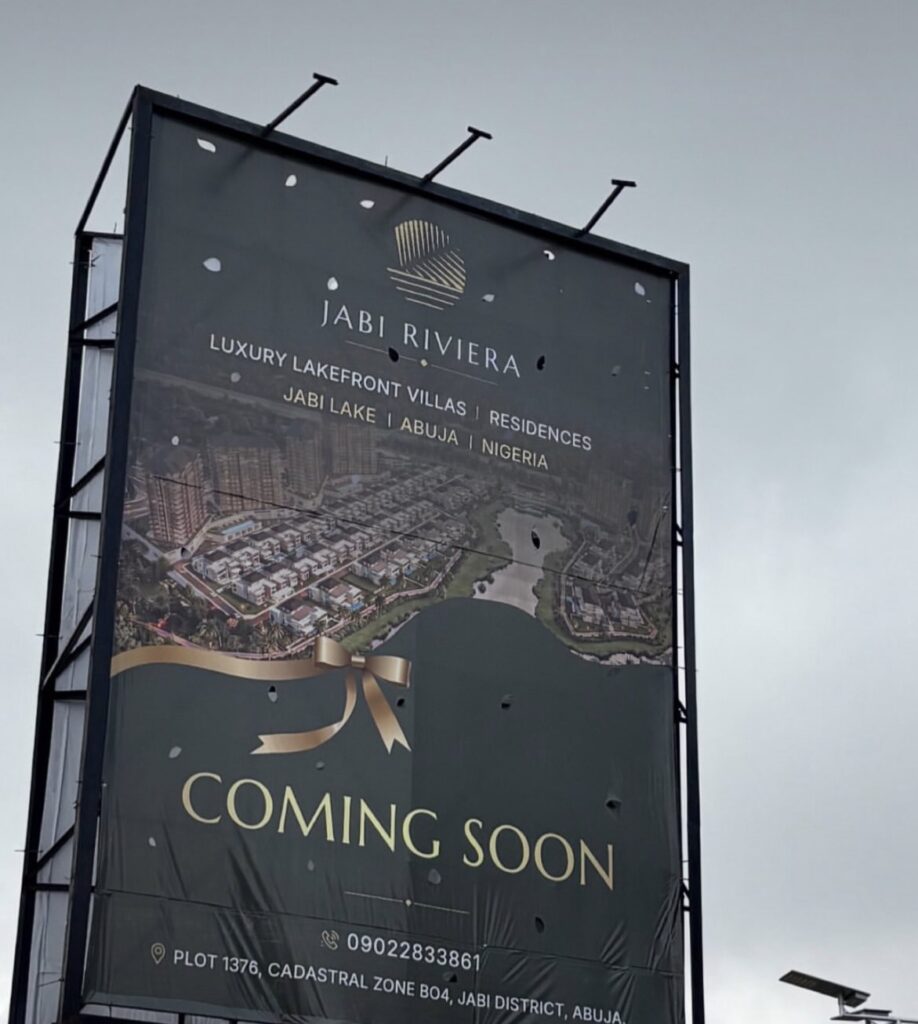
Recently, residents learned what that space is being turned into. Under a memorandum signed with private developers, the park’s recreation area is being redeveloped into a “Jabi Riviera,” a cluster of luxury residences and villas replacing one of the last large public green spaces in the capital. Abuja is losing its green areas, district by district, and the minister overseeing that loss, Nyesom Wike, appears far more invested in defending his projects than in answering for what they cost the city.
On August 15, 2026, heavy rainfall turned Wuse 1, Wuse 2, Gudu, Lokogoma, Garki, Katampe, Durumi, and Gaduwa into flooded streets, stranding residents and submerging vehicles in parts of the city centre that had never flooded like this before. Abuja sits roughly 360 metres above sea level, on terrain that was deliberately designed with green belts, open drainage corridors, and buffer zones along natural waterways to move stormwater away from residential and commercial districts. This is not a city where flooding can be waved away as an unavoidable consequence of climate change. Abuja floods because green areas and waterways have been built over, because drainage channels are choked with waste, and because urbanisation has outpaced any real commitment to maintaining the infrastructure the master plan called for.
Following the August flooding, he ordered the demolition of structures obstructing waterways in Maitama and elsewhere, insisting that no property owner, however wealthy or politically connected, would be exempt. He blamed the flooding on a mix of illegal construction on drainage routes, blocked drainage channels, and indiscriminate waste disposal by residents. What he rejected, forcefully, was any suggestion that his own administration’s allocations were part of the problem. When FCT Senator Ireti Kingibe alleged that developments approved under his watch had obstructed natural waterways and worsened the flooding, Wike dismissed the claim and challenged her to name names. Any concern about the city’s public and environmental assets is treated as a distraction from the minister’s building agenda, rather than a legitimate account he owes the people who live there.

Urban development in Nigeria does not prioritise the needs of its citizens. Instead, government infrastructure is built around, over, and increasingly, against them. The government has repeatedly demonstrated that the welfare of residents is a secondary concern at best, and an inconvenience at worst. While these infrastructures may offer some public value, their primary benefits accrue to the state and its aligned interests. Who, then, is Nigeria designed for? Examining both the capital city and one of the country’s largest urban centres reveals a consistent pattern of exclusion, privatisation, and commodification of land and property for the benefit of political elites and private developers, often at the direct expense of the citizens they are meant to serve.
Abuja, Nigeria’s Federal Capital Territory (FCT), built around a detailed master plan, is regarded as one of the most comprehensive urban blueprints ever produced for a new African capital. This plan was intended to serve both aesthetic and functional purposes. Decades later, that blueprint exists mainly as evidence of how completely successive FCT Administrations have abandoned their obligations. In April 2026, it was reported that a plot of land reserved specifically for a health facility for over 30 years, in Wuye District had been reallocated to a private developer for a residential estate instead. This approval was granted by Minister Nyesom Wike.
Wike has played a central role in many developments, demolitions, land acquisitions, which have almost become a signature of his administration, since his appointment in 2023. While he presents himself as restoring a city, his tenure has also been defined by the consistent redirection of public assets toward private interests, often with explicit support of the presidency. On April 29, Wike announced that President Bola Tinubu approved the allocation of plots of land in Abuja to Nigerian ambassadors and high commissioners-designate. The disclosure was made while he hosted the diplomats at his official residence in Abuja.
Lagos state has a different urban context but faces the same underlying issue. While it lacks a masterplan with Abuja’s specificity, Lagos exhibits a consistent pattern of arbitrary government displacement of low-income communities, for the development of luxury buildings. Between 1973 and 2024, over 91 forced evictions were carried out in Lagos, directly displacing more than two million residents.
Makoko, the historic floating community beneath the Third Mainland Bridge and home to generations of the Egun fishing people, has faced demolition attempts since 2005. In December 2025, the Lagos State Government launched its most sustained and violent demolition operation to date. Demolition teams accompanied by armed police and water-based excavators, arrived before Christmas. Schools, clinics and churches were demolished. The demolition exceeded the 30-metre safety setback cited by the government as justification, with community organisations and NGOs documenting destruction up to 500 metres into the residential core. Despite a restraining order against demolitions issued in August 2025, which the Lagos State Government ignored.
Lagos State’s approach to informal settlement clearance follows what human rights lawyer Adetokunbo Ibezim-Ohaeri, counsel for Makoko since 2005, calls a deliberate “eviction playbook”: government identify a problem, demolish it, and luxury developments beyond the reach of former residents materialise is built. In Makoko’s case, Lagos State has already signed away 75% of the waterfront to property developer FBT Coral Estate Limited in 2021, four years before the December 2025 demolitions began and didn’t stop even when the court gave an order.

From 1973 to 2024, there were 91 forced evictions in Lagos, directly affecting over two million residents. Meanwhile, the housing deficit sits at an estimated 3.4 million units, yet the government has provided no resettlement plan for those it displaces. Lagos state’s Commissioner of Environment and Water Resources, Tokunbo Wahab has been at the helm of conversations on sustainability, waste management, and the protection of water sources, yet sits in the cabinet of the governor whose administration demolished the schools and clinics of Makoko while residents were still inside, and has presided over a mass displacement programme that the United Nations described as potentially criminal.
A government that demolishes the homes of its residents while platforming sustainability cannot credibly claim to be building a city for everyone. What Wahab’s ministry is working to build in terms of green infrastructure is being systematically undone by the same government’s approach to land, housing, and community demolition. You cannot plant a million trees and simultaneously bulldoze the communities of the people who were living under them.
The Lagos-Calabar Coastal Highway project reached Victoria Island in April 2024, resulting in the demolition of sections of Landmark Beach Resort. Landmark Beach represented a $200 million investment, directly employing over 4,000 people, attracting close to a million visitors a year, and generating more than 2 billion naira in tax revenue annually. Its owner Paul Onwuanibe told journalists that the land had been purchased in 2007, before the highway was planned, and that his team had never been officially consulted about the road’s alignment, and were given seven days’ notice before demolition. One year after demolition, Landmark Group had received no compensation. Onwuanibe said to journalists, in one of the more understated descriptions of the experience: “Not a penny. To date, we haven’t been compensated.”

What happened to Landmark Beach has happened elsewhere, and keeps happening. Nigerians have lost far too many public spaces they relied on for years. Jabi Lake Park once offered free recreational access to all; it is now being handed to private developers, and when the reconstruction is complete, it will likely become inaccessible to many people who once frequented it. The Lagos coastal road was built through shoreline communities, destroying stretches of coast. Established businesses like Landmark Beach Resort were demolished within hours with no meaningful consultation. The pattern is consistent: public land is transferred to private interests, and ordinary Nigerians are left outside the developments that replaced what they once freely enjoyed.
Even infrastructure built in the name of public good often works against the public. Pedestrian bridges are a telling example. They are designed without consideration for how people actually move through cities, they are impractical and widely ignored, yet those who cross roads at ground level are fined or arrested. The people displaced by demolitions are not rehoused or compensated. Across housing, land, and public infrastructure, the Nigerian state has consistently built systems that exclude the very people they are meant to serve.
The current wave of residential construction in Nigerian cities reflects similar priorities. Terrace houses are densely packed on available plots, often featuring small windows, no trees, limited shade, and a lack of verandas. These designs disregard the country’s high temperatures and prioritise maximizing profit per square metre, often to the detriment of residents’ comfort. Urban temperatures in Lagos and Abuja are rising, exacerbated by the prevalence of concrete and asphalt, which retain heat. Trees that could provide cooling and shade are frequently removed and never re-planted. The new housing stock, aimed at the aspirational middle class, often requires air conditioning to be habitable, despite persistent challenges with electricity supply.
Some regions are adopting better environmental initiatives. Kano has implemented tree-planting initiatives with genuine community participation, Cross River has committed to preserving its forest cover as a long-term ecological asset, and Kaduna has experimented with urban greening projects. Although these efforts are modest and underfunded, they demonstrate the potential outcomes when governments prioritise the needs of urban residents rather than viewing them as obstacles to development.
Nigeria’s cities are clearly being constructed with specific interests in mind, yet the available evidence strongly suggests that these interests do not align with the needs of the Nigerians who inhabit these urban spaces, endure the environmental conditions, and experience the loss of their homes and public spaces. The last large scale housing project in Nigeria was the 1004 Estate in Victoria Island, Lagos. It was completed in 1979 and then sold to private developers in 2007.
Nigeria needs more affordable housing, and better environmental and urban planning. Currently, the Tinubu administration is working on subsidised housing across the country, but these projects should also reflect the environmental and social needs of the people who will live there. Abuja’s August floods should have been the moment that argument became impossible to ignore. Instead, the minister’s response has been to demolish smaller structures on waterways while denying that his own administration’s allocations, including the one at Jabi Lake, are part of the same pattern.