



The Federal Government is positioning Nigerian professionals and digitally delivered services for international markets as it launches the Hire from Nigeria campaign, with a target of creating one million export-linked jobs by 2030.
The campaign was unveiled in Abuja on Monday as part of the government’s broader strategy to expand Nigeria’s participation in the global services economy and convert the country’s growing pool of skilled workers into export earnings and international employment opportunities.
The initiative is being driven through the National Talent Export Programme (NATEP), in collaboration with the Federal Ministry of Industry, Trade and Investment and other government and private-sector partners.
The launch, held under the theme, “Impact Sourcing as a Driver of Global Trade and Inclusive Job Creation”, brought together government officials and representatives of organisations including Tech4Dev, the Mastercard Foundation and the Bank of Industry’s iDICE programme.
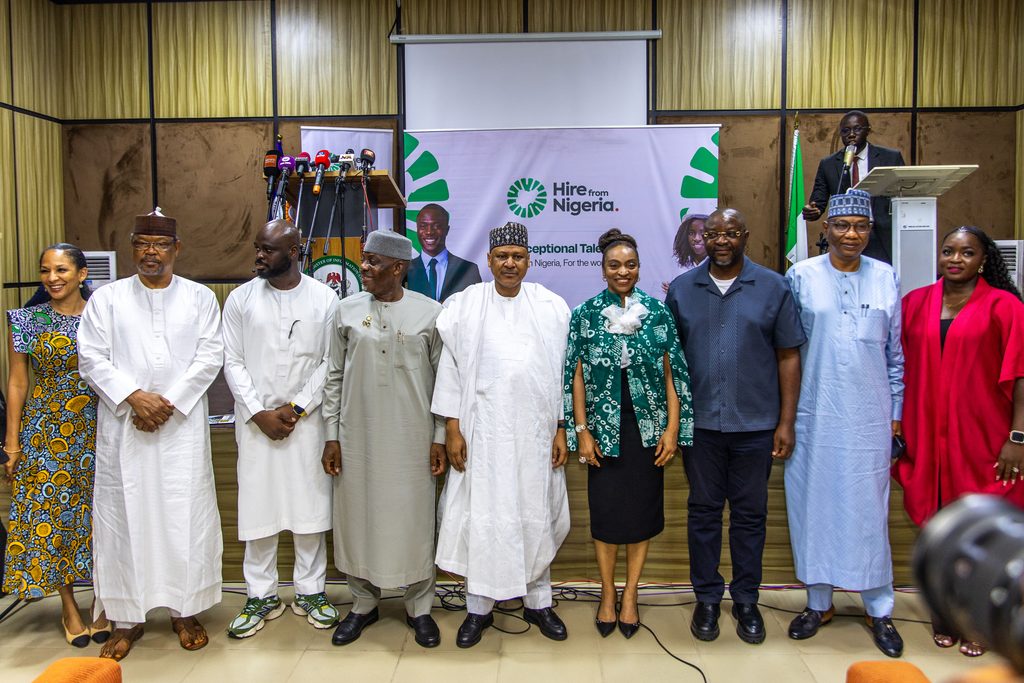
Hire from Nigeria targets global services market
Olajumoke Dan-Okayi, Senior Special Assistant on Strategic Communications and NATEP in the Office of the Minister of Industry, Trade and Investment, said the campaign was intended to move Nigeria’s talent-export ambitions from policy to market-facing opportunities.
“Nigeria has the capability, Nigeria is strengthening the systems, and Nigeria is ready to compete for global business,” Dan-Okayi said.
She described Hire from Nigeria as the market-facing component of NATEP’s wider strategy to connect Nigerian talent and service providers with international employers and buyers.
The Federal Government first launched NATEP in 2023 with a five-year target of creating one million jobs through talent and services exports. The programme was subsequently relaunched and repositioned around Nigeria’s participation in the global services economy, with a stronger focus on export-linked employment, foreign exchange earnings and economic diversification.
The current strategy includes the National Coordination Mechanism for Services Exports and the Nigeria Talent Accelerator Network, which are designed to strengthen connections between Nigerian talent, service providers and international markets.
He said knowledge, skills, creativity and professional services could increasingly cross international borders without the physical movement of people or products.
Idris said Nigeria’s large youthful population, English-language proficiency, entrepreneurial culture and growing technology and professional-services sectors gave it an opportunity to compete in the global talent economy.
Hire from Nigeria builds towards UNGA 81
The campaign is expected to receive an international push during the 81st session of the United Nations General Assembly in September, when Nigeria plans to showcase its talent and services ecosystem to potential employers, outsourcing buyers and investors.
NATEP said the campaign would convene global employers, business process outsourcing buyers, operators and investors at the Nigerian House in New York on September 24.
The New York engagement is expected to focus on commercial connections, including buyer-provider relationships, hiring opportunities, outsourcing pipelines and potential investment.
Dan-Okayi said the objective was to ensure that Nigerian talent was not merely visible internationally but converted into actual contracts and employment.
“Our focus is to ensure that Nigerian talent and service providers are not only visible globally, but are increasingly hired, contracted and integrated into global value chains,” she said.
The government is also working on a National Outsourcing Policy, which is expected to be launched in November 2026. The policy is intended to establish clearer standards for Nigeria’s outsourcing industry and strengthen confidence among international employers and investors.
Nigeria’s participation in the World Economic Forum’s Future of Jobs Report 2026 has also been cited by NATEP as part of efforts to understand changing global workforce requirements, particularly as artificial intelligence reshapes jobs and business models.
The campaign therefore goes beyond promoting Nigerian workers abroad. Its central proposition is that Nigerians can serve international clients and employers while remaining in the country, allowing Nigeria to earn foreign exchange from services exports while retaining skilled workers locally.
The Federal Government says the broader NATEP strategy is aimed at turning Nigeria’s human capital into an export asset and strengthening the country’s position in the growing global services economy.
The one million jobs target remains an ambition of the programme, rather than an indication that the jobs have already been created.