

The education minister says Nigeria is reshaping its education system to produce globally competitive workers who can serve international employers from home.
Minister of Education Maruf Tunji Alausa has said the Federal Government’s Hire from Nigeria campaign will help turn Nigeria’s longstanding brain-drain challenge into a source of economic growth by preparing Nigerians to secure global jobs while remaining in the country.
Alausa said the Ministry of Education was responsible for supplying the skilled workforce required to make the initiative work, with reforms focused on producing industry-ready and globally competitive talent.
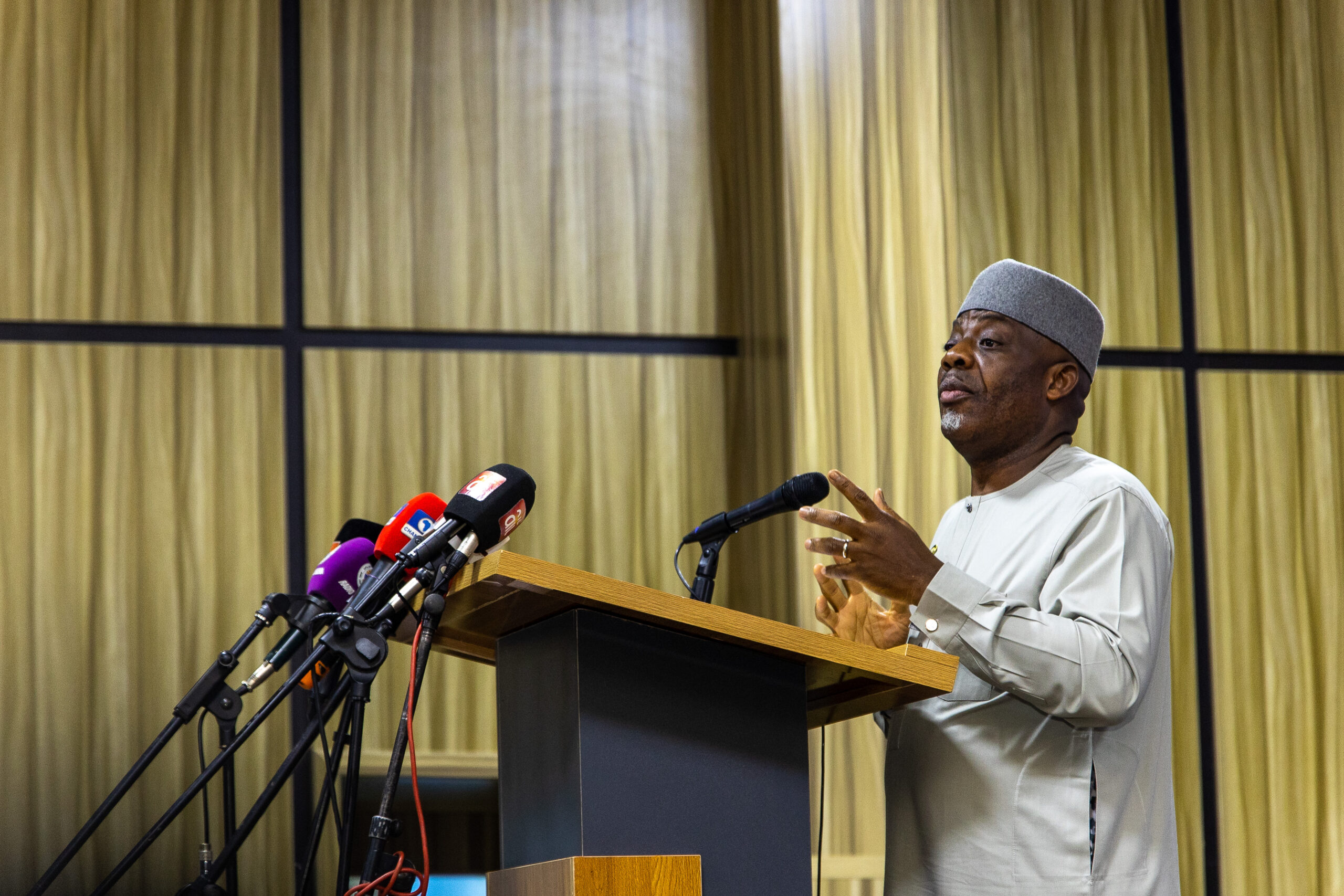
Speaking at the launch of the Hire from Nigeria campaign in Abuja on Monday, the minister said the goal was not simply to produce graduates but to equip Nigerians with skills that could earn them jobs from international employers without requiring them to migrate.
“We want Nigerians to be trained, certified, and ready for the hire,” Alausa said.
He said the initiative could allow Nigerians to work from the country while providing services to companies in markets including Singapore, Hong Kong, London and Germany.
Hire from Nigeria targets global-ready talent
Alausa said Nigeria’s population of more than 200 million people, with more than 70 per cent below the age of 30, presented both an opportunity and a challenge.
He said the country had to ensure its youthful population became a demographic dividend rather than a demographic burden.
The minister said the education sector was therefore moving towards practical learning, curriculum reforms and stronger technical and vocational education to ensure graduates could compete internationally.
According to Alausa, more than 200,000 Nigerians are currently being trained across more than 1,200 technical and vocational skills centres.
He said the government had also shifted technical and vocational education towards an 80 per cent practical and 20 per cent theoretical training model.
The ministry, he added, was carrying out quality-assurance and accreditation reforms across universities, polytechnics and colleges of education, while developing centres of excellence across tertiary institutions.
“These are the things we are doing to support Hire from Nigeria,” he said.
Alausa said the objective was to make Nigerian workers easier for international employers to identify, trust and hire.
The approach is consistent with the government’s wider push to expand practical training and strengthen the quality of professional education. The Federal Government has also announced plans for medical simulation centres across the six geopolitical zones as enrolment in health-related programmes increases.
Hire from Nigeria seeks to keep talent in Nigeria
Alausa said the campaign was designed to change the relationship between skills, migration and employment by allowing Nigerians to participate in international markets without necessarily leaving the country.
“The aim of all this is to make a switch from brain drain to brain gain,” he said.
He said the ministry was expanding admission and training capacity in key professional fields as part of the effort to build a workforce capable of meeting domestic and international demand.
Alausa said annual nursing enrolment had risen from about 28,000 to nearly 120,000 nationwide, while the number of annual medical admissions had increased from about 5,000 when the Tinubu administration assumed office to almost 12,000.
He said similar efforts were being made in pharmacy, dentistry and engineering, including investment in practical workshops and modern equipment to improve students’ readiness for employment.
The minister also cited Nigeria’s growing technology capabilities, saying the country had emerged as a leading African player in artificial intelligence.
He said the Ministry of Education’s student venture grant programme would also enter a second phase, with plans to provide larger funding support to businesses as they move towards commercialisation.
For Alausa, these interventions are part of the same objective: creating decent and well-paid opportunities that allow young Nigerians to build careers while contributing to the domestic economy.
“The whole thing about Hire from Nigeria is to keep our people in Nigeria, but for them to service companies globally, so that we can also use this to drive our economy and contribute to our GDP,” he said.
The campaign, launched by the Federal Government on Monday, is being driven through the National Talent Export Programme alongside government and private-sector partners, with a broader target of enabling one million export-linked jobs by 2030.
Alausa said the Education Ministry would continue focusing on the supply side of that ambition by ensuring Nigerians are trained, certified and prepared for international employers.
The launch was attended by Information and National Orientation Minister Mohammed Idris, Industry and representatives of NATEP, Tech4Dev and other private-sector partners.