

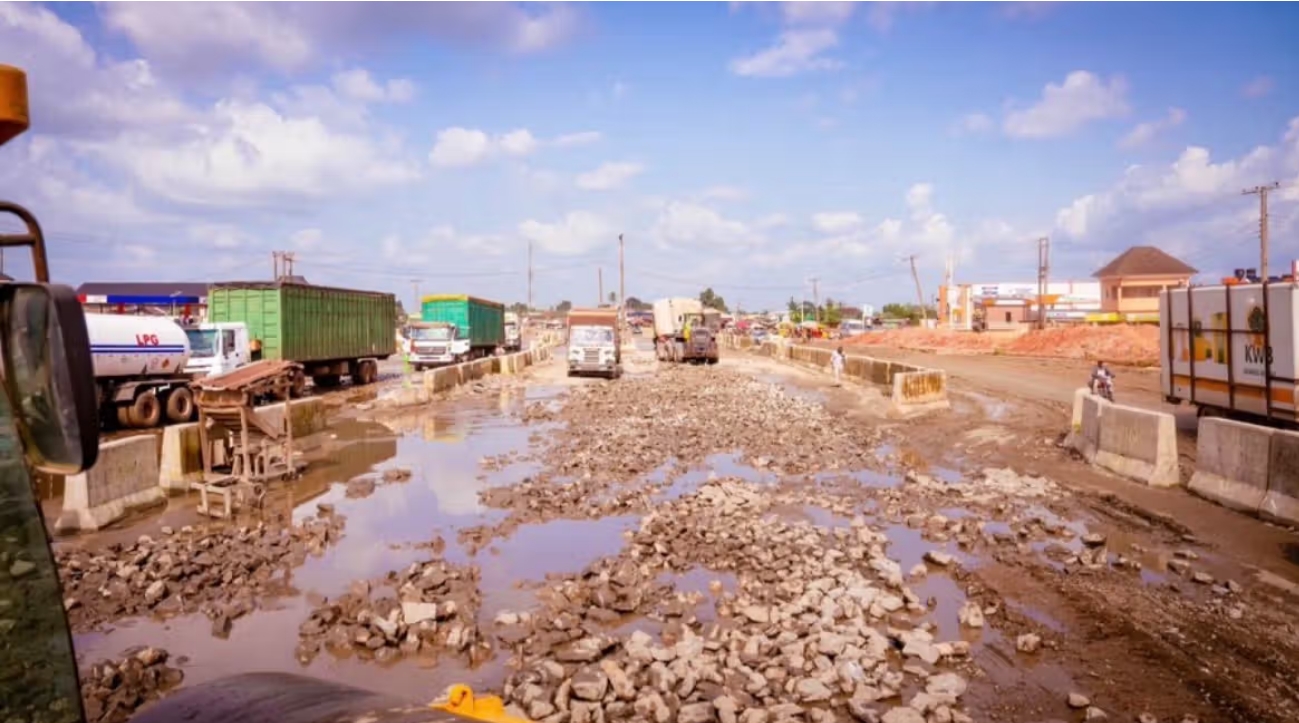
The Federal Government says the concessionaire failed to properly execute the highway project, while the contractor blames heavy rainfall, traffic and drainage challenges for the worsening condition of the Benin-Agbor-Asaba Road.
The Presidency has blamed the contractor handling the Benin-Agbor-Asaba Expressway for the highway’s deteriorating condition and the gridlock that left motorists stranded for days.
Sunday Dare, Special Adviser to President Bola Tinubu on Media and Public Communications, said the contractor had failed to meet its obligations, while defending the Federal Government’s response to the crisis.
Dare spoke on Channels Television on Wednesday as the government faced mounting criticism over the condition of the major highway linking Edo and Delta states.
“Whatever played out yesterday, we had all the stakeholders there. And it’s important that even the contractor came out, even though he gave excuses, it showed a failure on their part,” Dare said.
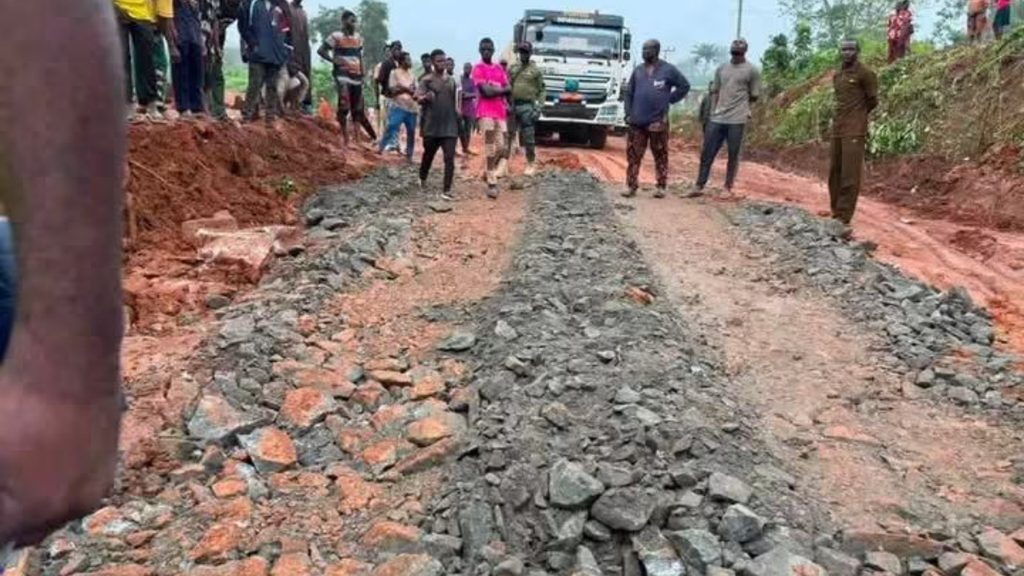
The Benin-Agbor-Asaba corridor has suffered severe congestion and failed sections for days, with the gridlock disrupting the movement of people and goods between Benin City, Agbor and Asaba.
Motorists and commuters have reported spending hours and, in some cases, days on the route, while businesses transporting goods along the corridor have also been affected.
Presidency says contractor failed on Benin-Agbor-Asaba Road
Dare said the Federal Government was responsible for identifying roads requiring intervention and providing funding, but contractors had a corresponding responsibility to execute projects properly.
“Government has a responsibility to identify the roads that need to be fixed. Government has a responsibility to provide the funding. And then, the next responsibility goes to the contractors to do what is necessary,” he said.
He described the Benin-Agbor-Asaba crisis as an isolated case and cautioned against using it to judge the Federal Government’s wider road infrastructure programme.
Dare said the government responded quickly after the situation escalated, with Works Minister David Umahi, National Assembly members and other stakeholders visiting the affected areas.
“What we saw yesterday, the Minister, the National Assembly members, and other key stakeholders going there in record time, right on the spot. And I think that’s what good governance is about, responding as quickly and as swiftly as possible, putting the blame where it is, and requesting for immediate action,” he said.
He also said the Federal Government was undertaking major road projects across the country and that problems on one corridor should not obscure progress on others.
Umahi orders reconstruction after road inspection
Umahi inspected the highway on Tuesday and apologised to motorists and commuters over the hardship caused by its condition.
Following the inspection, the minister directed moves towards the redesign and total reconstruction of the Benin-Agbor-Asaba road, saying palliative repairs would not provide a lasting solution. President Tinubu also directed the redesign and reconstruction of the road and other major highways in Edo State and adjoining corridors.
Umahi was particularly critical of the Benin-Asaba Expressway Concession Company (BAECC), accusing it of removing existing asphalt without first providing adequate drainage.
The minister said the Benin-Agbor-Asaba Road was not in its current condition when it was handed over to the concessionaire and questioned the company’s technical capacity to handle the project.
He also said the government would review road concession arrangements and ensure that concessionaires have the technical competence required for the projects entrusted to them.
Contractor gives different explanation
BAECC has disputed the government’s characterisation of the problems, pointing instead to difficult construction conditions on the busy highway.
The company said persistent and unusually heavy rainfall had affected earthworks, drainage, pavement stabilisation and asphalt-laying activities.
It also said maintaining traffic along one of Nigeria’s busiest transport corridors while construction was underway created additional complications.
According to the concessionaire, some sections had to be reopened before construction had fully reached the appropriate engineering stage in order to ease traffic and reduce hardship for motorists.
The company said the combination of heavy traffic, premature traffic loading and continued rainfall subsequently damaged some sections.
BAECC said it had adjusted its construction programme to prioritise drainage and other critical works.
The contrasting accounts mean that while the Presidency and Works Ministry have attributed the immediate crisis to failures by the concessionaire, BAECC has pointed to environmental and operational challenges. Neither account should be presented as an independently established finding of liability.
Benin-Asaba crisis puts road concessions under scrutiny
The dispute has now expanded beyond the immediate condition of the highway.
Umahi has ordered a review of road concession agreements, raising questions about how private companies are selected, monitored and held accountable for major public infrastructure projects.
The Benin-Asaba Expressway is being developed under the Federal Government’s Highway Development and Management Initiative and was concessioned to BAECC for reconstruction and expansion into a 10-lane highway.
The project is expected to operate under a long-term concession arrangement, with the private operator responsible for construction and maintenance.
The Federal Government’s decision to review concession agreements following the crisis could therefore have implications beyond the Benin-Asaba corridor.
For now, however, the immediate priority remains restoring movement on the highway.
With President Tinubu ordering total reconstruction and the Works Ministry deploying emergency measures, the government faces the more immediate test of turning its response from promises and blame into a road that motorists can actually use.