


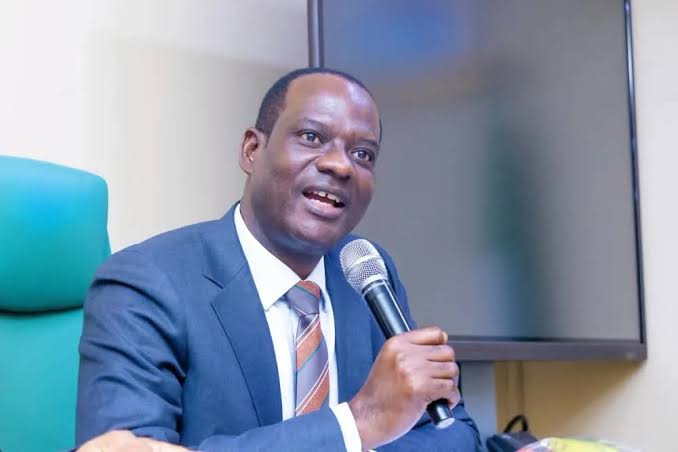
Finance Minister Oyedele says the reforms freed trillions in resources, but government spending still outpaced the savings by over N10tn.
Thirty months after President Bola Tinubu removed the petrol subsidy and introduced other sweeping economic reforms, the Federal Government says it spent N30.64 trillion in incremental expenditure to manage the effects of its policies, while the reforms generated N15.8 trillion in savings for the Federation.
The government said its total incremental expenditure between June 2023 and December 2025 exceeded the N20.4 trillion in additional resources available to the federal government from subsidy savings, higher revenue and borrowing, by N10.24 trillion, or 50.2 per cent.
Put differently, for every N100 the federal government generated in additional resources, it spent about N150, meaning roughly a third of that spending had to come from its existing revenue base.
Why the “subsidy savings” never sat in one account
Finance Minister and Coordinating Minister of the Economy Taiwo Oyedele disclosed the figures on Wednesday while unveiling the government’s “Nigeria’s Reform Scorecard: The Benefits, Costs and Harms Prevented.”
He said the N15.8 trillion was never paid into the Federation Account under a line item called “subsidy savings,” but instead showed up as higher revenue collections once the naira value of dollar-denominated transactions increased following the exchange rate reform.
“Between June 2023 and December 2025, subsidy savings mobilised a sum of N15.8tn in resources for the Federation,” Oyedele said.
“As a matter of fact, there wasn’t any line in the Federation Account with the description, ‘subsidy savings.’ So, the subsidy savings showed up in the form of higher collection by Customs, because for every one dollar of import duty before, at N460, it became one dollar at N1,004, N1,003, N1,005.”
Of the N15.8 trillion, only N5.4 trillion, or 34 per cent, accrued to the federal government, while states received N6.5 trillion and the 774 local government areas received N3.9 trillion under the statutory Federation Account allocation formula.
The federal government also generated N3.1 trillion in additional independent revenue, mainly from remittances by government-owned entities, and N11.9 trillion from additional borrowing, bringing its total incremental resources to N20.4 trillion, of which borrowing accounted for 58 per cent, subsidy savings 27 per cent, and other revenue 15 per cent.
Where the N30.64tn was spent
Of the N30.64 trillion in total incremental expenditure, N9.39 trillion went to wage adjustments, including the national minimum wage increase from N30,000 to N70,000 and allowances for public servants, N9.37 trillion to additional external debt servicing driven by naira depreciation, and N6.5 trillion to strategic infrastructure.
These three items alone accounted for about N25.22 trillion, or more than 82 per cent of total incremental spending. The remainder included N3.14 trillion in additional electricity subsidy costs, N1.24 trillion in increased domestic debt servicing, N423.8 billion for social welfare transfers, and N419.1 billion for the FCT, Ecological Fund, Natural Resource Fund and other interventions.
Oyedele said the scorecard also credits the reforms with preventing a deeper crisis, citing NELFUND’s support for over 1.5 million students, prompt payment of salaries and pensions, and a shift from 27 states struggling to reliably pay salaries in May 2023 to zero states facing that problem today.
“We invited you here today not to declare a victory, but to give an account,” he said. “Those decisions came at a real cost, and we are not here to pretend otherwise. Prices rose. The naira adjusted sharply. Households and businesses felt it, and many still do.”
Also speaking, Minister of Information Mohammed Idris described the fuel subsidy removal as one of the most significant and difficult reforms undertaken by the administration, while Minister of Budget and Economic Planning Abubakar Atiku Bagudu said Tinubu inherited an economy with one of the world’s lowest revenue-to-GDP ratios, requiring bold fiscal choices.