

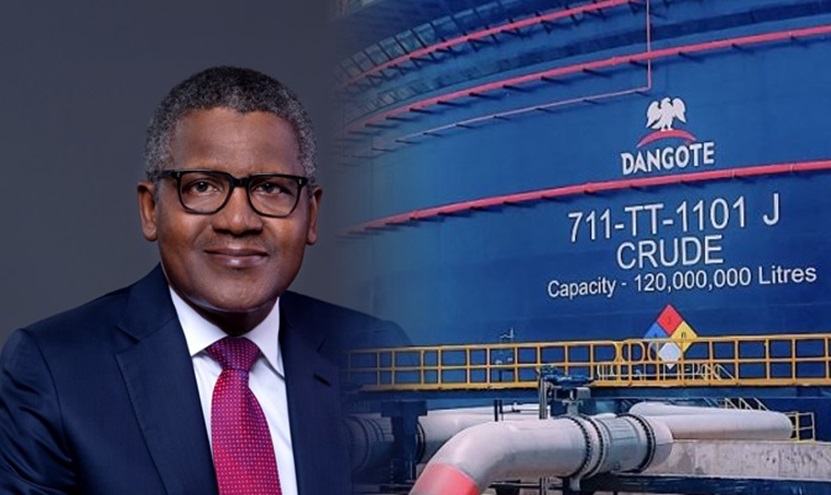
Dangote Refinery has purchased its first Middle Eastern crude cargoes from the UAE as domestic supply shortfalls force Nigeria’s largest refinery to diversify its feedstock sources.
The Dangote Petroleum Refinery has made its first-ever purchase of Middle Eastern crude oil, acquiring two cargoes from the United Arab Emirates as Nigeria’s largest refinery moves to diversify its feedstock sources amid persistent domestic supply shortfalls.
According to S&P Global Commodity Insights, the purchases mark the first time the 700,000-barrels-per-day facility has sourced crude from any Middle Eastern supplier a significant shift from its established reliance on Nigerian, African and United States crude grades.
Why Dangote Refinery Is Looking East
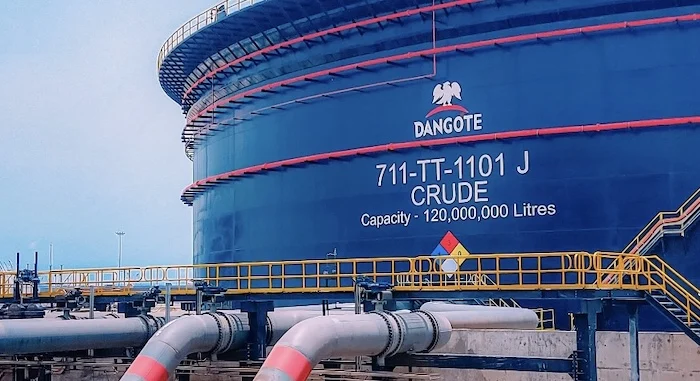
The move follows the resumption of Middle Eastern oil exports after the United States and Iran reached an interim peace agreement, restoring confidence in shipping through the Strait of Hormuz and reopening supply lanes that had faced uncertainty.
The Dangote Refinery crude oil diversification strategy has been building for some time. An existing agreement between the refinery and the Nigerian National Petroleum Company (NNPC) had guaranteed the supply of between 13 and 15 cargoes of Nigerian crude monthly, settled in naira to reduce the refinery’s foreign exchange exposure.
However, that arrangement has been undermined by inadequate crude availability and operational disruptions at export terminals. Refinery Chief Executive Officer David Bird had previously disclosed that these constraints left the company with little choice but to look beyond Nigeria’s borders for additional supply.
The UAE procurement is part of a broader feedstock strategy as the refinery ramps up throughput and prepares for a substantial capacity expansion. Bird signalled the direction of travel earlier this year.
“We definitely want to heavy up the barrel,” Bird said in April, indicating the refinery’s intention to incorporate heavier crude grades into its processing mix a category where Middle Eastern suppliers have a natural advantage over Nigeria’s predominantly light sweet crude.
He elaborated on the scale of the ambition: “We will be in the crude blending game. So you can easily imagine at 1.4 million b/d we could process 30 per cent Middle Eastern grades on each train.”
Dangote plans to double the refinery’s processing capacity from its current 700,000 barrels per day to 1.4 million barrels per day by the end of 2028. At that scale, the facility would be capable of processing approximately 80 per cent of Nigeria’s recent total crude oil production within a single day, a figure that underscores both the refinery’s ambition and the pressure it places on domestic supply logistics.
Crude Slate in Transition
S&P Global reported that in 2025, Nigerian crude accounted for approximately 70 per cent of the refinery’s total crude imports, with United States grades making up a further 24 per cent. The UAE purchases represent the refinery’s first meaningful foray outside those established sourcing corridors.
The refinery has been deliberately broadening the range of crude grades it processes as part of its longer-term goal to operate as a fully merchant refinery one capable of processing a wide variety of global crude types rather than being constrained by the characteristics of any single supply source.
The strategic pivot toward Middle Eastern crude reflects the operational realities of running Africa’s largest refinery: domestic supply alone cannot sustain the volumes required, and the refinery’s expansion targets make feedstock diversification not an option but a necessity.