

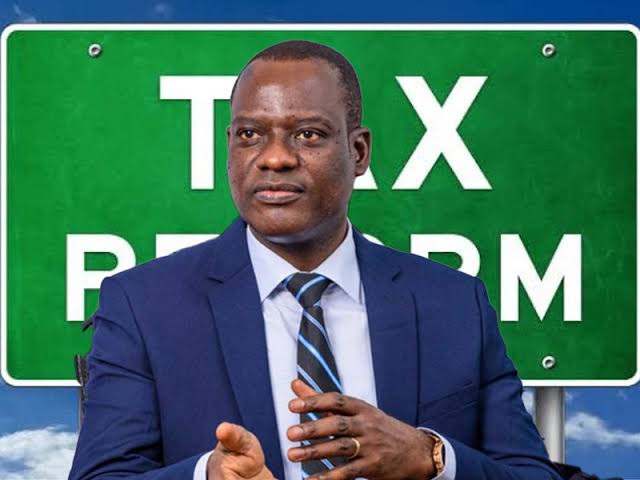
Finance Minister Taiwo Oyedele says Nigeria’s tax problem is not about raising rates but ensuring compliance, warning that the country is still not collecting enough tax revenue.
Nigeria is failing to collect sufficient tax revenue despite ongoing fiscal reforms, Finance Minister Taiwo Oyedele has warned, saying the country’s challenge lies not in raising tax rates but in enforcing compliance among those already obligated to pay.
Oyedele made the remarks on Thursday in Abuja while receiving the leadership of the Chartered Institute of Taxation of Nigeria (CITN), led by its president Innocent Ohagwa, during activities marking the institute’s maiden national tax awareness day road walk.
The minister said the country’s challenge is not about increasing tax rates but ensuring that individuals and businesses who are required to pay taxes comply under a fair and transparent system.
“We are still not getting enough revenue from tax,” Oyedele said.
“It is not about increasing tax, but making sure that those who are supposed to pay tax pay. We want to promote fairness in tax administration.”
The statement signals that the federal government’s tax reform agenda is focused on broadening the compliance base rather than introducing new levies or hiking existing rates, a distinction Oyedele has consistently drawn in public engagements on fiscal policy.
He commended the CITN for supporting the government’s reform agenda and promoting public understanding of taxation but urged the institute to intensify its public awareness efforts.
Compliance, Not Rates, at the Heart of Nigeria’s Tax Problem
Oyedele identified a deeper cultural and perceptual challenge undermining Nigeria tax revenue collection. Many Nigerians, he said, still view taxation as a mechanism for government to extract money rather than as a critical instrument for national development.
This perception gap, the minister argued, fuels resistance to voluntary compliance and limits the effectiveness of enforcement efforts. Changing that mindset, he suggested, is as important as tightening administrative systems.
He added that if Nigeria gets its tax system right, “the level of development will be monumental,” a pointed reminder that the stakes of tax reform extend well beyond government finances into infrastructure, healthcare, education, and public services.
CITN Challenged to Drive Voluntary Compliance
Beyond awareness, Oyedele issued a specific institutional challenge to the CITN. He called on the institute to introduce annual awards recognising Nigeria’s most tax-compliant individuals and organisations, arguing that public recognition could become a meaningful incentive for voluntary compliance.
The proposal reflects a broader philosophy in the government’s reform approach, that sustainable tax compliance requires social legitimacy, not just legal enforcement. Rewarding compliant taxpayers publicly, the minister suggested, could shift cultural attitudes over time.
Context: Nigeria’s Tax-to-GDP Ratio

Nigeria’s tax-to-GDP ratio has long been among the lowest in Africa, a structural weakness that has left the federal government heavily dependent on oil revenues and exposed to sharp fiscal shocks when crude prices fall. The ongoing tax reform agenda, which has included proposals to streamline multiple levies and expand the formal taxpayer base, is aimed at addressing this chronic vulnerability.
The CITN’s national tax awareness day represents part of a broader civic campaign to close the gap between statutory tax obligations and actual collection a gap that Oyedele acknowledged on Thursday remains stubbornly wide.
With the government committing to reform without rate increases, the success of Nigeria’s fiscal strategy now rests heavily on whether compliance culture can be meaningfully shifted through awareness, fairness, and institutional accountability.