

By the Special Adviser to the President on Oil and Gas, Mrs. Olu Arowolo Verheijen
At the Nigerian-British Chamber of Commerce Energy Day | Lagos, June 18, 2026
Energy in Nigeria: From potential to reality
The Presidency says Nigeria now refines the majority of the petrol consumed domestically, marking a significant shift from years of dependence on imports, as ongoing reforms in the energy sector begin to yield results.
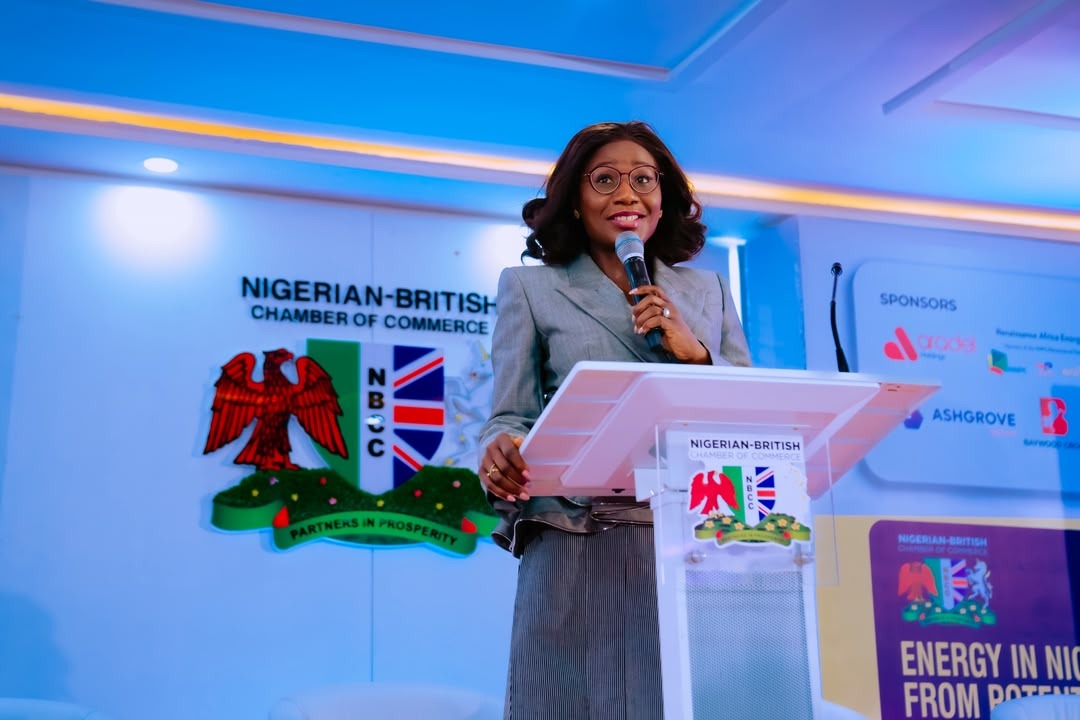
Speaking at the Nigerian-British Chamber of Commerce Energy Day 2026 in Lagos, Special Adviser to the President on Oil and Gas, Mrs. Olu Arowolo Verheijen, said local petrol production had risen from virtually zero in 2023 to about 48 million litres per day, while petrol imports fell drastically over the past year.
Verheijen said the reforms introduced by the administration of President Bola Tinubu, including fuel subsidy removal and foreign exchange liberalisation, had helped improve government revenue, restore investor confidence, increase crude oil production and reposition natural gas as a driver of industrial growth.
Here’s the full text of her speech:
Distinguished members of the Nigerian-British Chamber of Commerce, Your Excellency the British Deputy High Commissioner, captains of industry, investors, regulators, development partners, ladies and gentlemen — good morning.
We meet under a theme that captures both the challenge and the promise of our time: energy in Nigeria, from potential to reality.
Nigeria has never lacked potential. We have oil. We have gas. We have sunlight, water, land, talent and scale. What we have lacked is conversion — the discipline to turn resources into results.
Reserves into production. Production into revenue. Gas into power. Power into productivity. Refining into supply security. And reform into confidence.
That is the work President Bola Ahmed Tinubu mandated us to do: to move Nigeria’s energy sector from promise to performance.
Energy is not simply a sector. It is the foundation of national competitiveness. When energy works, factories run, farms process, transport gets cheaper, and government can invest in its people. When energy fails, every Nigerian pays — in diesel costs, food prices, lost jobs and pressure on the naira. That is why energy reform is economic reform.
When we came into office, the sector was under severe strain. Subsidies had become fiscally unsustainable. Foreign-exchange distortions had weakened investment.
Production was below potential. Power-sector debt was strangling the gas-to-power chain. The country had resources, but the system was not converting them into national value. So our first task was to stop the bleeding and rebuild the foundations.
First, we restored fiscal credibility.
Removing the fuel subsidy and reforming the exchange rate were hard decisions — but necessary. The results are visible. Total federation revenue rose to about ₦21 trillion in 2024, up from roughly ₦12 trillion in 2023 — nearly doubling in a single year.
And despite deregulation, we have avoided the chronic nationwide petrol queues that once defined scarcity.
Local production of petrol has moved from effectively zero in 2023 to about 48 million litres per day — for the first time in a generation, the majority of the petrol Nigerians consume is now refined here at home, not imported.
And this is where energy reform meets the strength of the naira. For decades, every cargo of imported petrol was a standing demand for scarce dollars — a structural drain that weakened our currency. As local refining has risen, that drain has eased: petrol imports fell from about ₦2.3 trillion in the first quarter of 2025 to under ₦90 billion a year later.
Fewer dollars spent on fuel means less pressure on the naira. Energy security and currency stability are not separate goals. They are the same goal.
Second, we restored production and investor confidence.
Crude oil and condensate production averaged 1.64 million barrels per day in 2025 — up by roughly 400,000 barrels a day since 2023, and the highest onshore level in two decades.
Over four billion dollars in international oil company divestments were concluded — deepening indigenous participation onshore while the majors refocus on deepwater and integrated gas. Pipeline uptime is now consistently high, and illegal refining sharply reduced.
Every additional barrel matters — for revenue, for jobs, and for the strength of the federation.
Third, we brought capital back.
Capital is not moved by speeches. It is moved by clarity, competitiveness and confidence. Through targeted presidential directives, we improved the environment for deepwater, non-associated gas and midstream infrastructure — and we attacked the cost of doing business.
Contracting that once took thirty-six months now takes around fourteen — and we are driving toward a target of six.The market responded. Nigeria’s share of African upstream Final Investment Decisions rose from about four percent in the years to 2023 to roughly forty percent across 2024 and 2025 — with about ten billion dollars committed and a visible pipeline of some fifty billion ahead.
Stalled projects are moving again — Bonga North, Ubeta and HI gas developments and new non-associated gas developments that anchor long-term supply to our LNG exports. When Nigeria improves the rules of the game, capital returns to the field.
Fourth, we repositioned gas as the foundation for industrialisation.
For Nigeria, gas is not merely a transition fuel. It is a development fuel — central to power, fertiliser, petrochemicals, clean cooking, CNG transport, LNG exports and manufacturing.
Our proven reserves now stand at over 215 trillion cubic feet of gas, and gross gas production has risen from about 6.83 billion standard cubic feet per day in 2023 to about 7.63 billion today.
But the goal is not simply to produce more gas. It is to ensure Nigerian gas becomes Nigerian power, Nigerian products, Nigerian jobs and Nigerian exports. A nation does not grow wealthy by owning resources. It grows wealthy by converting them into value.
Fifth, we are restoring financial viability to the gas-to-power chain.
For years the power sector was constrained by accumulated arrears, weak payment discipline and tariff distortions. The Presidential Power Sector Debt Reduction Programme was built to address this directly — a Federal Executive Council-approved bond programme of up to ₦4 trillion to settle verified generation- and gas-company arrears.
Under it, generation companies have signed full and final settlement agreements worth about ₦2.28 trillion, and the ₦501 billion Series 1 bond was issued and oversubscribed, with payments to generation and gas companies now underway. A second series of ₦729 billion will follow to complete the first phase.
This is not a bailout. It is a strategic reset — one that clears verified arrears, restores liquidity, and gives operators the footing to invest with confidence. Government obligations must be honoured if private capital is to return.
That reset is matched by reforms on the ground. The national metering rate has risen to about fifty-seven percent, with hundreds of thousands of new meters deployed each year.
Two distinct programmes — the Presidential Metering Initiative and a separate World Bank-supported programme — are together set to deploy several million additional meters in the years ahead. Metering protects consumers, reduces estimated billing, and builds the commercial discipline investment requires.
Tariff reform is being implemented pragmatically — about forty-five percent of the market is now on cost-reflective tariffs linked to service quality, while the subsidised segment is redesigned to better protect vulnerable households, already reducing the projected subsidy burden by over a trillion naira.
Ladies and gentlemen — this is the wider point.
When we speak of energy reform, we are not speaking only of oil companies, power plants or investors. We are speaking of the price of food, the cost of transport, the survival of small businesses, the strength of the naira, and jobs for young Nigerians. Energy reform is not an elite conversation. It is a national development conversation.
We have done the foundational work. The directives were issued. The decisions were taken. The structures were designed. The agreements were negotiated and signed. The task ahead, for the new sector leadership and for all of us, is to build upon it: to move from financial stabilisation to service delivery, expanded access, and the reliable power Nigeria’s industrial ambitions require.
We laid the foundation. The work now is to build on it — together.
This is where the Nigerian-British Chamber of Commerce has a role. The UK brings finance, legal structuring, insurance, engineering and institutional capital. Nigeria brings resources, demand, scale and reform momentum.
The opportunity is to connect these strengths around bankable projects — and to move partnership beyond goodwill into financing structures, skills transfer and measurable outcomes.
Nigeria is no longer presenting potential alone. We are presenting a reform pathway, a project pipeline, and evidence that disciplined execution changes outcomes.
The road is not easy. Reform never is. But nations are not built by avoiding difficult choices. They are built by making them, sustaining them, and converting them into opportunity for their people.
Our resources are present. Our market is present. Our talent is present. Our partners are present.
The opportunity is before us. The task now is delivery.
Let us move from promise to performance. From resources to revenue. From gas to power. From power to productivity. From potential to reality.
Thank you — and God bless the Federal Republic of Nigeria.