


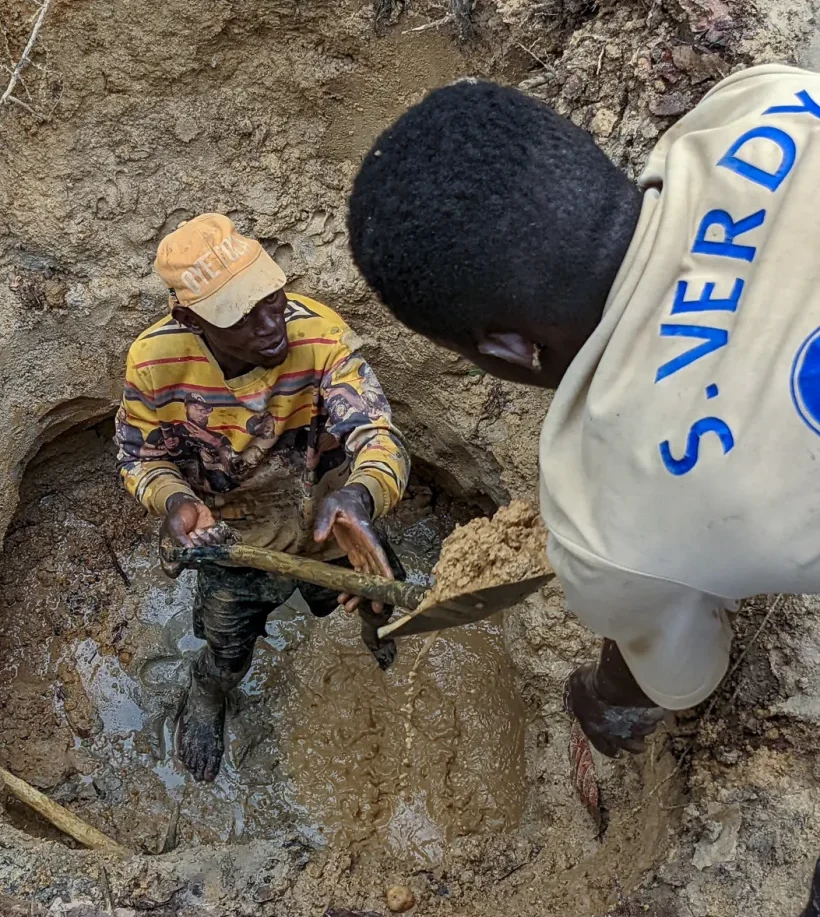
Mining as the frontier of Nigeria’s new economy and a major driver for economic diversification
The mining industry in Nigeria is a significant contributor to the country’s GDP, with various players operating in the space. Nigeria is endowed with a vast array of solid mineral resources, including gold, coal, iron ore, limestone, bitumen, zinc, lead, and tin, among others.
These resources are spread across different geopolitical zones of the country, making the sector a potential driver of economic diversification away from the nation’s heavy dependence on crude oil revenues.
The federal government has in recent years intensified efforts to develop the solid minerals sector, recognising its enormous, untapped potential to generate employment, attract foreign direct investment, and boost export earnings.
To engage in any mineral resource activities, companies or individuals must obtain the proper licences and permits from the government. The Nigerian Minerals and Mining Act of 2007 serves as the primary legislation governing the sector, establishing the legal and regulatory framework for the exploration, exploitation, and processing of solid minerals in the country. The Ministry of Solid Minerals Development, along with the Mining Cadastre Office (MCO), is responsible for administering and issuing the various categories of licences required for mining operations.
A mining licence is an official document granted by the federal government, specifically the Nigeria Mining Cadastre Office (NMCO), which operates under the Federal Ministry of Solid Minerals Development.
The NMCO oversees all mineral titles on a “first-come, first-served” basis.
Types of Mining Licenses & How to Get Them
1. Exploration License
Your starting point if you’re assessing whether a site has viable mineral deposits. Once successful, you can progress to an Exclusive Prospecting License and then a Mining Lease.
Key requirements:
• Company incorporation documents
• Pre-Feasibility Report and prospecting plan
• Evidence of financial capability and technical competence (or a COMEG-accredited geologist)
• Landowner consent
• Lawyer’s attestation of non-criminal conviction
• Payment of processing fees
2. Mining Lease
Grants exclusive rights to extract, market, sell, and export minerals over up to 50km². Valid for 25 years, renewable every 24 years.
Key requirements:
• Must already hold a valid Exploration License for the same area
• Proof that commercially viable mineral deposits exist
• Evidence of sufficient operating capital and technical competence
• Same core documents as the Exploration License
3. Small-Scale Mining Lease
Designed for artisanal and small-scale operations. Valid for 5 years, renewable for a further 5. Area must not exceed 3km².
Key requirements:
• Applicant must be a Nigerian citizen or Nigeria-incorporated company
• Low-level technology methods must be used (no substantial capital expenditure)
• COMEG-accredited geologist, proof of financial capability, and landowner consent
• Standard incorporation and application documents
4. Possess or Purchase Mining License
Required for any entity wishing to trade in minerals without owning a mining lease. Valid for one year, renewable.
Key requirements:
• Application letter specifying the minerals to be traded
• COMEG-accredited geologist
• Tax clearance certificate, banker’s reference letter
• Letter of consent from a mineral title holder
• Lawyer’s attestation of non-criminal conviction
5. Mineral Buying Centre License
Authorizes operation of a facility for processing, warehousing, and trading minerals. Foreign companies must incorporate a Nigerian subsidiary.
Key requirements:
• Established warehouse facility (subject to inspection)
• Same documents as the Possess or Purchase License
• COMEG-accredited geologist on staff
• Payment of prescribed application fees
6. Mineral Export Permit
Required every time minerals are exported from Nigeria. Issued by the MMSD.
Key requirements:
• Valid Possess or Purchase License
• Export Certificate from the MMSD confirming legal sourcing
• Proof of royalty payments to the government
• Payment of prescribed fees
Available Incentives
The Nigerian government offers attractive incentives to encourage mining investment:
• 75% capital allowance on capital expenditure in year one; 50% in subsequent years
• 5% investment allowance and ability to capitalize prospecting expenses
• Customs exemption on approved imported plant, machinery, and equipment
• Tax exemption for the first three years of operation (extendable by two more years)
• Expatriate benefits, including exemption from expat quotas and personal remittance quotas
• Protection from nationalization of mining titles for foreign investors
Each stage of this process builds on the last, so compliance at every step is essential. Given the complexity of the regulatory requirements, engaging a legal professional experienced in Nigerian mining law is strongly advised before submitting any application.