


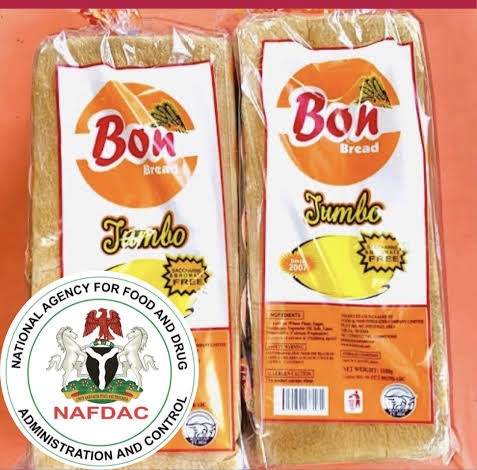
A TikTok video posted by a shop owner, Love Dooshima, where she displayed a loaf of bread that had stayed mold-free for over two months sent Nigerians into a panic. She did not show the brand’s identity; however, the CEO of Bon Bread called for her arrest. Dooshima was arrested and later released on bail.
The incident revealed a gap between how food science works and how many Nigerians understand food safety. When people see bread that looks “too perfect” or lasts longer than expected, they worry. Is it laced with harmful chemicals? Will it cause cancer? These are legitimate concerns that deserve answers backed by science, not dismissal.
The Federal Competition and Consumer Protection Commission and the National Agency for Food and Drug Administration and Control (NAFDAC) launched investigations into the matter. NAFDAC’s findings offer clarity on what actually happened and why the bread’s extended shelf life is not a sign of danger.
NAFDAC investigated and says the bread is perfectly safe. Here’s why:
- Understanding why preservatives exist
Bread naturally goes mouldy because mould spores are everywhere: in the air, on surfaces, on our hands. Without protection, mould colonises bread within days, making it inedible and potentially harmful if consumed.
Preservatives slow the growth of mould and bacteria, extending shelf life and making bread safer to transport and consume. Without them, bread would deteriorate rapidly, increasing food waste and limiting distribution. This is why virtually every commercial bread brand worldwide uses preservatives.
- The preservative is legal and well-Known
Lab tests confirmed that BON Bread uses calcium propionate as its preservative. This is one of the most commonly used preservatives in commercial bread worldwide, including in brands one would find in the US, UK, and Europe. It works by slowing the growth of mold and bacteria.
Calcium propionate, the preservative found in BON Bread, is not unique to bread. It is widely used in many food products including pastries, cakes, processed meats, cheese, dairy products, and canned foods. If you have ever eaten a mass-produced cake, sausage, or tinned food that lasted longer than expected on a shelf, it likely contained the same preservative. Regulatory agencies across the world have approved calcium propionate for food use because decades of data show it is safe when used within established limits.
- The amount used was within safe limits
NAFDAC tested three separate samples (taken from both the factory and open market shelves) and found that the calcium propionate levels were within the limits set by the Codex Alimentarius. This is the global food safety rulebook developed by the World Health Organization (WHO) and the Food and Agriculture Organization (FAO), and it’s the same standard used by regulators across the world.
No harmful substances were found
Beyond the preservative, NAFDAC specifically tested for two red-flag ingredients:
- Bromate: a chemical sometimes illegally added to flour to make bread look better, but which is banned in many countries due to cancer risks. It was not found in the bread tested by NAFDAC.
- Non-nutritive sweeteners: artificial sweeteners that should not be in bread. These were also not found.
NAFDAC has concluded that the bread is not in violation of any regulation, the preservative used is safe at the levels detected, and there are no harmful additives present. The long shelf life was a feature of approved food science, not a sign of something sinister.
NAFDAC’s willingness to investigate and publish detailed findings in response to public concern is how food safety systems should work. Regulatory bodies exist to answer these questions so that consumers can make informed decisions.
The lesson here is not that Nigerian food is unsafe. The lesson is that when people have concerns about what they eat, those concerns deserve serious investigation and clear explanation. And when the science is clear, as it is with BON Bread, that clarity should be shared widely so panic gives way to informed understanding.