

Customs has begun evacuating 98 containers of power equipment stranded at Lagos ports for up to 20 years following waivers on accumulated charges.
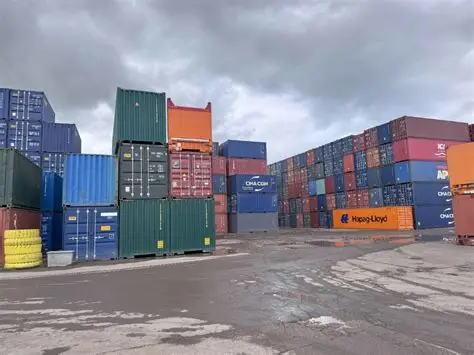
The Nigeria Customs Service (NCS) has commenced the evacuation of 98 containers of electricity transmission equipment that had remained stranded at the Apapa and Tin-Can ports for between 14 and 20 years.
The evacuation follows the approval of waivers on accumulated charges and a directive by President Bola Tinubu to remove administrative and financial obstacles preventing the release of the equipment.
Comptroller-General of Customs, Adewale Adeniyi, announced the development on Friday during the flag-off of the exercise in Lagos.
He said the first 44 containers were being released from the ENL terminal, while another 54 containers at APM Terminals and Sun & Moon terminals would also be evacuated.
The consignments include high-capacity transformers, cables, switchgear and other transmission equipment imported for the Federal Ministry of Power and government agencies, including the Transmission Company of Nigeria (TCN) and the Niger Delta Power Holding Company (NDPHC).
Adeniyi said the Finance Minister of State, Taiwo Oyedele, approved waivers on accumulated charges to facilitate the release of the equipment.
“In line with that presidential directive, this service has commenced the immediate clearance of more than 200 containers of power equipment,” he said.
The Customs chief said the service had introduced priority processing, dedicated officers for joint examinations and the application of approved waivers to accelerate the exercise.
He added that the NCS was working with the Federal Ministry of Power, TCN, NDPHC, the Nigerian Ports Authority (NPA) and other maritime stakeholders to complete the evacuation.
According to Adeniyi, technical experts would inspect the equipment after its release to establish its condition and determine which items remained suitable for deployment.
“The equipment will be deployed to ongoing and uncompleted projects, including transmission corridors and substations across the country, while obsolete items will be disposed of in accordance with experts’ recommendations,” he said.
Equipment to undergo technical assessment before deployment
Speaking at the event, Minister of Power, Joseph Tegbe, said the equipment was procured for projects intended to expand Nigeria’s transmission network, reduce pressure on existing substations and improve electricity delivery.
He said the prolonged stay of the consignments at the ports had prevented their deployment to the projects for which they were acquired.
According to the minister, existing substations have continued to carry loads that new facilities were expected to share, placing additional pressure on the electricity network.
“The consequences have been very conspicuous. First, essential equipment remained unaccounted for. Secondly, existing substations continue to carry loads that new facilities were intended to share, placing pressure on the system and limiting operational flexibility and efficiency,” he said.
Tegbe said engineers would verify the inventory, assess the condition of the equipment and conduct the necessary tests after evacuation.
He added that the ministry would undertake repairs or other interventions where necessary before deploying the equipment.
“Some of the equipment is fairly new. Some are being deployed to Kaduna, Lafia, Kwale and many other locations,” the minister said.
He said the deployment would provide additional usable capacity at affected locations and improve operational flexibility across the power sector.
The government has not provided a detailed breakdown of how many of the 98 containers contain equipment that remains serviceable or how long the inspection, repairs and eventual installation will take.
The actual contribution to electricity supply will therefore depend on the condition of the recovered equipment and the completion of the projects for which it was acquired.
Release comes amid worsening electricity supply
The evacuation comes as households and businesses across Nigeria face reduced electricity supply following a decline in power generation.
On November 5, the Nigerian Independent System Operator (NISO) attributed the decline to inadequate gas supply to thermal power stations and reduced water inflows into hydroelectric reservoirs.
The operator said the constraints had reduced the electricity available for distribution companies, resulting in shorter supply hours and increased load shedding across their networks. TheCable+1
In response, Tegbe directed TCN, NISO and electricity distribution companies to address operational challenges affecting electricity supply, accelerate ongoing maintenance and keep consumers informed about efforts to restore normal supply. TheCable
The recovery of the stranded equipment represents an effort to address some of the infrastructure constraints affecting electricity transmission. However, it does not resolve the immediate generation problems identified by NISO, particularly gas shortages and reduced hydropower output.
The impact of the exercise will depend on how quickly the equipment can be assessed, repaired where necessary, installed and commissioned at the designated project locations.