

FG, according to Defence Minister Christopher Musa says electronic tolling could help security agencies track suspicious vehicles, while the military plans to transfer more internal security duties to the police.
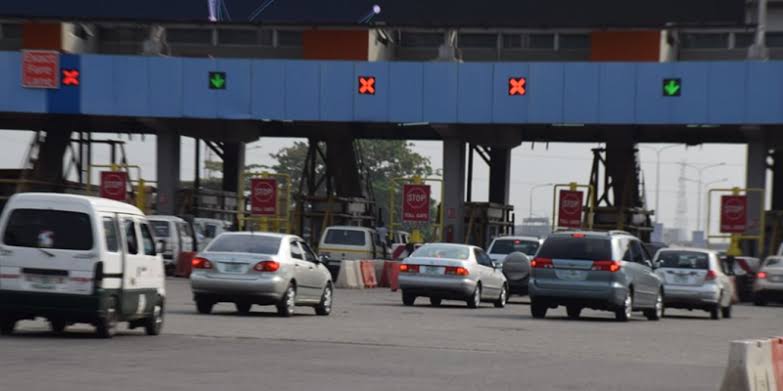
The Federal Government is considering reintroducing tollgates equipped with surveillance technology on major highways as part of efforts to combat kidnapping, banditry and other security threats across Nigeria.
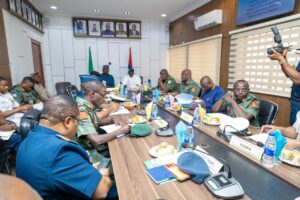
Minister of Defence Christopher Musa disclosed the proposal at an Abuja event on Thursday, November 5, 2026, saying modern tolling systems could help security agencies identify vehicles, monitor movements and track suspected criminals.
The proposal would combine electronic toll collection with vehicle identification technology, allowing motorists to pass through designated points without stopping to make manual payments.
Musa spoke at the APC Progressive Strategy Roundtable, themed “Promise to Proof: The Renewed Hope Conversation”, convened by Ismaeel Ahmed, head of the Presidential Initiative on Compressed Natural Gas and Electric Vehicles.
Responding to concerns about highway attacks and suggestions that motorists could contribute to security funding through toll charges, the minister said dismantling the former tollgate system might have been a mistake.
“We may have made a mistake by removing tollgates,” he said.
He argued that technology capable of recognising vehicle registration numbers and processing payments electronically could also provide information useful to security operations.
The proposal remains under consideration. No implementation timetable, toll charges or list of affected highways has been announced.
Why FG wants surveillance technology at highway tollgates
Nigeria dismantled tollgates on federal highways under former President Olusegun Obasanjo, with the policy taking effect in 2004.
According to the Federal Ministry of Works, the old system suffered from revenue leakages and failed to generate the intended improvements in road maintenance.
However, the government has since moved towards restoring toll collection on selected federal roads.
In February 2025, tolling commenced on the Abuja–Akwanga–Lafia–Makurdi highway, partly to support repayment of financing obtained for the road’s rehabilitation.
Musa’s latest proposal introduces a stronger security component to the tolling debate, suggesting that vehicle identification systems could assist investigations and monitoring along vulnerable routes.
The minister also advocated integrating personal identification numbers, facial recognition and fingerprint technology into Nigeria’s national identification framework.
He said such information could help security agencies establish identities and trace criminal networks.
However, nationwide deployment of vehicle surveillance and biometric identification would raise questions about data protection, access to information and safeguards against misuse.
Nigeria’s Data Protection Act 2023 requires personal information to be processed lawfully, transparently and for specified purposes. Biometric information used to identify individuals also receives additional legal protection.
The government has yet to explain how the proposed surveillance system would operate, which agencies would access collected information or how long such records would be retained.
Military plans gradual withdrawal from internal security operations
Beyond highway surveillance, Musa acknowledged that the military’s prolonged involvement in domestic security operations had stretched its personnel and resources.
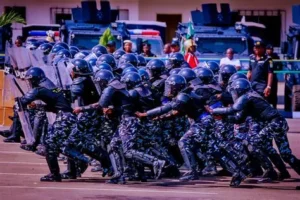
He said the armed forces were working towards gradually reducing their internal security responsibilities while strengthening the Nigeria Police Force to assume duties within its constitutional mandate.
According to the minister, the military is supporting police training, operational capacity and equipment procurement to facilitate the transition.
Nigeria’s armed forces have been deployed across several regions to confront terrorism, armed banditry, kidnapping and other violent crimes, often alongside police and other security agencies.
The minister did not announce a timetable for withdrawing troops from internal security operations.
The proposed transition would require improvements in police manpower, intelligence gathering, equipment and operational readiness before soldiers could be withdrawn from affected communities without creating security gaps.