

The proposed laws seek to update Nigeria’s Geneva Conventions framework and establish domestic provisions for prosecuting serious international crimes.
President Bola Tinubu has transmitted two bills to the House of Representatives seeking to strengthen Nigeria’s legal framework for prosecuting genocide, war crimes and crimes against humanity.
The bills, forwarded to the House for consideration, seek to incorporate key international legal instruments into Nigerian law, establish penalties for serious international crimes and provide a framework for cooperation with the International Criminal Court (ICC).
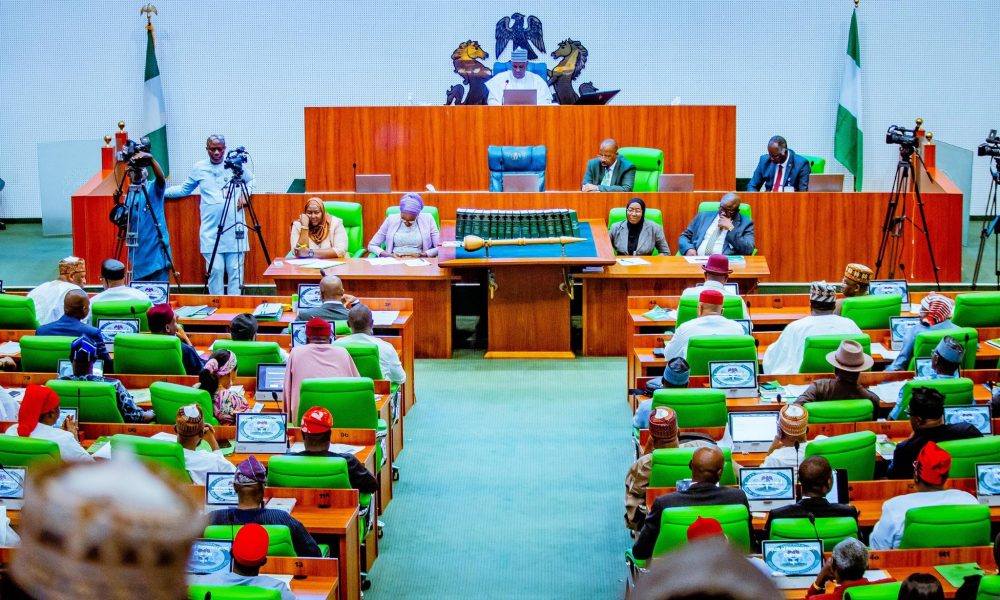
The president’s letter, dated 6 October 2026 and addressed to the Speaker of the House, Abbas Tajudeen, was read during plenary on Tuesday, 13 October.
Titled Transmission of the Geneva Conventions and Additional Protocols Bill, 2026 and the Rome Statute of the International Criminal Court (Enforcement) Bill, 2026 for consideration, the letter invoked Section 58(2) of the 1999 Constitution, as amended.
“Pursuant to Section 58(2) of the Constitution of the Federal Republic of Nigeria, 1999 (as amended), I forward herewith the Geneva Conventions and Additional Protocols Bill, 2026 and the Rome Statute of the International Criminal Court (Enforcement) Bill, 2026 for the kind consideration of the House of Representatives,” Tinubu said.
The president urged lawmakers to consider the proposals expeditiously.
Geneva Conventions bill seeks to update existing law
The Geneva Conventions and Additional Protocols Bill, 2026, seeks to repeal the existing Geneva Conventions Act, Cap. G3, Laws of the Federation of Nigeria, 2004, and give effect to the four Geneva Conventions adopted on 12 August 1949 and two Additional Protocols adopted on 8 June 1977.
The Geneva Conventions establish rules for protecting people affected by armed conflict, including wounded and sick members of armed forces, shipwrecked personnel, prisoners of war and civilians. The Additional Protocols expand protections and set further limits on the conduct of hostilities.
The proposed legislation is intended to update Nigeria’s domestic framework for implementing its obligations under international humanitarian law.
If enacted, the bill would replace the existing legislation with a revised framework reflecting the specified conventions and protocols. It must, however, pass through the legislative process before becoming law.
Rome Statute bill targets serious international crimes
The second proposal, the Rome Statute of the International Criminal Court (Enforcement) Bill, 2026, seeks to give effect to the Rome Statute, the treaty that established the ICC.
It would provide a domestic legal framework for the prosecution and punishment of genocide, crimes against humanity, war crimes and related offences. It would also establish provisions for Nigeria to cooperate with the international court in carrying out its mandate.
Genocide involves certain acts committed with the intent to destroy, in whole or in part, a national, ethnic, racial or religious group. Crimes against humanity involve specified acts committed as part of a widespread or systematic attack against a civilian population, while war crimes are serious violations of the laws governing armed conflict.
The ICC prosecutes individuals accused of these crimes when the requirements for its jurisdiction are met. Under the principle of complementarity, national authorities have the primary responsibility to investigate and prosecute such offences, while the ICC may intervene when the relevant conditions are satisfied, including where genuine national proceedings are absent.
The proposed Nigerian legislation would therefore strengthen the domestic legal framework for addressing serious international crimes while providing a basis for cooperation with the ICC.
Bills await legislative consideration
Tinubu said he trusted that the House would give the bills prompt consideration.
“While I trust that the House of Representatives will consider the request expeditiously, please accept, Rt. Hon. Speaker, the assurances of my highest regards,” he said.
The proposals will now undergo legislative consideration. They are not yet law, and their final provisions will depend on the versions approved by the National Assembly and assented to by the president.
The bills form part of efforts to update Nigeria’s domestic legal framework for international humanitarian law and the prosecution of serious crimes.