

Nigeria’s independence from British colonial rule was the result of decades of political organising, protests, constitutional negotiations, journalism and popular mobilisation. Although famous names such as Nnamdi Azikiwe, Obafemi Awolowo, Ahmadu Bello, Tafawa Balewa, and Herbert Macaulay dominate many accounts of the independence struggle, several other Nigerian independence activists played important roles in building the political movements that eventually led to self-government in 1960.
Among them were Aminu Kano, Sa’adu Zungur, Gambo Sawaba, K. O. Mbadiwe and Bode Thomas. Their approaches were different: some challenged colonial rule directly, while others fought for political representation, social reform, education, women’s rights and greater participation in government.
Together, their stories show that Nigeria’s road to independence was shaped by competing political ideas and activists from different parts of the country.
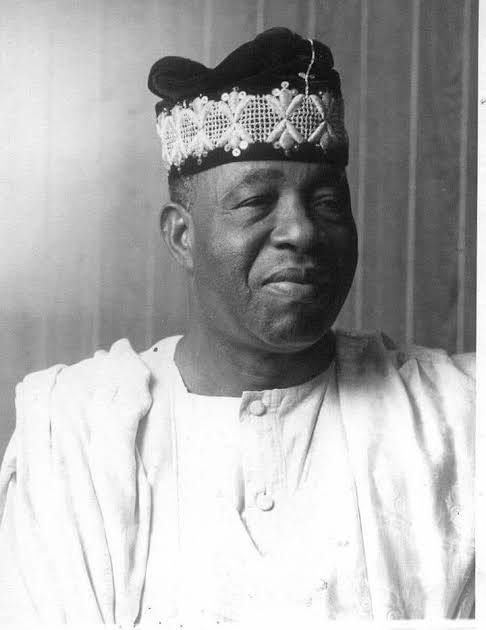
Kingsley Ozumba Mbadiwe, popularly known as K. O. Mbadiwe, was a Nigerian nationalist, politician and statesman who became one of the important figures in the constitutional and political struggle that preceded independence.
Born in 1915 in what was then the Orlu Division, Mbadiwe developed an interest in politics and African nationalism while studying in the United States. Research on his political career describes him as a Pan-African student activist during his years in America before returning to Nigeria and becoming increasingly involved in nationalist politics.
Mbadiwe became associated with the National Council of Nigeria and the Cameroons (NCNC), the nationalist organisation led by Nnamdi Azikiwe. He was elected to the Eastern Region House of Assembly in 1951 and subsequently became an important parliamentary figure.
His importance to the independence struggle came partly from his ability to operate within the institutions created under colonial rule. Nigerian nationalists increasingly recognised that political power could be challenged not only through protests and public campaigns but also through elections, legislative debates and constitutional negotiations.
Mbadiwe became a prominent parliamentarian at a crucial period in Nigeria’s transition toward self-government. He subsequently served as a federal minister, including as Minister for Communications and Aviation and later Minister for Lands, Survey and Natural Resources. He was also appointed Minister for Commerce in 1957.
His political career therefore placed him close to the centre of negotiations over Nigeria’s future.
The NCNC had initially developed as a broad nationalist organisation campaigning for greater Nigerian participation in government. Its politics evolved as constitutional reforms gradually transferred greater authority to Nigerian politicians. Mbadiwe became one of the politicians who helped turn nationalist demands into parliamentary and governmental action.
His career also illustrates the disagreements that existed within the independence movement. Nigerian nationalists did not always agree about political strategy, party leadership or the structure of the future Nigerian state. Mbadiwe himself eventually became involved in a major dispute with Azikiwe within the NCNC during the late 1950s. He established the Daily Telegraph as an outlet for his political position.
These disagreements are important because Nigeria’s independence movement was never politically uniform. Different leaders disagreed over regionalism, federalism, party organisation and political leadership.
Nevertheless, Mbadiwe remained an important nationalist figure during the period when Nigeria moved from colonial administration toward self-government. His parliamentary career demonstrated the increasing ability of Nigerian politicians to occupy positions previously controlled by colonial officials.
The National Library of Nigeria preserves Mbadiwe’s autobiography, Rebirth of a Nation, which includes a section titled “The Crusade for Independence” and provides his own account of the political period.
Mbadiwe’s contribution to Nigerian independence can therefore be understood through his combination of Pan-African activism, nationalist politics, parliamentary representation and participation in government.
He was part of the generation that transformed Nigerian nationalism from an anti-colonial campaign into an organised political struggle for self-government and, ultimately, independence.
By the time constitutional conferences were held in London in 1957 and 1958, Nigerian politicians from different parties and regions were participating directly in negotiations over the structure of an independent Nigeria. The National Library of Nigeria describes these conferences as important stages in preparing the federal constitution for an independent Nigeria.
Nigeria finally achieved independence on 1 October 1960.
The independence story was therefore not the achievement of one party, one region or one political ideology. It was the product of years of organising, political education, constitutional negotiations, popular mobilisation and pressure for self-government.
For that reason, remembering figures such as Aminu Kano, Sa’adu Zungur, Gambo Sawaba, K. O. Mbadiwe and Bode Thomas provides a broader understanding of how Nigerians challenged colonial rule and built the political movements that eventually made independence possible.