

The CBN has cut Nigeria’s Monetary Policy Rate to 23% from 26.5%, its biggest cut in the current easing cycle. Here’s what it means for borrowers and savers.
The Monetary Policy Committee (MPC) of the Central Bank of Nigeria (CBN) has cut the Monetary Policy Rate (MPR) by 350 basis points to 23 percent, from 26.5 percent.
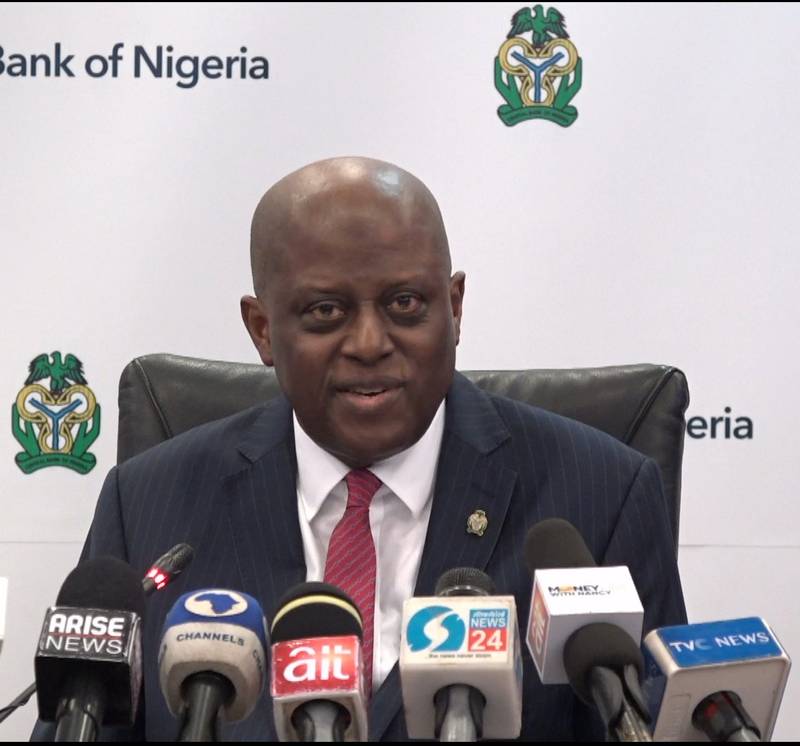
CBN Governor Olayemi Cardoso announced the decision on Tuesday at the end of the committee’s 307th meeting, held over two days (September 21–22) in Abuja, with 11 members of the committee in attendance.
“The Committee decided as follows: reset the monetary policy rate to 23 per cent,” Cardoso said.
A Bigger Cut Than Expected
The reduction marks the committee’s second rate cut this year, and the largest single move in the current easing cycle. The MPC first cut the MPR by 50 basis points, to 26.5 percent, in February 2026, before holding the rate steady at its two subsequent meetings while assessing the pace of disinflation and other risks to the economy.
Tuesday’s 350-basis-point cut was considerably larger than markets had anticipated. A Bloomberg survey ahead of the meeting found that five of eight economists polled expected the MPR to remain at 26.5 percent, with estimates ranging between 25.5 and 26.5 percent.
The latest MPR, which is the benchmark interest rate in Nigeria, comes after headline inflation eased to 15.39 percent in August 2026, from 15.43 percent in July, according to the National Bureau of Statistics (NBS).
Speaking at the news conference, Cardoso said the committee also adjusted the asymmetric corridor around the MPR to +50/-300 basis points.
The governor said the committee retained the Cash Reserve Ratio (CRR) at 45 percent for deposit money banks and 16 percent for merchant banks, while the CRR on non-Treasury Single Account (TSA) public sector deposits was also retained at 75 percent. The Liquidity Ratio was left unchanged at 30 percent.
Why the CBN Made the Move
According to Cardoso, the decision to reset the MPR and adjust the corridor was aimed at strengthening monetary policy transmission and reinforcing the MPR as the main signal of monetary policy.
“The MPC emphasised that the recalibration of the corridor does not constitute a change in the current monetary policy stance, but rather an operational reset to enhance the effectiveness of monetary policy and support the transition to an inflation targeting framework,” he said.
The governor said MPC members considered the current macroeconomic environment supportive of the adjustment without undermining the disinflation process. He added that the divergence between the MPR and prevailing market rates had weakened the effectiveness of monetary policy transmission.
Cardoso said the CBN’s ongoing repair of its monetary policy implementation framework, including the adoption of the Nigerian Overnight Funding Average (NOFA) as a transaction-based operational benchmark, had improved the transparency of money market operations.
“The committee therefore considered a reset of the MPR and recalibration of the corridor appropriate to better align the monetary policy implementation framework with market realities,” he said.
Cardoso reiterated that the recalibration of the policy framework should not be interpreted as a change in the underlying monetary policy stance, describing it instead as part of the CBN’s ongoing reform of how monetary policy is implemented.
What It Could Mean for Borrowers and Savers
A reduction in the MPR can influence banks’ lending and deposit rates, the cost of borrowing for businesses and households, and returns on interest-bearing investments, though the adjustment does not automatically translate into an equivalent cut in commercial bank lending rates. The extent and timing of any pass-through will depend on individual banks’ funding costs, credit risk assessments, liquidity conditions and broader market developments. Households with loans tied to market rates could see relief if banks pass on the cut, while savers may see lower returns on short-term instruments.
The decision has drawn cautious optimism from economists and capital market analysts, who see it as a positive signal for economic growth, even as they note that the real test will be how quickly and how far commercial lending rates actually move in response.