


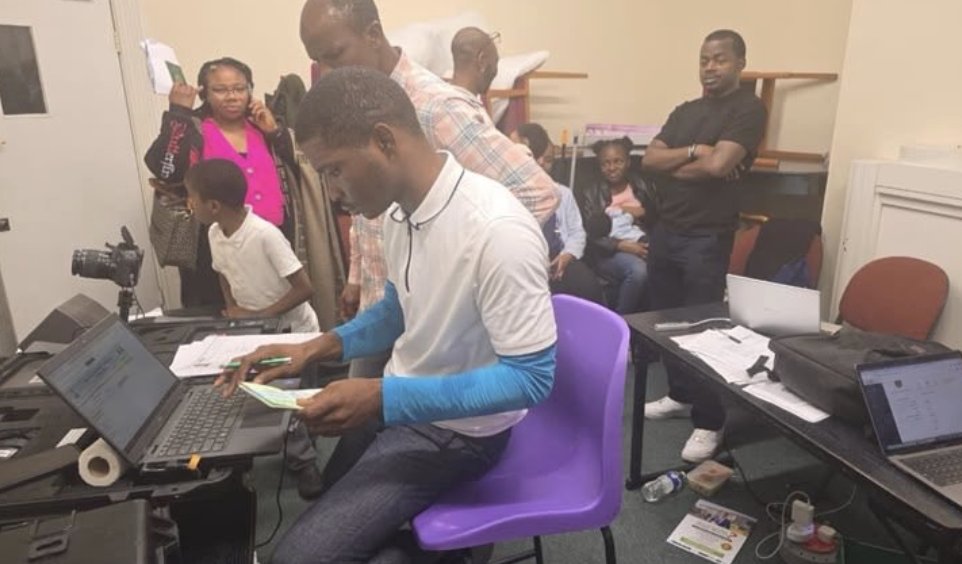
The immigration service says a brief technical failure disrupted biometric capturing, while 230 applicants were eventually processed across Manchester and London.
The Nigeria Immigration Service (NIS) has attributed disruptions that triggered complaints at its passport intervention exercise in the United Kingdom to a brief technical failure, saying services resumed after the issue was resolved.
The explanation followed videos shared on social media on Monday showing Nigerians gathered outside a locked entrance at the intervention centre in Manchester, with some applicants alleging that they had waited for hours without being attended to.
The special intervention exercise, which began on September 7, was introduced to help Nigerians in the UK with new passport applications, renewals and pending cases. The first phase covers London and Manchester, with the exercise later moving to Aberdeen and Cardiff.
NIS explains Manchester disruption
In a statement issued early Tuesday, the NIS said the disruption was caused by a “brief technical downtime” that temporarily affected biometric capturing, particularly at the Manchester centre.
The service said the problem was promptly resolved and the exercise subsequently proceeded smoothly.
“Following a brief technical downtime earlier yesterday morning that temporarily disrupted biometric capturing, especially at Manchester centre, and its prompt resolution, the exercise proceeded smoothly,” the NIS said.
The agency said 230 applicants who had booked appointments were processed on the first day, with 140 applicants captured in Manchester and 90 in London.
The update came after complaints from applicants who said they arrived at the centres for scheduled appointments but experienced significant delays.
One applicant posting from the Manchester centre said people who arrived around 9am were still waiting by 11:30am without being attended to. The reports prompted criticism of the organisation of the exercise.
Minister addresses complaints
Interior Minister Olubunmi Tunji-Ojo said he was concerned about the inconvenience experienced by Nigerians during the exercise.
According to the ministry, consultations are ongoing with the Ministry of Foreign Affairs to address the challenges and prevent a recurrence.
The minister also rejected reports that applicants were required to pay additional passport charges, saying the official fees remained $150 for a five-year passport and $230 for a 10-year passport, excluding bank charges.
However, the Nigeria High Commission in London’s published notice for the intervention exercise lists a £70 postal order payable to the Nigeria High Commission, or payment through e-payment, among the requirements for applicants. It separately lists a £150 payment for lost, misplaced or damaged passports.
The discrepancy means claims that applicants were being charged an unauthorised £70 “administrative fee” cannot be presented as established fact without further clarification from the authorities.
The exercise itself was announced by the NIS as a special intervention to provide passport services to Nigerians in four UK cities. London and Manchester are the first locations, while Aberdeen and Cardiff are scheduled to host the team later in September.
The NIS has urged applicants to cooperate with officials as the intervention continues, while the Interior Ministry says it is working with relevant authorities to resolve outstanding issues.
For now, the service says the technical problem that affected biometric capture in Manchester has been resolved and that the intervention is continuing.