

A reported three-month truce raises fresh questions about Nigeria’s counterinsurgency strategy.
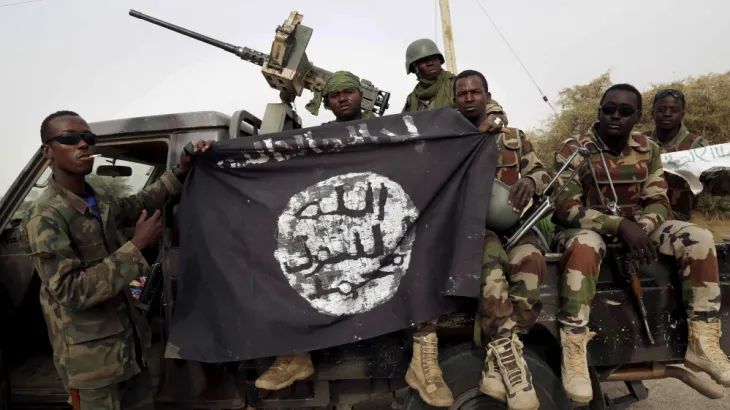
An exclusive report by The New Humanitarian has revealed that a quiet ceasefire has been in place between the Nigerian government and Boko Haram for the past three months, despite never being publicly disclosed.
Sources with contacts within the jihadist group told The New Humanitarian that the truce began in June and could be extended by another 40 days.
The reported truce followed months of negotiations over the release of 360 civilians abducted after Boko Haram fighters attacked an army base near Ngoshe, a village in the Mandara Mountains along the Cameroon border, in March. The hostages were eventually released in June. According to sources cited by The New Humanitarian, about $3.7 million may have been paid as ransom by Abuja, a claim the government has denied amid separate allegations of funds being misappropriated. Communities around Ngoshe say Boko Haram attacks have also stopped since the truce began.
Conflict researcher Malik Samuel has cautioned against reading too much into the reported agreement, suggesting it could simply be a tactical pause that benefits both sides without fundamentally changing the course of the war. The reported ceasefire also does not cover ISWAP, the rival jihadist faction operating around Lake Chad, where fighting between the two groups continues.
Public denials, private diplomacy
Publicly, President Bola Tinubu’s government has rejected talks with Boko Haram, which is formally designated a terrorist organisation. Tinubu has instead promoted a major military buildup ahead of next year’s elections, including plans to recruit 30,000 new troops and establish additional army divisions. But behind the scenes, the latest report suggests officials may be more open to dialogue, having recognised that military force alone may not resolve the conflict.
The report also links the current back-channel efforts to earlier attempts at dialogue dating back to the start of the insurgency in 2009, with Nigeria’s National Security Adviser’s office and the Department of State Services playing key roles. Previous ceasefires, including efforts in 2022 and 2023, have collapsed repeatedly, sometimes amid opposition from factions within the government or military. There are concerns that the latest truce could meet the same fate, with some sources warning that Boko Haram could use the pause to reposition fighters and equipment in the mountains.
The report also provides insight into Boko Haram’s internal structure. Ibrahim Bakura Doro, who operates from the Lake Chad area, is described as the group’s leader, with three subordinate factions active in different parts of the country. One of those factions was reportedly responsible for the Ngoshe kidnappings. The durability of the ceasefire could therefore depend partly on Bakura’s ability to keep the factions aligned.
Boko Haram and ISWAP also operate differently. Boko Haram relies partly on looting and extortion, while ISWAP has developed a more centralised, tax-based system of financing. ISWAP also maintains a nominal connection to the wider Islamic State network, potentially making any negotiations with the group more complicated. Bakura, by contrast, is considered more open to engagement, largely because his fighters rely heavily on cash in the absence of their traditional sources of loot.
That dependence on money could be both an opportunity and a risk. While financial incentives may secure cooperation, they could also create a cycle of repeated demands, according to a former Boko Haram hostage negotiator.
The dangerous logic of an enemy alliance
Perhaps the most striking possibility raised by the report is that Nigeria’s security establishment could eventually seek cooperation with Bakura against ISWAP, effectively using the rivalry between two enemies to confront the one considered more dangerous. ISWAP is regarded as the more capable adversary, with a well-organised and well-armed presence in island strongholds around Lake Chad that have proved difficult for Nigerian forces to dislodge.
Bakura’s hostility towards ISWAP reportedly dates back to the 2016 split within Boko Haram and the 2021 assault by ISWAP that resulted in the death of former Boko Haram leader Abubakar Shekau.
According to Samuel, former fighters have said Bakura now places greater emphasis on confronting ISWAP than Nigerian forces, with some attacks on military positions allegedly aimed at acquiring weapons for that fight.
This is a developing story. TDC will continue to monitor developments and provide updates as more details emerge.
Edited by Samiah Ogunlowo