

A phantom agency secured ₦1.3 billion in the 2026 budget, and the one body built to ask how has decided that’s someone else’s job
Just one day after denying any responsibility for the ₦1.3 billion channeled to the so-called Presidential Foreign Intervention Promotion Council (PFIPC), Nigeria’s Senate blocked its own inquiry into how that sum ended up written into the 2026 budget.
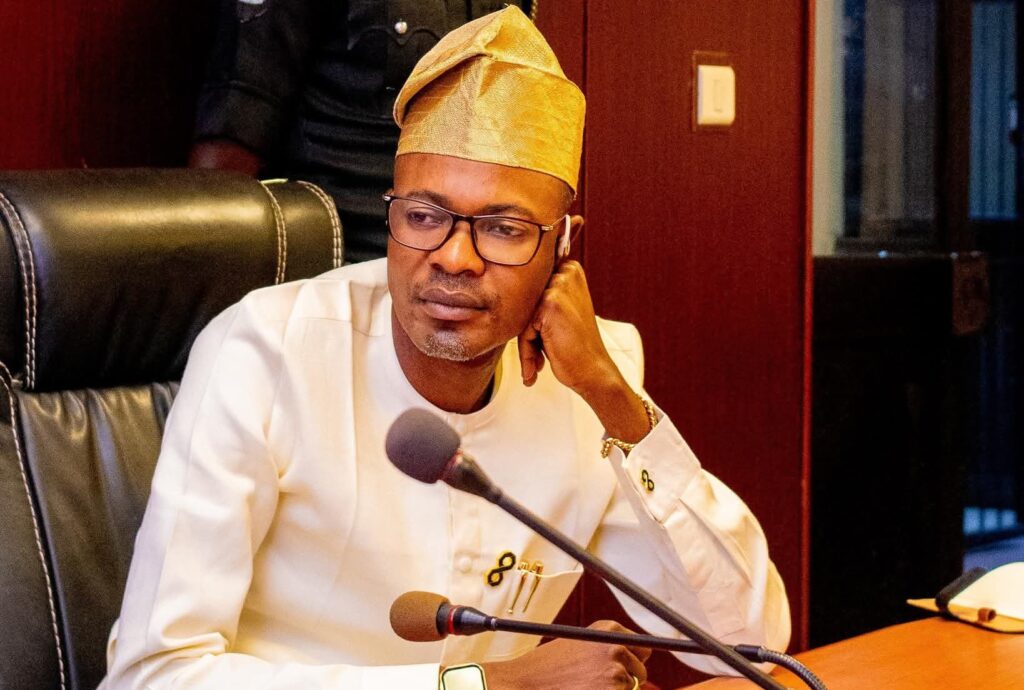
Deputy Senate President Barau Jibrin, presiding over the session, interrupted Senator Kawu Sumaila’s motion before it could proceed as a full vote, ruling that it should have come before the chamber as a substantive motion. Lawmakers instead chose to defer to the Independent Corrupt Practices and Other Related Offences Commission (ICPC), which President Bola Tinubu has already directed to look into the matter.
It’s a striking stance for the nation’s top legislative body to adopt.
Oversight is not optional
Passing budgets isn’t the whole of the Senate’s constitutional job, oversight is baked into appropriation itself. Every line item that Parliament debates, revises, and ultimately approves carries its institutional stamp of approval. So if an agency the government now claims never existed managed to secure ₦1.3 billion in public money, figuring out how that happened isn’t a discretionary exercise, it’s core to what the legislature is there to do.
Yet the Senate has handed that job to the executive branch instead.
What makes this notable is that the scandal has moved well beyond Prince Adeniyi Adeyemi, the individual accused of posing as the agency’s Director-General. His guilt or innocence is now a matter for the courts to settle. The deeper scandal is structural: how did a supposedly nonexistent agency manage to obtain office space inside the Federal Secretariat, launch a government website, engage with foreign diplomats, request visa facilitation through the Ministry of Foreign Affairs, and most remarkably, win a budget line approved by the National Assembly? These are the questions the state owes the public.
A chorus of institutions looking away
Over the past week, one government body after another has tried to put distance between itself and the affair. The Presidency points to an alleged con artist; the Budget Office has said nothing; the Office of the Head of Service hasn’t answered; the Central Bank has offered no clarification; the Office of the Secretary to the Government of the Federation hasn’t accounted for its part; and the National Assembly has claimed it simply rubber-stamped what was handed to it. Now the Senate has decided not to even ask how the item got there in the first place. The irony runs deep.
Only a day earlier, Senate spokesperson Yemi Adaramodu had argued that senators can’t be expected to run background checks on the heads of government agencies, a reasonable point, since Parliament isn’t an intelligence service. But that’s not really the ask. The real question is how an entity the government now calls fictitious made it through the country’s budgeting process with ₦1.3 billion attached to its name.
Senator Kawu Sumaila, to his credit, framed this correctly as a legislative matter. Sponsoring the motion for an inquiry, he cautioned that letting a phantom agency slip into the national budget erodes public trust in the appropriations process and damages the National Assembly’s own credibility. He also made the essential point that Parliament can’t fully separate itself from a budget it signed off on.
Deferring to the ICPC
His colleagues weren’t persuaded. Responding to the motion, Jibrin said plainly: “I believe that what we need to do at this stage is to have the report of the ICPC, and then we can act on that report, deal with it as we feel appropriate.” That logic should concern anyone who takes separation of powers seriously. The ICPC’s job is to pursue criminal wrongdoing; the Senate’s job is to scrutinize public administration, exercise legislative oversight, and ensure accountability. These roles complement each other rather than compete. Treating legislative scrutiny as something that only happens once the executive greenlights it effectively subordinates one branch of government to another.
Adding to the oddity: the House of Representatives has already passed its own motion to investigate the same budget allocation. That leaves the National Assembly in the strange position of one chamber pursuing self-examination while the other opts out entirely, raising the question of what, if not this, would ever count as worth investigating.
Even taking every allegation against Prince Adeyemi at face value, it still took a remarkable string of institutional breakdowns for a private individual to operate under a federal agency’s name, secure government facilities, land a spot in the national budget, and pass through layer after layer of bureaucracy before anyone stepped in. The more institutions that decline to ask hard questions, the less credible it becomes to chalk this up to the work of one unusually bold fraudster.
The Senate had a chance to show that its oversight role goes beyond rubber-stamping budgets to actually examining how those budgets come together. Instead, it opted to let someone else do the asking.
The questions that went unanswered yesterday remain unanswered today, with one more now added to the pile: not just how a fictitious agency ended up in the budget, but why the Senate seems to have lost interest in finding out.