


Minister of Education Tunji Alausa has announced a new ₦365 million annual prize to reward outstanding research and innovation across Nigeria’s universities, polytechnics and colleges of education.
The Federal Government has launched the Tertiary Institutions National Laureate Prize, a new annual initiative designed to recognise and reward outstanding research, innovation and intellectual excellence among students and researchers across Nigeria’s accredited tertiary institutions.
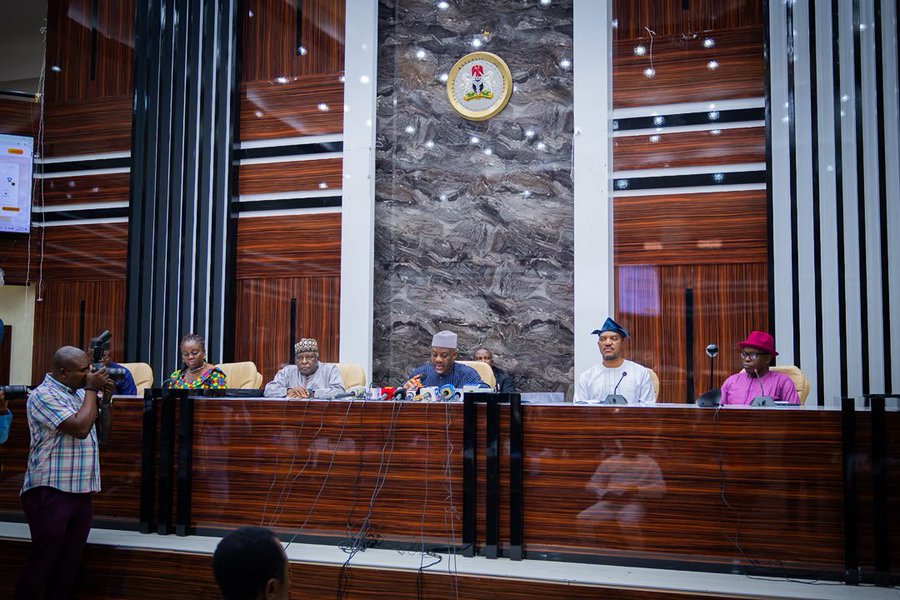
Minister of Education Dr Tunji Alausa announced the prize at a press briefing in Abuja on Wednesday, alongside members of the Nigeria Education Repository and Databank (NERD) National Laureate team, where he outlined the initiative’s vision, structure and implementation and took questions from journalists on the selection process and its long-term objectives.
Prize Structure
The programme is backed by an initial annual prize fund of ₦365 million. It includes three major “Star Prizes”, ₦35 million for the Undergraduate Star Prize, ₦50 million for the Master’s Star Prize, and ₦100 million for the Doctoral Star Prize, alongside ₦180 million allocated across 15 Thematic Excellence Prizes, worth ₦12 million each. Beyond the Star Prizes, the programme will feature special awards in fields including Engineering and Technology, Medicine and Health Sciences, Arts and Social Sciences, Agriculture, Law and Teaching Innovation. The government has also established the Dr Stella Adadevoh Prize for Medicine and Medical Innovation, named in honour of the late Nigerian physician credited with containing Nigeria’s 2014 Ebola outbreak.
The Prize is open to students and researchers at every accredited tertiary institution in Nigeria, including universities, polytechnics, monotechnics, colleges of education and military institutions, and is jointly implemented by the Federal Ministry of Education and NERD.
How Entries Work
Eligible research must first be deposited on the NERD system and assigned a National Document Number (NDN), which confirms the work has been added to the repository, though holding an NDN does not automatically enter a submission into the Laureate competition. Students cannot submit their own research directly; entries must be forwarded through their institution, which manages submissions via a Laureate Dashboard listing eligible dissertations, theses and projects associated with the institution.
The 2026 edition formally began in late July, when Emeritus Professor Abubakar Sambo, chairman of the National Laureate Committee, wrote to vice chancellors, rectors, provosts and commandants of tertiary institutions nationwide, directing them to constitute selection committees to identify exceptional undergraduate dissertations, master’s theses and doctoral research from their institutions.
Alausa said the credibility of the Prize would depend on the integrity of its selection process, which he said would be transparent, competitive and insulated from political, institutional or personal influence.
“Excellence must be the determining factor,” he said. He added that the initiative was designed to shift student aspirations: “We want Nigerian students to understand that there is honour in scholarship, opportunity in innovation and national recognition for intellectual excellence.”
Part of a Broader Agenda

Alausa described the Prize as part of President Bola Tinubu’s Renewed Hope Agenda, saying it reflected the administration’s commitment to investing in Nigeria’s human capital and giving young people platforms to compete, innovate and succeed.
“This initiative reflects the clear direction of President Bola Ahmed Tinubu, GCFR, under the Renewed Hope Agenda: to build a Nigeria where knowledge, skills, research and innovation are deliberately harnessed to create opportunities, strengthen our economy and improve the lives of our people,” he said.
He said the government’s broader goal was to build an education system that does not simply produce certificates, but “produces solutions, innovations, enterprises and measurable national value,” and that the world’s most successful nations in the 21st century would be those able to transform knowledge into solutions, research into enterprise, and intellectual capital into economic and industrial value.