


The UK has advised against all travel to parts of 11 Nigerian states and essential-only travel to 19 more, citing terrorism, banditry and kidnapping risks.
The United Kingdom has advised its citizens against all travel to parts of 11 areas of Nigeria, including Borno, Yobe, Adamawa and Gombe, while urging only essential travel to parts of 19 other states and the Federal Capital Territory, in an updated advisory published by the Foreign, Commonwealth and Development Office (FCDO) on Thursday, August 20.
Under its strongest warning, the FCDO advised against all travel to four North-East states, Borno, Yobe, Adamawa and Gombe and two North-West states, Katsina and Zamfara, as well as the riverine areas of Delta, Bayelsa, Rivers, Akwa Ibom and Cross River states in the South-East and South-South. The FCDO defined the affected riverine locations as “the river and swamp locations accessible by boat, but not by road.”
Different reports on the same advisory have cited varying overall totals figures of 11, 18 and 28 states have all circulated, likely reflecting different ways of counting the two separate warning categories and their overlapping regions; the FCDO’s own published lists, cited above, are the most precise breakdown available.
Why the Warnings
The FCDO cited a “high and increasing threat” from Boko Haram and the Islamic State West Africa Province (ISWAP) in the North-East, particularly around transport hubs, religious sites and large gatherings, and warned that regular military operations in Adamawa, Borno and Yobe raise the risk of retaliatory attacks.
In the North-West, it cited frequent banditry, violent attacks and a “high threat of kidnap,” noting that trains remain vulnerable to attack. In the South-East, the FCDO said secessionist groups remain active, with attacks and clashes with security forces occurring, and flagged an emerging pattern of improvised explosive devices used by secessionist groups in Imo State, though the overall number of such incidents remains low. In the Niger Delta, it said militant groups remain active and have carried out attacks.
Essential-Travel-Only Areas
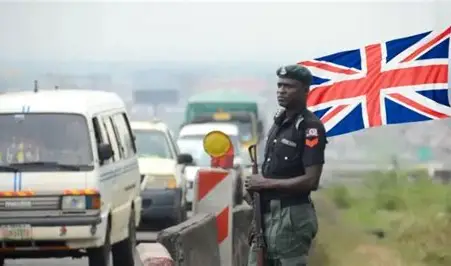
The UK advised against all but essential travel to Bauchi State in the North-East, and to Kaduna, Kano, Kebbi, Jigawa and Sokoto in the North-West. The same category covers Niger, Kogi, Plateau, Taraba, Kwara and Benue in the North-Central region; Abia, Anambra and Imo in the South-East; the non-riverine areas of Delta, Bayelsa and Rivers; and the Federal Capital Territory, including Abuja.
On Abuja specifically, the FCDO advised travellers to take advice from trusted contacts and be prepared to cancel or limit plans, noting that protests occur periodically and can turn violent; it said its own staff in Nigeria have been advised to restrict travel to within the greater Abuja metropolitan area. Separately, the advisory flagged elevated crime risk in Lagos, particularly on the mainland, describing security levels there as unpredictable.
Practical Guidance
The FCDO cautioned that “no travel can be guaranteed safe” and urged prospective travellers to study its advice before departing, to “research your destinations,” and to “get appropriate travel insurance.” It warned that “your travel insurance could be invalidated if you travel against advice from the Foreign, Commonwealth & Development Office (FCDO),” and said insurance should cover a traveller’s full itinerary, planned activities and possible emergency expenses.
The latest update also added new information on IVF and fertility-treatment scams and on overseas adoption, alongside its existing guidance on entry requirements, health concerns, regional risks and how British nationals can access assistance in Nigeria.
The advisory said insecurity is increasing across Nigeria generally, with kidnapping, violent crime and intercommunal violence occurring throughout all regions, and noted that terrorism-linked attacks beyond the core North-East states have also occurred since 2021 in Gombe, Niger, Kaduna, Kogi, Bauchi, Ondo, Zamfara, Taraba, Jigawa, Sokoto, Edo, Kano and the FCT.