

Elijah Oyebode is on death row at Ibara prison in Abeokuta, the capital of Ogun State in Nigeria. He was convicted in 2019 of the 2016 murder of Rofiat Adebisi, a final year university student he lured into his car under the pretence of a lift, before she was killed for ritual purposes.
He gave two conflicting confessions during investigation and later disowned both at trial, but the court found him guilty on the strength of medical evidence and sentenced him to death by hanging.
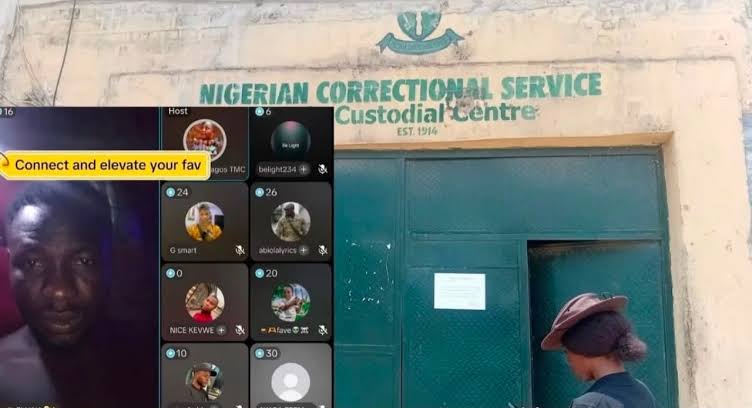
Despite that sentence, Oyebode has, since early 2026, built an active and lucrative presence on TikTok, hosting livestreams, gathering followers and collecting monetary gifts from viewers who, in many cases, have no idea they are watching a condemned killer perform from inside a maximum security facility.
Level 20 and counting
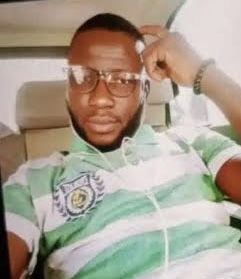
His main account, run under the handle @ayola.oluwafu, is understood to have reached Level 20 gifting status on the platform, a tier that requires substantial financial activity, implying transactions running into millions of naira. He also operated a second account that impersonated a real TikTok host and activist, using her name and photograph without permission. She eventually discovered this herself, confronted him directly, and said he apologised and removed her image once caught.
How he convinced people he was genuine
That same activist was initially sceptical when she first came across his livestream, in which he claimed to be broadcasting from behind bars in exchange for financial support. She asked for proof and confirmed his location through a video call. Believing at that point that he might be innocent, she went as far as contacting lawyers on his behalf to pursue an appeal.
It was only after she independently obtained a certified copy of the court judgment and confronted him again that he admitted, during a phone call, that he had in fact accepted money from the man who arranged the killing and had helped dispose of the victim’s body. His lawyer withdrew from the case shortly afterwards, and the relationship between Oyebode and the activist ended after he began issuing threats against her using a smuggled phone.
Life inside: phones, drugs and hotel projects
During one lengthy livestream, Oyebode described in some detail how a parallel economy operates inside Ibara prison, largely through compromised officers. According to his account, warders are the ones who obtain and smuggle phones in for inmates at the prison gate, though other warders will then confiscate those same phones and demand payment for their return.
He alleged that drugs move through similar channels, bought by inmates for hundreds of thousands of naira and resold, once repackaged, for several times that amount. He further claimed that some wealthier inmates are escorted out of the facility by warders to oversee personal building projects, including hotels, even while under sentence of death.
The legal exposure
Much of what Oyebode described would, on paper, constitute serious criminal conduct under the Nigerian Correctional Service Act 2019. Officers found to have facilitated the use of communication devices face fines of up to three million naira, up to three years in prison, or both, while those involved in smuggling drugs face up to twelve months and a fine of one million naira. Escorting a death row inmate off the premises for personal business has no legal basis whatsoever and is itself classified as a distinct offence, with supervising officers also liable to sanction should such conduct be proven.
The official response
A spokesperson for the Nigerian Correctional Service acknowledged that there will always be a small number of compromised officers within any large workforce and said the agency wants evidence it can act on to identify both inmates and staff involved. She pointed to more than fourteen hundred officers already disciplined for various forms of misconduct and said tactical teams carry out unannounced searches, with plans under way to introduce CCTV surveillance across facilities.
A cybersecurity academic consulted for this story suggested a more direct technical fix, namely signal jammers configured to block any unauthorised device within a defined prison perimeter, arguing that such a system need not interfere with nearby civilian infrastructure.
TikTok’s slow response and the bigger picture
Although the account had been active for months and had reached a high monetisation tier, TikTok only began an internal review once presented with specific evidence. Around the same period, the platform announced a sweeping removal of millions of videos and livestreams across Nigeria, yet Oyebode’s primary account survived, reportedly evading detection by repeatedly changing its display name.
A bill that would require social media companies to establish physical offices in Nigeria, intended to close exactly this kind of accountability gap, remains stalled in the Senate.
Nigeria’s pattern of institutional negligence
What this case ultimately lays bare is not the ingenuity of one death row inmate but the negligence of the institutions meant to contain him. A prison service bound by statute to secure and rehabilitate offenders instead allowed its own officers to become the primary suppliers of the phones, drugs and access that sustained a parallel economy behind its walls, while oversight mechanisms such as CCTV remained, by the agency’s own admission, still in the planning stage rather than in operation.
A social media platform with detection technologies it publicly credits for removing millions of videos failed for months to notice a self-identifying convicted murderer broadcasting under his own face and profiting from it, only stirring into action once confronted with evidence gathered by a journalist rather than its own systems.