

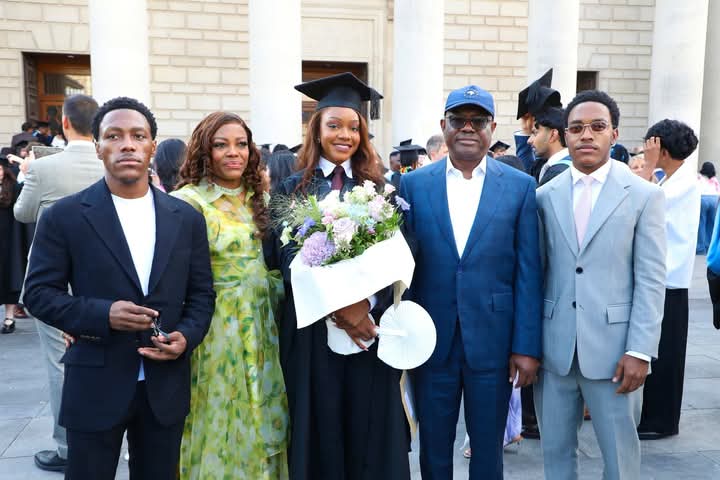
Every graduation season, the same photos flood Nigerian social media.
A senator’s daughter in a gown or a governor’s son outside a graduation venue. The comments section fills with outrage, and the questions are always the same. Why can’t these children study in the country their parents govern? Why is it always abroad?
Over the last couple of weeks, social media has been flooded with photos of the children of prominent Nigerian politicians in their UK university graduation gowns. Some of these graduates include the daughter of the former governor of Zamfara, Senator Abdulaziz Yari; the daughter of the FCT Minister, Nyesom Wike; the daughter of Anambra state governor, Charles Soludo; and the son of former President Goodluck Jonathan.
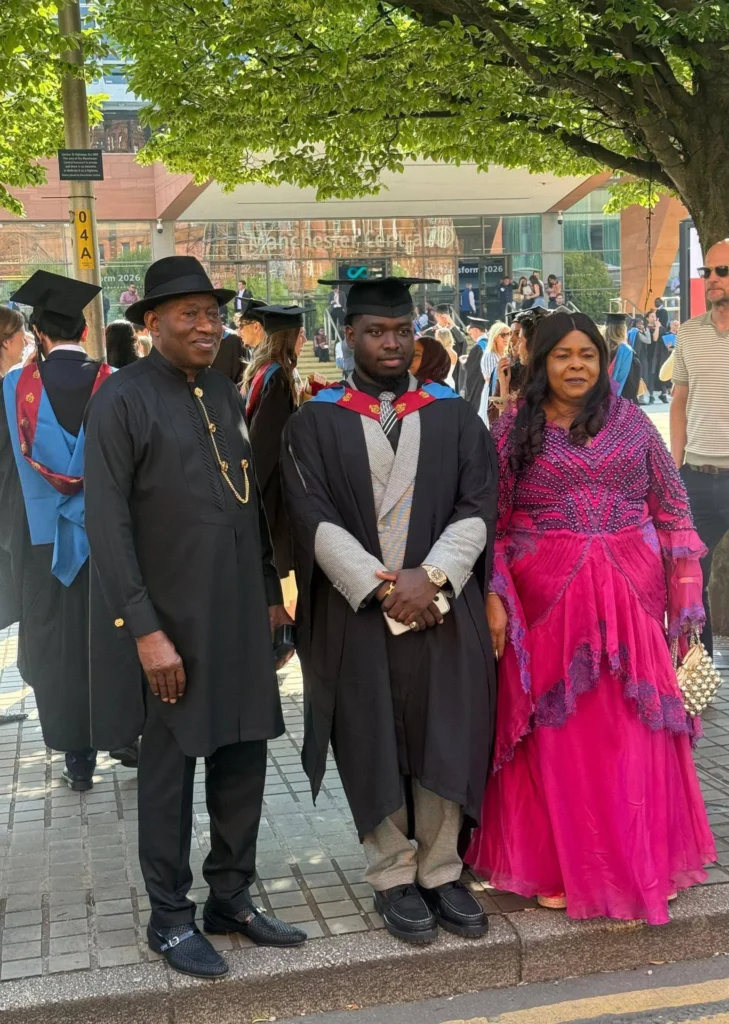
The anger is justified, but the answer is more layered than the simple hypocrisy that Nigerians attribute it to. It is a melting pot of educational quality, status, and a colonial mindset that Nigeria has never fully shaken off.
Nigerian public universities have been through decades of underfunding, strikes, and infrastructural decline. The Academic Staff Union of Universities (ASUU) has gone on strike so often that a full academic calendar now feels like an exception rather than the norm.

Lecture halls are overcrowded, laboratories are poorly equipped, and research funding is close to nonexistent in many institutions. Anyone with the financial means to avoid this system will avoid it. This is not unique to politicians. Business owners, doctors, and diaspora Nigerians all do the same thing when they can afford it. The difference is that politicians are the ones directly responsible for the state of these schools, which makes their choices sting more.
Then there is the matter of status. Certain UK universities carry a prestige that Nigerian institutions, fairly or unfairly, are not seen to carry. A degree from Oxford, Warwick, or King’s College London signals something in elite Nigerian social circles. To be frank, even universities that are ranked lower in foreign countries seem to be a thing of pride for Nigerians regardless. For a political class and even citizenry obsessed with status and legacy, sending a child abroad is as much about optics as it is about learning outcomes. It says something about the family’s wealth, connections, and place in society.
This is where the colonial mindset comes in, and it is worth naming directly. Many Nigerians, not just politicians, still operate under the quiet assumption that anything foreign, especially anything British or American, is automatically superior.
This belief did not appear from nowhere. It was built over generations of colonial education systems that positioned European knowledge as the standard and local knowledge as lesser. Decades after independence, that hierarchy still lives in how Nigerians talk about schools, accents, products, and even skin tone. Nigeria has genuinely good universities.
University of Nigeria, Nsukka, University of Ibadan, University of Lagos, Ahmadu Bello University, and others produce capable graduates every year. Yet the instinct to look abroad first remains strong, even when a comparable or better option exists at home. Undoing that instinct requires more than pointing fingers at politicians. It requires an honest conversation about a mindset that runs through much of the middle and upper class.
But none of this excuses the political class from the deeper failure at the center of this issue. These are the people who control education budgets, appoint ministers of education, and decide how much funding public universities receive. They sit in the National Assembly and approve policies that shape what happens in Nigerian classrooms. And yet their own children will never sit in those classrooms. There is no personal cost to them when a public university shuts down for eight months over unpaid lecturer salaries. There is no sleepless night over a leaking roof in a lecture hall or a laboratory with no working equipment, because their children are thousands of miles away, unaffected by any of it.
This is the real injustice that Nigerians are reacting to when they see those graduation photos. It is not simply that politicians can afford better education. It is that they have no incentive to fix what they have broken, because the consequences of that damage never reach their own families. A parent who has no choice but to enroll their child in a Nigerian public university has a personal stake in demanding better. A senator whose daughter graduated in the UK does not.
And when these children return, the gap widens further. They come back with degrees, accents, and networks that open doors in Nigeria’s tightest job markets. They walk into positions in banking, oil and gas, and government itself, often ahead of equally capable graduates who studied locally and never had the same access.
The cycle repeats. Wealth buys better education abroad, better education buys better jobs, and the ordinary Nigerian graduate is left competing on an uneven field shaped by decisions the political class made and then quietly opted out of.
The outrage every graduation season is not misplaced. It is a reminder that until those who govern Nigeria’s education system are forced to depend on it, meaningful reform will keep waiting.