

From a $33m greenhouse agreement to a new National Adaptation Plan and an energy partnership with the UK, Nigeria used the climate summit to pursue investment and showcase its transition plans. But questions remain about implementation, financing and the country’s role in the final negotiations.
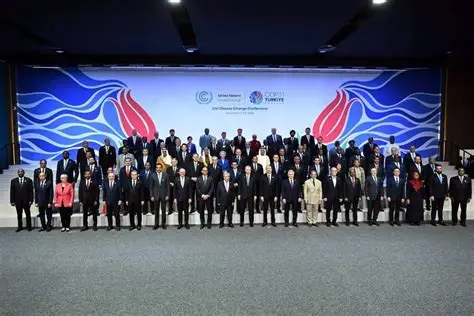
Nigeria’s participation in the 31st United Nations Climate Change Conference (COP31) in Antalya, Türkiye, produced a range of investment announcements, policy presentations and international partnerships covering agriculture, energy, methane reduction, climate adaptation and environmental resilience.
The conference, which opened on November 9, was scheduled to close on November 20 but continued until November 22 after countries failed to agree on an overarching political decision known as the Antalya Pact.
The failure to reach consensus followed disagreements over fossil fuel transition, adaptation finance and the role of carbon capture technologies. However, separate negotiations and voluntary initiatives recorded some progress.
For Nigeria, the summit provided an opportunity to advance its climate and development priorities, including a $33 million greenhouse farming programme, a partnership with the United Kingdom, a new National Adaptation Plan and investment opportunities in the oil and gas sector.
Here is a breakdown of Nigeria’s key engagements and what they produced:
1. Nigeria signs energy transition partnership with the UK
One of the major developments was the announcement of a non-binding Memorandum of Understanding between Nigeria and the United Kingdom under the UK-Nigeria Energy Security and Transition Partnership.
The agreement is intended to strengthen cooperation on energy security and Nigeria’s transition to cleaner energy.
At the announcement, Minister of State for Foreign Affairs, Sola Enikanolaiye, said Nigeria’s transition must be just, orderly and equitable, taking into account the country’s energy needs, development priorities and national circumstances.
Nigeria reaffirmed its commitment to achieving net-zero emissions by 2060 and ending routine gas flaring by 2030, while maintaining that natural gas would serve as a transition fuel.
A key component is the UK-Nigeria Methane Partnership, which is expected to support improved methane monitoring, reporting and verification, leak detection and repairs, and efforts to reduce gas flaring and venting across the oil and gas, waste and agricultural sectors.
The UK later identified the partnership as part of the wider methane commitments advanced at COP31.
However, the MoU is non-binding. Its practical value will depend on the projects, financing, technical support and implementation arrangements that follow.
2. Nigeria signs $33m greenhouse agreement
Nigeria also signed a $33 million public-private partnership agreement to deploy 10,000 climate-resilient greenhouse units nationwide, starting with a $3 million pilot involving 1,000 greenhouses in Kano State.
The agreement was signed by the Special Agro-Industrial Processing Zones (SAPZ) programme, the Bank of Agriculture and Turkish agricultural technology company Direkci Group.
Under the arrangement, Direkci Group will provide $1.5 million in foreign direct investment, matched by a $1.5 million credit facility from the Bank of Agriculture for participating farmers.
The Turkish company will also provide greenhouse technology, engineering, installation and technical support, while SAPZ is expected to provide land, basic infrastructure, seeds and seedlings.
The project will initially focus on tomato production, with participating farmers expected to receive technical training and support in connecting with buyers, including tomato processing factories.
The Bank of Agriculture will administer loans under a 36-month repayment arrangement, including an initial four-month moratorium to give farmers time to establish production.
The nationwide expansion is expected to increase access to climate-adapted farming technology and strengthen food production. However, the programme’s wider impact will depend on implementation, farmer participation, access to markets and the ability to sustain production beyond the pilot stage.
3. Nigeria launches National Adaptation Plan
One of the most significant policy developments was the formal unveiling of Nigeria’s National Adaptation Plan (NAP) at COP31 on November 13.
The plan, presented by Environment Minister Balarabe Abbas Lawal, is intended to guide the country’s response to climate risks across agriculture, water resources, energy, health, transport, forestry and infrastructure.
It addresses the different climate pressures facing the country, including desert encroachment and the shrinking of Lake Chad in the north, gully erosion in central and southeastern states, and coastal erosion and mangrove loss in the south.
The plan was developed through a process that began in September 2021, with support from the Green Climate Fund Readiness Programme and the United Nations Environment Programme.
It is based on climate risk and vulnerability assessments across Nigeria’s ecological and geopolitical zones, alongside economic assessments of proposed adaptation investments. Following approval by the Federal Executive Council, the government submitted it to the United Nations Framework Convention on Climate Change.
The NAP Global Network described the document as a costed blueprint for protecting lives, livelihoods and the economy from climate shocks. Its head, Orville Grey, warned that climate impacts could cost Nigeria up to 30 per cent of its GDP, or $460 billion, by 2050.
The launch marks an important step in Nigeria’s adaptation planning, but the next challenge is mobilising the public and private investment required to implement the proposed interventions. <Cite refs={[“turn934476view0”]}/>
4. Nigeria showcases methane monitoring and gas investment opportunities
Nigeria’s oil and gas sector featured prominently in its COP31 engagements, particularly through efforts to reduce methane emissions and attract investment into gas-flare commercialisation.
At a side event hosted by the Nigerian Upstream Petroleum Regulatory Commission (NUPRC), the commission showcased the Nigerian Oil and Gas Industry Emission Tracker (NOGIET).
The satellite-linked platform combines methane plume detection, maps of oil blocks and pipelines, and facility-level emissions data. It is designed to help regulators identify emission hotspots, compare reported figures with observed activity and strengthen compliance monitoring.
The platform was developed with the Stakeholder Democracy Network and financial and technical support from the Global Methane Hub. It was formally handed over to the NUPRC in Abuja in October, before being showcased at the Nigerian Pavilion during COP31.
The commission also signed a memorandum of understanding with the Environmental Defense Fund (EDF) to formalise cooperation on satellite-based digital methane tracking and verification.
At another engagement, NUPRC Chief Executive Oritsemeyiwa Eyesan presented the Nigerian Gas Flare Commercialisation Programme as an investment opportunity.
She said flare sites covered by the programme could support projects using up to 250 million standard cubic feet of gas daily, with the potential to unlock about $2.2 billion in investment.
The commission also cited assessments by the Clean Air Task Force indicating that methane-abatement measures could reduce Nigeria’s emissions by approximately 533 kilotonnes annually.
Eyesan further presented Nigeria’s potential to develop carbon capture, utilisation and storage projects, citing an estimated storage capacity of 3.4 billion tonnes of carbon dioxide across 606 depleted fields in the Niger Delta.
These figures represent investment opportunities and technical estimates, not funds already secured or emissions reductions already achieved.
The need for implementation is particularly important given that Nigeria flared 203.9 billion standard cubic feet of gas in 2025, according to NUPRC data. The regulator also faces questions about enforcement of anti-flaring rules and the accuracy of emissions reporting.
5. NNPC presents progress on methane reporting
The Nigerian National Petroleum Company Limited (NNPC) also used COP31 to showcase its progress in measuring and reporting methane emissions.
The company said it had moved from Level 1 to Level 3 under the Oil and Gas Methane Partnership 2.0 framework, following improvements in emissions data and operational practices.
Speaking at a session convened by the Oil and Gas Decarbonisation Charter, NNPC Foundation Managing Director Chinedu Igwe said the company had also carried out leak detection and repair work on one of its assets, which was approaching Level 4 reporting.
NNPC participated in discussions on decarbonising Africa’s energy value chain, presenting natural gas as part of its transition strategy alongside renewable energy investments and efforts to reduce emissions.
The company said its agenda included eliminating routine gas flaring and reducing methane emissions by 2030, while adopting low-carbon technologies, renewable energy and carbon capture solutions.
These are company-reported developments and targets. Their impact will ultimately depend on independently verifiable emissions data and measurable reductions.
6. Lagos launches green finance facility and courts investors
Lagos State used the summit to attract investment for its climate and infrastructure priorities, presenting an estimated $25 billion to $50 billion investment opportunity spanning more than 300 prospective projects.
The pipeline covers renewable energy, clean cooking, sustainable transport, waste management, water resources, climate-resilient infrastructure, agriculture and green enterprise.
The state also held Lagos Climate Investment Day on November 13, bringing together investors, financial institutions, development partners and project developers.
Following the engagements, the state said investors had expressed interest in potential partnerships across healthcare, solar energy, women’s empowerment and clean transportation.
Another development was the launch of the Green Finance and Investment Facility (GFIF) at the Nigerian Pavilion on November 13.
The facility was launched by Lagos State Commissioner for Energy and Mineral Resources, Biodun Ogunleye, and co-hosted by the Rural Electrification Agency and Barton Heyman Limited.
It is intended to help structure financing for distributed renewable energy projects by connecting project developers with lenders, investors and institutions that can provide guarantees and other financial support.
The launch brought together representatives of government, financial institutions and development partners, including the Bank of Agriculture and the UK government.
However, the $25 billion to $50 billion Lagos figure remains an indicative project pipeline, not funding already secured. The success of the initiative will depend on how many projects become bankable and attract actual financing.
7. Oyo presents climate action plan
Oyo State also presented its Climate Action Plan for 2026 to 2040 at the Nigerian Pavilion.
Led by the Commissioner for Environment and Natural Resources, Ademola Aderinto, the state’s delegation participated in investment forums, negotiation sessions and side events to seek partnerships with international development organisations and investors.
The state also held a dedicated session to present its climate investment prospects and discuss possible areas of collaboration.
The presentation formed part of wider efforts by Nigerian states to attract international financing for climate projects and strengthen their capacity to respond to environmental risks.
However, no specific investment amount or secured funding commitment was announced alongside the plan.
8. Nigeria and Türkiye agree to deepen economic cooperation
Beyond the climate negotiations, Nigeria used the conference to strengthen its bilateral relationship with Türkiye.
Following a meeting between Enikanolaiye and Türkiye’s Deputy Minister of Foreign Affairs for Africa, Musa Kulaklikaya, both countries agreed to convene a Joint Economic Commission in the first quarter of 2027.
The proposed commission is expected to provide a framework for expanding trade, investment and cooperation in energy, infrastructure and defence.
Nigeria also invited Turkish investors to participate in major infrastructure projects, including the Trans-Saharan Gas Pipeline and the Nigeria-Morocco Gas Pipeline.
The two countries discussed regional stability in West Africa, while Nigeria acknowledged Türkiye’s role in supporting capacity-building, including the training of Nigerian special forces.
Although these engagements took place on the sidelines of COP31, they form part of Nigeria’s wider diplomatic and economic activities at the summit.
9. Disability groups push for inclusive climate finance
Nigeria’s participation was not limited to government officials and business engagements. Civil society groups and researchers also used the conference to draw attention to communities and people often left out of climate discussions.
The Coalition of Organisations of Persons with Disabilities on Climate Change called for formal recognition of a Disability Constituency within the United Nations climate change process.
The coalition also demanded better access to climate finance for persons with disabilities and called on governments to integrate disability inclusion into climate policies, negotiations and decision-making.
It argued that persons with disabilities face additional risks during floods, droughts and other climate-related emergencies because of inaccessible early-warning information, evacuation facilities and emergency services.
At the Nigerian Pavilion, researcher Adebayo Jimoh presented findings on the impact of sea incursion on persons with disabilities in coastal communities in Ondo State.
His research focused on Ilaje and Ese-Odo local government areas, where flooding, coastal erosion and saltwater intrusion have affected livelihoods and displaced residents.
The presentation highlighted the need for climate interventions to consider the experiences of vulnerable groups, including people who may face additional barriers during environmental emergencies.
10. Nigeria’s climate targets and subnational performance
Nigeria’s national statement at the World Leaders’ Summit also outlined the country’s climate commitments and development priorities.
Environment Minister Balarabe Abbas Lawal said Nigeria’s Nationally Determined Contribution (NDC 3.0) commits the country to reducing greenhouse gas emissions by 32.2 per cent by 2035, relative to 2018 levels, while pursuing net-zero emissions by 2060.
He said the country’s transition would prioritise affordable energy, food security, industrialisation and job creation, with natural gas remaining part of the energy mix alongside increased investment in solar, hydro and other renewable sources.
The minister also disclosed that Nigeria had commercially launched a $300 million Distributed Renewable Energy Fund in September 2026 to mobilise capital for expanding access to clean and reliable electricity. The fund therefore predates COP31, although it featured in Nigeria’s national statement at the summit.
Meanwhile, the Society for Planet and Prosperity, in collaboration with the Department of Climate Change, presented the third edition of its Subnational Climate Governance Performance Rating and Ranking.
The 2026 assessment identified Katsina, Abia, Kano, Lagos and Kwara as the top five performing states in climate governance.
The ranking evaluates states across areas including institutional arrangements, climate policies, budgets, project implementation and public visibility. It provides a framework for comparing state-level progress and identifying gaps in climate action.
Nigeria’s COP31 participation raises questions
While Nigeria announced several projects and partnerships at COP31, its representation at the summit’s closing plenary has raised questions about the country’s participation in the final negotiations.
Nigeria’s government delegation was absent from the closing session on November 22, when countries expressed their positions on the failure to adopt the Antalya Pact.
The absence attracted attention partly because Nigeria had one of the largest delegations at the conference. Provisional figures cited by Premium Times put the country third among participating countries, with 1,506 registered delegates. Of these, 573 were registered under the Party category and 933 under Party Overflow.
The report also said it remained unclear how many participants were sponsored by the Nigerian government, as the National Council on Climate Change had not provided a comprehensive breakdown of publicly funded delegates.
The Director-General of the National Council on Climate Change, Teniola Majekodunmi, was also reported to have left the conference venue midweek.
Responding to questions about Nigeria’s absence at the closing plenary, a council representative, Jummai Vandu, said the country’s position had been presented through the African Group of Negotiators, which serves as the continent’s collective negotiating voice.
She said countries were not required to make separate national statements at the plenary and that the director-general had advanced Nigeria’s priorities through high-level sessions and bilateral engagements. However, the response did not explain why she left the conference before its conclusion.
In a statement after the summit, Majekodunmi said Nigeria remained focused on implementing its NDC 3.0, strengthening climate governance, mobilising investment and pursuing an orderly and nationally determined energy transition.
The questions about delegation funding, representation and the director-general’s early departure remain relevant to assessing how effectively Nigeria used its participation in the negotiations.
What happens after COP31?
Nigeria’s engagements at COP31 covered several important areas, from food production and energy security to emissions monitoring, climate adaptation, coastal resilience and climate finance.
The $33 million greenhouse programme offers a defined public-private investment arrangement, while the National Adaptation Plan provides a framework for addressing climate risks. The UK partnership creates an avenue for cooperation on methane reduction, and the NUPRC’s tracker provides a tool for improving emissions monitoring.
Lagos and Oyo also presented climate investment opportunities, while the Green Finance and Investment Facility seeks to connect renewable energy projects with capital.
But the value of these engagements cannot be measured by the number of meetings held, agreements signed or investment figures announced.
The UK partnership is non-binding. The greenhouse programme still has to be delivered. Lagos’s investment pipeline is not the same as money secured, and the $2.2 billion gas-flare opportunity depends on investors and project execution.
The wider COP31 outcome also leaves important questions unresolved. Countries failed to agree on the Antalya Pact, particularly over fossil fuel transition and adaptation finance, although the Paris Agreement and existing climate commitments remain in force.
COP32 is scheduled to take place in Addis Ababa, Ethiopia, in November 2027. For Nigeria, the period before then will be a test of whether the projects and partnerships announced in Antalya translate into measurable progress at home.
Ultimately, the country’s climate performance will depend not on what it presented at the summit, but on what it delivers afterwards.