


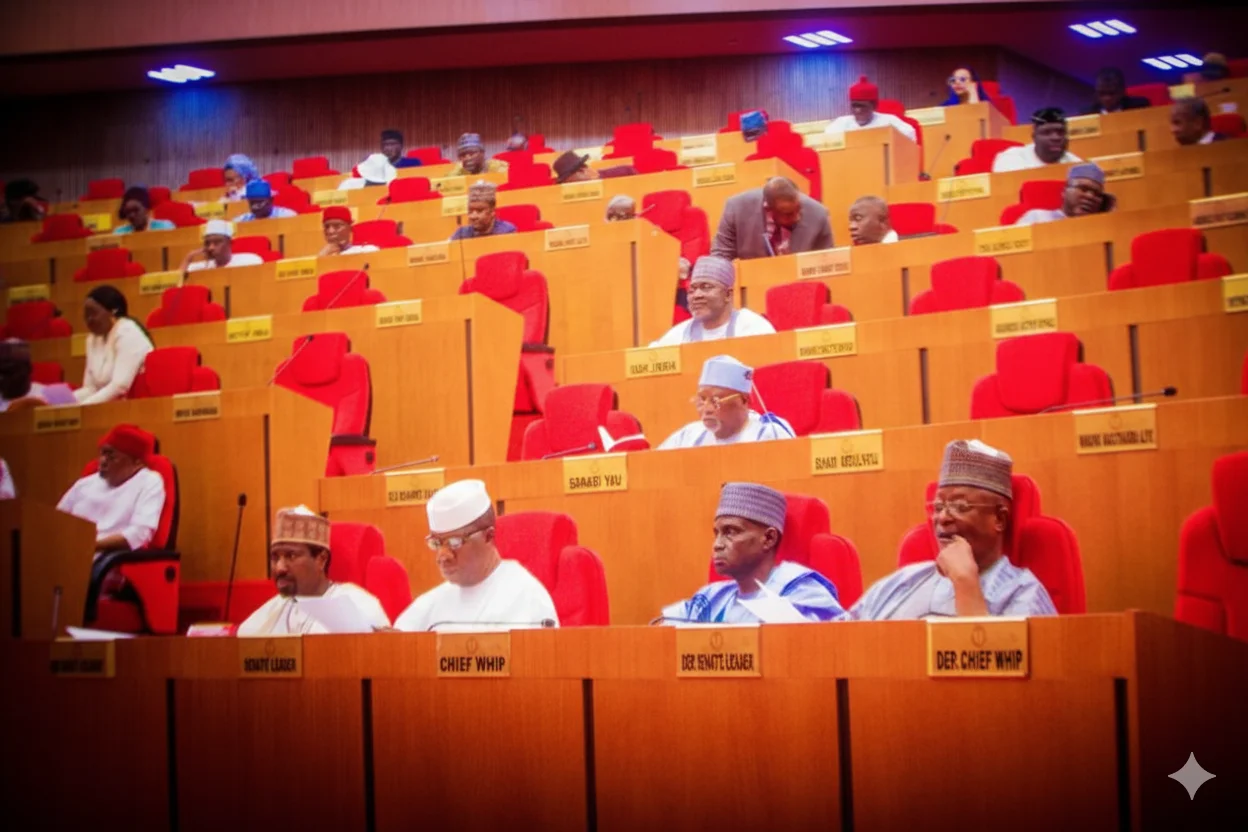
Senate Leader accuses critics of politicising legislation; cites bipartisan support and 77 percent approval among lawmakers as evidence of national consensus
The Senate has defended the passage of the Constitution of the Federal Republic of Nigeria (Alteration) (State Police) Bill, 2026, accusing opposition parties of politicising the debate and shifting focus from legitimate national security concerns to partisan manoeuvring.
Senate Leader Opeyemi Bamidele issued a statement on Sunday asserting that critics have mischaracterised the bill as politically motivated when evidence demonstrates it reflects years of nationwide consultations and broad-based consensus among stakeholders.
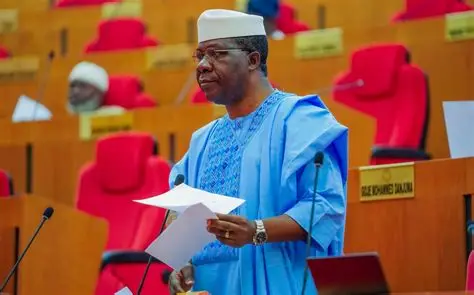
“The State Police Bill is purely a child of necessity and not of political expediency. It is also a product of national consensus and not of cynicism,” Bamidele stated.
Bamidele, representing Ekiti Central Senatorial District, argued that security should transcend partisan politics.
“Globally, security is a collective public good that benefits the citizenry across ethnic, political and religious divides. Political actors elsewhere always throw off their togas of partisanship and parochialism to support initiatives that will boost and reinforce national security,” he said.
The Senate passed the bill on Wednesday, 24 June 2026, following a show of hands by more than two-thirds of senators. The House of Representatives had previously passed the legislation on 11 June 2026 before its two-week recess.
Bipartisan support emphasised by Senate
Bamidele highlighted the bill’s bipartisan approval, noting that legislators from opposition parties voted in favour based on national interest rather than partisan considerations.
“Even though the APC is the majority, there are members of opposition parties; PDP, ADC, NDC and Labour Party; that exercised their discretion in favour of the bill, mainly in the national interest and not on a parochial basis,” he stated.
The Senate Leader disclosed specific voting figures.
“In the Senate, for instance, 84 out of 109 members voted clause by clause in support of the bill. This accounted for 77.06 per cent approval at the Senate alone,” he said.
Police memorandum cited as evidence
Bamidele defended the bill’s safeguards against potential abuse by citing input from the Nigeria Police Force.
“The Police submitted a comprehensive memorandum in support of the proposal. The memorandum contained vital recommendations that helped the National Assembly develop accountability and oversight mechanisms to prevent some political actors from abusing state police,” he stated.
He emphasised that police support underscores the bill’s strategic importance. “The resolve of the Police to support the bill obviously highlights its strategic national significance to deal with insecurity at local and state levels,” Bamidele said.
Critics voice concerns over timing and implementation
Despite the bipartisan support, opposition figures have expressed reservations. Garba Maidoki, a senator representing Kebbi South and member of the ADC, argued that lawmakers were not granted sufficient time for review before the bill’s passage.
Peter Obi, presidential candidate of the Nigeria Democratic Congress, called for postponement of state police implementation until after the 2027 general election, warning the system could be vulnerable to political manipulation.
Hakeem Baba-Ahmed, national chairman of the Peoples Redemption Party, stated that the Tinubu administration lacks credibility to implement state police, describing the timing as inappropriate.
Paul Ibe, media adviser to ADC presidential candidate Atiku Abubakar, alleged that the initiative was driven by political considerations ahead of 2027 elections.
Legislative process defended
Bamidele rejected claims that the bill was hurriedly passed, emphasising the extensive consultation process. “The State Police Bill was subjected to intense debates at the Senate and House of Representatives,” he said.
The bill has been transmitted to the 36 State Houses of Assembly, where it requires approval by at least 24 state legislatures before proceeding to President Tinubu for presidential assent.