

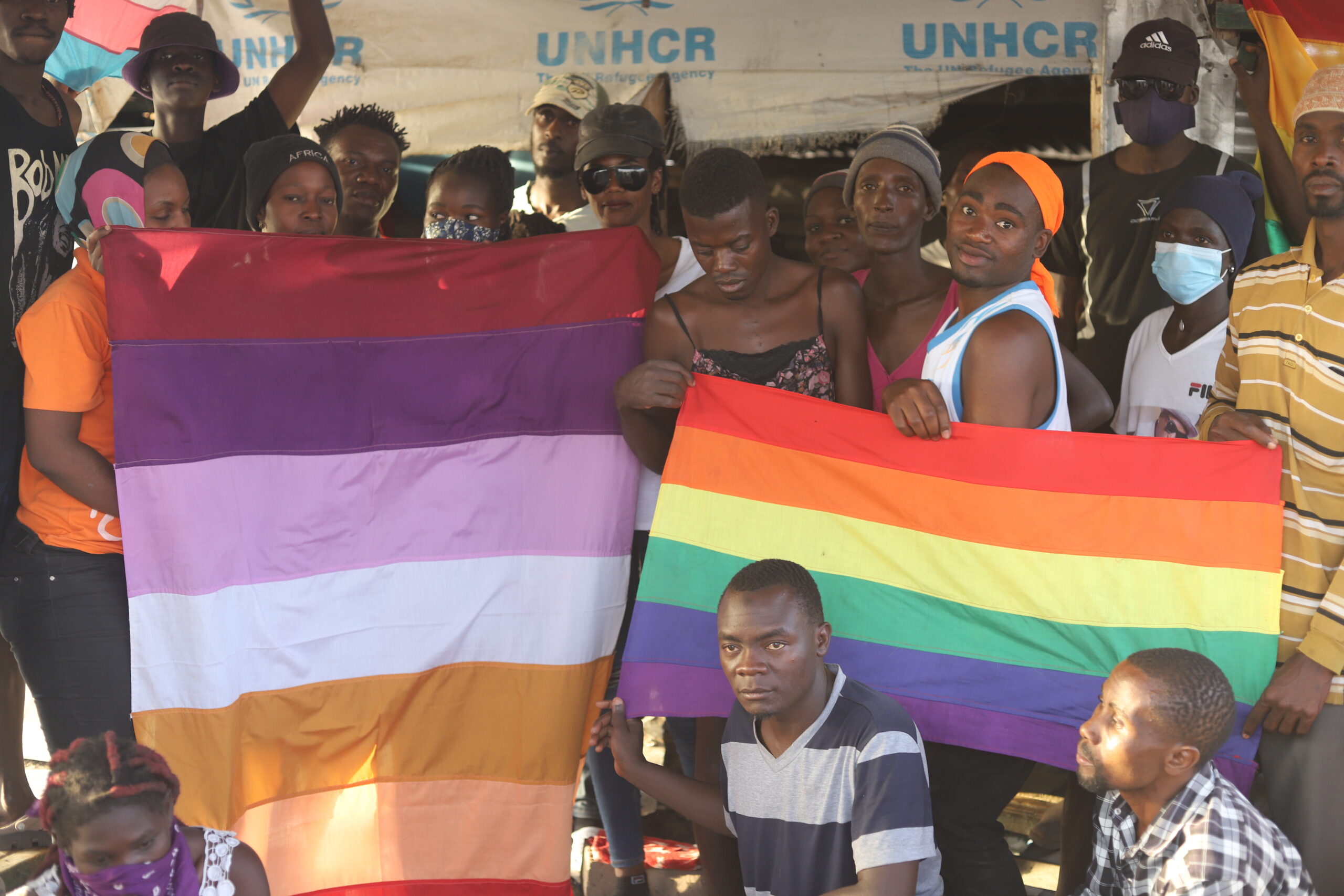
Kito attacks are a form of targeted entrapment used against LGBTQ+ people, most commonly documented in West Africa, particularly Nigeria. The term “kito” originates from Nigerian street slang and refers to any deliberate act of harm carried out against a queer person because of their sexual orientation or gender identity, often initiated through online deception.
Though the word is Nigerian in origin, the broader phenomenon of luring LGBTQ+ individuals into dangerous situations under the guise of romantic interest is not unique to any one country. Wherever queer people face legal criminalisation and social stigma, predatory actors have found ways to exploit their need for secrecy.
How kito attacks happen
The typical kito attack follows a recognisable pattern. A perpetrator creates a fake profile on a dating app or social media platform and poses as a potential romantic partner. They spend days or even weeks building the victim’s trust before arranging an in-person meeting.
When the target arrives, they are ambushed. Attackers physically assault them, film the encounter, steal their belongings, and extort money under threat of exposing their sexuality to family members, employers, or the authorities. In more severe cases, victims are held captive, sexually assaulted, or subjected to ongoing blackmail for months.
The attacks are designed to be self-concealing: because victims belong to a criminalised or stigmatised group, they are far less likely to seek help, report what happened, or pursue any form of justice. Silence is built into the crime.
The legal and social environment that enables them
What makes kito attacks particularly devastating is the legal and social environment that enables them. In countries where homosexuality is criminalised, victims face an impossible choice when deciding whether to report an attack. Going to the police means risking arrest for their own identity.
In environments where law enforcement is itself hostile to LGBTQ+ people, the very institutions meant to offer protection become an additional source of danger. This dynamic strips victims of recourse and gives perpetrators near-total impunity. Many attackers are repeat offenders who operate for years without consequence because their victims have nowhere to turn.
The psychological toll compounds the physical harm. Survivors often carry trauma in isolation, unable to confide in friends or family without revealing their sexuality. The fear of exposure, the erosion of trust, and the constant threat of follow-up extortion leave many victims in a prolonged state of anxiety. Mental health support is rarely accessible, and for those in conservative communities, even acknowledging what happened can be life-altering in ways that go far beyond the attack itself.
The scale of the crisis in Nigeria
In Nigeria, this crisis has taken on a particular scale and urgency. Nigeria’s legal framework criminalises same-sex relations with penalties of up to 14 years in prison under national law, and death in twelve northern states governed by Sharia. This environment has made the country one of the most documented sites of kito violence in the world.
The Initiative for Equal Rights, a Lagos-based NGO, documented 84 known kito cases in 2024 alone and described them as the most consistent human rights violation carried out against queer Nigerians by non-state actors. In 2023, the same organisation helped 65 physically abused survivors and recorded over 550 cases of blackmail and extortion, and those figures represent only reported incidents in Lagos.
The Initiative for Minority Excellence and Development Nigeria saw a 600% increase in the number of kito reports it received between August 2025 and February 2026. Its executive director, Olawale Shittu, described the trend as “very alarming and worrisome to many of us in the community,” noting that what used to be roughly two cases per month had surged to three or four cases per week.
The murder of Hilary Ikechukwu Emereole
One of the most high-profile cases came in 2025 with the murder of Hilary Ikechukwu Emereole, a 23-year-old graduate of the University of Port Harcourt, whose death drew rare national attention to the kito crisis.
In August 2025, Emereole boarded a bus in Owerri and travelled roughly 100 kilometres south to Port Harcourt, where he believed he was meeting a trusted friend at a hotel. The two men went up to a room together, after which the supposed friend left, saying he was getting drinks. He returned with several other people.
They turned up the television volume and began assaulting Emereole, eventually knocking him unconscious and stealing his personal belongings. His attacker then contacted Emereole’s family to demand a ransom, threatening to kill him within ten minutes if money was not received.
According to Chizelu Emejulu, executive director of the NGO Minority Watch, Emereole regained consciousness around 2am to find the door locked and the gang members asleep on the bed, leaving the window as his only unguarded exit. He was beaten and thrown from the building, sustaining severe spinal cord injuries from which he later died.
The death was confirmed publicly on 24 October 2025 by Reverend Jide Macaulay, founder of House of Rainbow and a prominent LGBTQ+ rights advocate, who described the assault as “a brutal act of hate.” Macaulay wrote: “Hilary fought for his life, but yesterday, he succumbed to the injuries to his spinal cord and the violent cruelty inflicted upon him.”
Macaulay also noted that Hilary’s murder was the second reported kito-related death in Nigeria within just two weeks. “Two beautiful souls gone because of hate, fear, and the failure of our society to protect its own,” he wrote.
His funeral, held in early 2026 at his family’s home in Owerri, Imo State, was met with hostility rather than mourning: a crowd gathered outside the house, dancing and shouting homophobic slurs, underscoring the depth of societal prejudice that had surrounded him even in death.
Amnesty International Nigeria called on the authorities to launch a transparent investigation into the killing, describing Hilary as “yet another victim of rampant kito.” To date, no arrests or prosecutions have been publicly reported in connection with his murder.

Community response: Taking justice online
Hilary’s death sparked outrage and grief across Nigerian social media, with many queer individuals sharing their own kito experiences and warning others about dangerous individuals and fake profiles. One user on X urged: “Let’s post pictures of all the kitos we know. Most of them are community members, and people in the community actually know them. Pictures, locations, social media handles etc… They won’t have time to hurt us if they are busy trying not to be harmed first.”
This grassroots response reflects a broader pattern. One survivor, James, who was ambushed and beaten during a fake date in 2020, explained why he eventually turned to social media rather than law enforcement: “This is Nigeria; calling them on here [X] is 100% more effective than going to the police. I am sure over 100 people saw that post and are going to stay away from him. It helps others take precautions.” Many survivors share this reasoning. As one advocate put it, some victims “would rather die than talk to the police about their kito cases”, a silence shaped not just by homophobia but by fear of institutions that are themselves a source of danger.
A crisis with no easy end in sight
The kito crisis in Nigeria is not simply a law enforcement failure. It is the product of a legal and political architecture that criminalises the very people it ought to protect, leaving them uniquely exposed to violence and uniquely unable to seek redress. As long as homosexuality remains a criminal offence, queer Nigerians will face a fundamental impossibility: they cannot report attacks without risking prosecution for their own identity, and perpetrators will continue to operate with near-total impunity, knowing this.
The numbers are stark, and they are almost certainly undercounts. Nigerian organisations working with kito survivors note that a clear sense of scale is extremely difficult to obtain, as legal experts suggest the true number of cases could be even higher than reported. Rights groups recorded at least 50 new cases between December 2025 and February 2026 alone,suggesting the violence has intensified, not abated, in the period following Hilary’s death.
What makes the situation all the more troubling is that the institutions which should offer protection are often implicated in harm. Reports document a rise in raids, illegal stops and searches, arbitrary arrests, and extortion by police and the Hisbah, Nigeria’s Islamic enforcement force, over recent years. For many queer Nigerians, the state is not a potential ally but an additional threat.