


When those in power cannot see hunger, celebrate ignorance, and reward minimal effort, what exactly are they building?
Last week, Nigeria held up three mirrors to itself. In each reflection, something disturbing became clear: those steering the nation’s ship are looking in the wrong direction, seeing what they want to see rather than what actually exists.
Three separate voices, three different moments, but one consistent message that exposed a chasm between those in power and the lived experiences of ordinary Nigerians.
Presidential Spokesman Bayo Onanuga insisted he sees no hunger. First Lady Remi Tinubu suggested Nigerians could simply start akara businesses with minimal capital. Rapper YCee lamented an “Olodo uprising” where ignorance is celebrated over intellectual achievement. Together, these three moments revealed no malice but something far more dangerous: a profound disconnection from reality, dressed up in the language of hope, entrepreneurship and progress.
Mirror One: The blindness of Bayo Onanuga
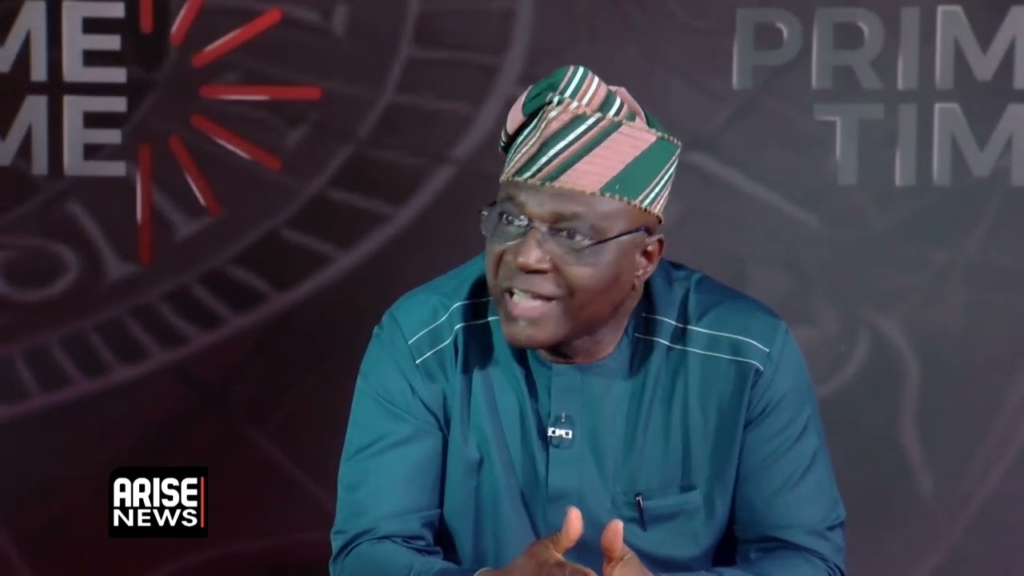
The presidential spokesman spoke with the confidence of someone describing a meal he did not have to eat. Speaking on Arise Television, he said: “I don’t see the level of hunger people are talking about.” He cited his interactions with people in his office and pointed to infrastructure projects as proof that citizens are benefiting.
This is not cruelty. This is something more insidious: it is blindness dressed up as wisdom. Onanuga is like a doctor examining a patient’s symptoms from a position of comfort and confidently assuring them they are not ill based on what he observes from his clinic in Abuja. Yes, road projects exist. Yes, some government initiatives provide support. But what he cannot see or perhaps chooses not to see is the crushing reality facing millions of Nigerians navigating an economy that has fundamentally changed.
In the year before last, a tin of tomato paste cost far less. Firewood for cooking was cheaper. The naira held its value. Children did not need to attend private schools costing 500,000 naira per term because the public system still functioned. A young person could start a business with small capital and compound it gradually. That pathway still exists, but it is now so narrow and difficult that it is almost impassable for most.
When Onanuga says he doesn’t see the hunger, he is admitting he has stopped looking.
Mirror Two: The First Lady’s recipe for survival
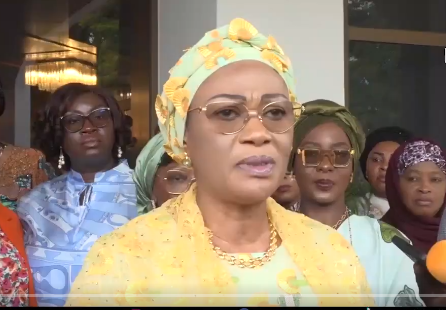
Then the First Lady offered her contribution. Speaking to State House correspondents after a Renewed Hope Initiative meeting, Remi Tinubu suggested that starting an akara business doesn’t take much money. The government would provide grants. Roasting corn or making kuli-kuli, she noted, were also viable options. This is not wrong, exactly. It is incomplete to the point of being misleading. Like giving someone a recipe for bread but no flour, no water, no oven. You have given them only half of what they need.
The First Lady’s remarks reveal a fundamental misunderstanding, or perhaps a willful refusal to understand, what Nigerians are asking for. They are not asking for permission to be poor entrepreneurs. They are asking why professors earn less than 700,000 naira monthly. They are asking why a young person with a university degree cannot find employment. They are asking why the cost of living has become a form of violence. They are asking why the government removed fuel subsidies, unified the exchange rate, and then stands shocked that everything is now unaffordable.
When you tell a drowning man to simply learn to swim, you are not offering a solution. You are announcing that you have no interest in throwing him a rope.
Mirror Three: YCee names what leadership refuses to see

Then came the rapper. During an appearance on the Afropolitan Podcast, YCee spoke about an “Olodo uprising.” He lamented that Nigerian society has stopped celebrating intellectual achievement and started rewarding sensational ignorance instead. He specifically pointed to “Peller culture,” referring to content creators who gain massive followings through viral, often sensational content rather than substantive work.
YCee’s diagnosis was uncomfortable but accurate. Nigerian society has developed a reward system that values noise over substance, clicks over content, entertainment over education. The backlash was swift and predictable. Content creators defended themselves. Some argued YCee was punching down. Others said he was misunderstanding how a broken system works.
But here is what gets lost in that debate: both sides are describing the same problem from different angles. It is like two people standing on opposite sides of a wall, one insisting the wall is white, the other insisting it is black. They are both right. The wall simply has two sides. The problem is not that content creators exist. The problem is that we have built an economic and social system where creating viral content pays more than teaching mathematics, where making people laugh pays more than making them think, where entertainment is rewarded more generously than expertise.
This is not an accident. It is a calculated outcome of a system that thrives on distraction. And so when YCee holds up this mirror, the response is to blame the messenger rather than examine the message.
The defender steps forward
In the days following these three explosive moments, Sunday Dare, the Special Adviser on Information and Strategy, stepped forward to defend the First Lady. He shared his personal narrative, describing how his mother trained him by selling akara, bananas and oranges in Jos, Plateau State. He carried bananas in a tray on his head to markets. It is a powerful story and a testament to the resilience of Nigerian mothers.
“Wherever I am today, my mother sold akara,” Dare said. “Wherever I am today, my mother sold bananas. Through that, they were able to train me. What is wrong with that? If that was right 60 years ago, what is wrong with that now?”
But here again is the disconnect. Dare is describing a truth from 40 or 50 years ago and presenting it as current reality. He is like a traveller describing roads that existed decades ago as proof that modern highways do not need construction. Yes, his mother’s akara business fed her children. Yes, informal traders have historically lifted families out of poverty. But what Dare cannot see or perhaps refuses to acknowledge is that the akara business of 2026 operates in a vastly different context.
The economics have changed fundamentally. The purchasing power has collapsed. The opportunity cost has exploded. When Dare says his mother trained him through selling small items, he is celebrating an individual victory without acknowledging the systemic collapse that has made individual victories increasingly rare.
The thread that connects them all
What binds these four moments together is not stupidity. The people involved are not unintelligent. What binds them is a refusal, or perhaps an inability, to see the nation as it actually is. They see Nigeria through the lens of what they believe should work rather than what is actually working. They see small businesses and forget about inflation. They see government initiatives and forget about the collapse of purchasing power. They see hope and forget about desperate reality.
This is like building a house on sand while insisting it is concrete. You can build beautifully, paint the walls, furnish the rooms and invite guests. But the foundation is compromised. Everything you build will eventually sink.
What these moments revealed
The “Olodo uprising” revealed that Nigerian society has developed a reward system that values noise over substance. YCee was right to name it. What he could not say, what perhaps no one in his position can safely say, is that this system serves those in power. An informed, educated, intellectually engaged citizenry asks hard questions. A distracted, entertained, uninformed citizenry consumes what they are given and asks for nothing more.
Onanuga’s blindness revealed that the government has stopped consulting with the people it governs. It has stopped listening to ordinary Nigerians describe their struggles and has instead begun describing their struggles back to them in a language they do not recognise. “I don’t see hunger” is not a statement about hunger. It is a statement about a man who has stopped looking.
The First Lady’s remarks revealed something sadder: a nation where those in authority have begun to believe their own mythology. The mythology that says hard work and entrepreneurship can overcome systemic collapse. That individual effort can defeat structural failure. That if people are struggling, it is because they lack ideas rather than because the system has failed them.
Dare’s defence, though well intentioned, revealed that even those seeking to support government policy cannot help but prove the point their critics are making: that this administration has mistaken personal success stories for policy solutions, and confused individual resilience with systemic adequacy.
The danger ahead
This matters because governance is not a performance for those already living well. It is a contract with those who are struggling. When leaders cannot see the hunger, when they celebrate ignorance, when they recommend solutions that have no relationship to actual problems, they are not being kind. They are being negligent.
The “Olodo uprising” will not go away because YCee spoke about it. It will persist and deepen because the system that created it remains intact and is, in fact, being reinforced. The First Lady’s grants for akara businesses will not solve the unemployment crisis of millions of university graduates. Dare’s historical justifications will not feed anyone. And Onanuga’s insistence that he sees no hunger will not change what millions are experiencing daily.
What Nigeria needed last week and desperately needs now is for those in power to look honestly at what exists rather than what they wish existed. Not through the distorted lens of their own success, but through the actual lens of a citizen earning minimum wage, a graduate without employment, a farmer facing agricultural collapse, a teacher earning a pittance, a health worker who cannot afford the medication they dispense.
This week, three different voices held up mirrors. All three showed the same reflection: a nation where leadership has lost the ability to see the nation it leads.