

Nigeria’s independence from British colonial rule was the result of decades of political organising, protests, constitutional negotiations, journalism and popular mobilisation. Although famous names such as Nnamdi Azikiwe, Obafemi Awolowo, Ahmadu Bello, Tafawa Balewa, and Herbert Macaulay dominate many accounts of the independence struggle, several other Nigerian independence activists played important roles in building the political movements that eventually led to self-government in 1960.
Among them were Aminu Kano, Sa’adu Zungur, Gambo Sawaba, K. O. Mbadiwe and Bode Thomas. Their approaches were different: some challenged colonial rule directly, while others fought for political representation, social reform, education, women’s rights and greater participation in government.
Together, their stories show that Nigeria’s road to independence was shaped by competing political ideas and activists from different parts of the country.
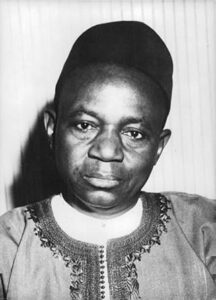
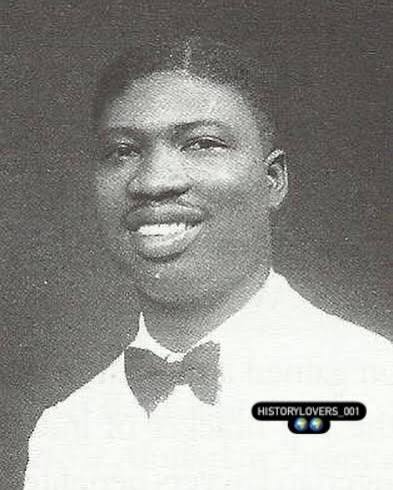
Chief Olabode Thomas, commonly known as Bode Thomas, was a lawyer, politician and one of the founding figures of the Action Group, one of the major political organisations involved in Nigeria’s transition to independence.
Born in 1918, Thomas attended CMS Grammar School in Lagos before working briefly as a railway clerk. He later travelled to Britain to study law and was called to the bar in 1942. After returning to Nigeria, he established a successful legal practice and became involved in nationalist politics. Cambridge’s historical account identifies him as a leader of the Nigerian Youth Movement, a leader of Egbe Omo Oduduwa and one of the founders of the Action Group.
Thomas initially participated in the Nigerian Youth Movement and later became legal adviser to Egbe Omo Oduduwa, a Yoruba cultural and political organisation. He was among the figures who helped transform the organisation’s political influence into the Action Group, which emerged as a major political force in Western Nigeria.
His contribution to the independence struggle was closely connected to political organisation in the Western Region. The Action Group developed a powerful regional political structure and became an important participant in constitutional debates about Nigeria’s future.
Thomas was also part of the growing group of Nigerian politicians who believed that regional political organisations could play an important role in preparing Nigerians for self-government. His political career demonstrates the importance of regional organisation in the final stages of colonial rule.
One of the most significant moments came in 1953, when Anthony Enahoro of the Action Group moved a motion in the House of Representatives calling for Nigerian independence by 1956. The motion produced intense political disagreement, particularly between Southern and Northern politicians. Historical records preserved by the National Library of Nigeria show that the Action Group’s federal ministers, including Bode Thomas, resigned in protest following the controversy surrounding the independence motion.
Thomas therefore participated directly in one of the major constitutional confrontations over the timetable for Nigerian independence.
His political role also extended beyond party politics. He served as a federal minister and was deputy leader of the Action Group. The Nigeria Year Book for 1954 recorded his death that year and identified him as Central Minister of Works and Deputy Leader of the Action Group.
Thomas died only six years before Nigeria became independent. As a result, he did not participate in the final celebrations of October 1960. However, his earlier political work helped build the party structures and nationalist pressure that shaped the final decade of British colonial rule.
His legacy also highlights the complexity of Nigeria’s independence movement. Nationalists could share the objective of self-government while disagreeing about the best political structure for achieving it. The Action Group’s regional approach was different from the national strategy pursued by organisations such as the NCNC, but both became important parts of Nigeria’s constitutional development.
Bode Thomas’s contribution to Nigerian independence was therefore rooted in political organisation, constitutional activism and the development of the Action Group, as well as his participation in the crucial debates over when Nigeria should achieve self-government.
By the time constitutional conferences were held in London in 1957 and 1958, Nigerian politicians from different parties and regions were participating directly in negotiations over the structure of an independent Nigeria. The National Library of Nigeria describes these conferences as important stages in preparing the federal constitution for an independent Nigeria.
Nigeria finally achieved independence on 1 October 1960.
The independence story was therefore not the achievement of one party, one region or one political ideology. It was the product of years of organising, political education, constitutional negotiations, popular mobilisation and pressure for self-government.
For that reason, remembering figures such as Aminu Kano, Sa’adu Zungur, Gambo Sawaba, K. O. Mbadiwe and Bode Thomas provides a broader understanding of how Nigerians challenged colonial rule and built the political movements that eventually made independence possible.