

The recently signed Nigeria-US framework is not a $700 billion investment cheque. It is an agreement to attract investment, develop critical minerals and build more of the value chain inside Nigeria.
The headline sounded enormous: Nigeria and the United States had signed a deal involving the country’s mineral resources estimated at $700 billion.
But there is an important distinction behind the figure.
The United States has not committed $700 billion to Nigeria’s mining sector, and Nigeria has not sold or handed over $700 billion worth of minerals to Washington.
What Nigeria and the US signed in New York is a framework designed to encourage American investment and cooperation in Nigeria’s solid minerals sector.
The $700 billion figure refers to the estimated value of Nigeria’s mineral resources, according to the Federal Government. The agreement itself is intended to help turn some of that geological potential into actual exploration, mining, processing, infrastructure and investment.
Here is what the agreement actually means.
Table of Contents
What exactly did Nigeria and the US sign?
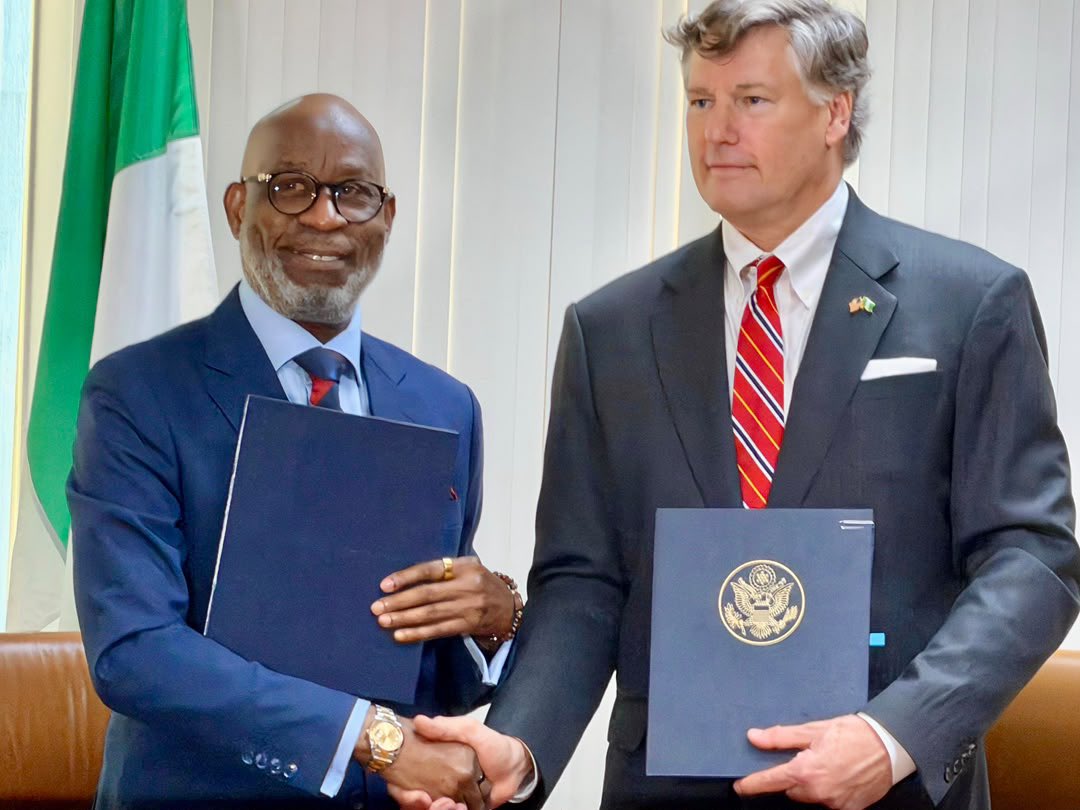
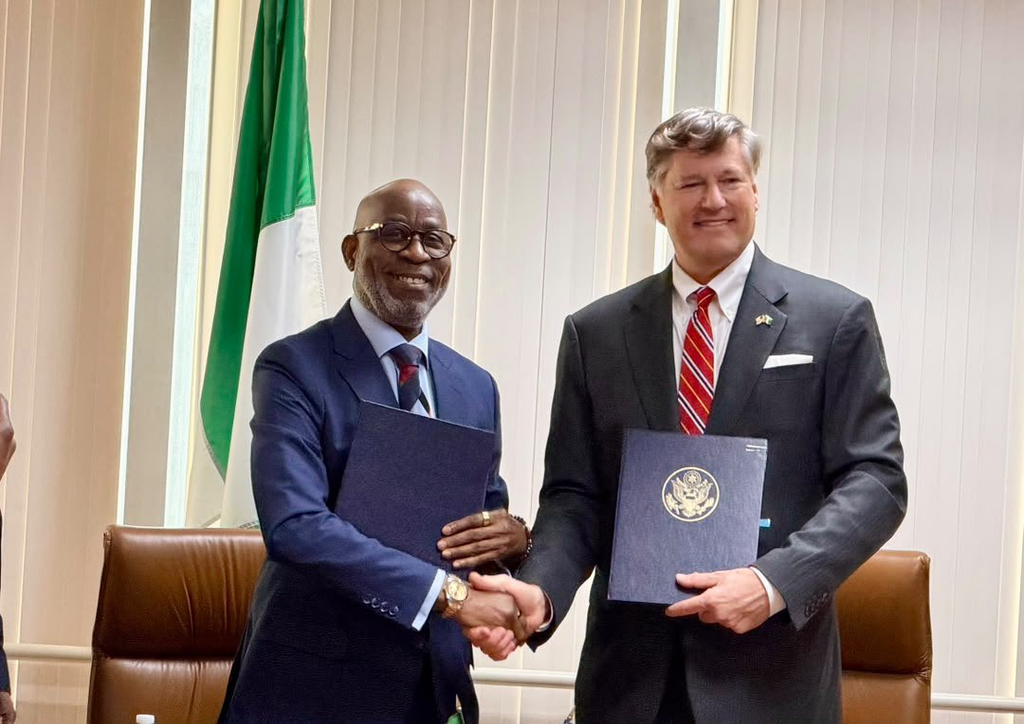
Nigeria’s Minister of Solid Minerals Development, Dele Alake, and US Deputy Secretary of State Christopher Landau signed and exchanged the framework at Nigeria’s Mission House in New York on September 23, 2026, on the sidelines of the 81st United Nations General Assembly.
The framework covers five broad areas:
- geological data and exploration;
- mineral development and processing;
- infrastructure;
- technical capacity building; and
- investment and commercial partnerships across the mineral value chain.
The idea is for government-to-government cooperation to create the conditions for business-to-business transactions.
That means the framework is not, by itself, a list of mining projects with final investment decisions attached to them.
Instead, Nigeria and American partners are expected to identify commercially viable projects, mobilise investment and develop partnerships around them.
Alake himself acknowledged that the signing was only the beginning, saying: “Now comes the harder and more important work: moving from agreement to implementation.”
So, what is the $700bn figure?
This is probably the most misunderstood part of the announcement.
The $700 billion is not the amount America is investing in Nigeria.
It is the Nigerian government’s estimate of the value of the country’s mineral resource base. The figure has been used by the Federal Government before the latest agreement. In 2023, Alake described Nigeria’s solid mineral sector as being valued at more than $700 billion.
Nigeria has deposits of minerals including lithium, gold, tin, iron ore, phosphate, lead-zinc, limestone, barite, coal and gemstones. The Ministry of Solid Minerals Development says there are at least 44 mineral deposits in commercial quantities spread across more than 500 locations in the country.
But a geological estimate should not be confused with money sitting in a bank account.
A mineral resource has to be explored, quantified, developed, mined, processed and sold before it generates revenue. The Nigerian Geological Survey Agency notes that properly estimating an ore resource can require drilling, sampling and technical evaluation to establish its grade and tonnage.
So, $700 billion is better understood as an estimate of potential mineral wealth, not guaranteed government revenue or an existing investment fund.
Is America giving Nigeria $700bn?
No.
The agreement announced so far does not disclose a $700 billion US investment commitment.
In fact, the Minister of Industry, Trade and Investment, Jumoke Oduwole, said on September 29 that the critical-minerals framework is an MOU and “not legally binding”, describing it as a framework for the countries to negotiate and develop specific arrangements.
This distinction matters.
An MOU or framework can establish areas of cooperation and the intention to work together, while individual projects may subsequently require separate agreements, financing arrangements, licences, environmental approvals and commercial negotiations.
Therefore, readers should be cautious when headlines describe the development as a $700 billion investment deal.
The more accurate description is a Nigeria-US framework to attract investment into a mineral resource base that Nigeria estimates at about $700 billion.
What does Nigeria want from the agreement?
Nigeria’s objective goes beyond simply digging minerals out of the ground and exporting them.
The government wants more of the economic value created from those minerals to remain in Nigeria.
For example, rather than exporting lithium-bearing ore and allowing processing and manufacturing to take place elsewhere, the ambition is to develop a chain that can move from exploration and mining to processing and eventually manufacturing.
Alake said Nigeria does not want to remain “a source of raw materials while others capture most of the value”, adding that the government wants local processing, jobs, skills development and greater opportunities for Nigerian businesses.
That is what officials mean when they talk about value addition.
The difference can be substantial.
A country that exports an unprocessed mineral earns money from the extraction stage. A country that also processes the mineral, manufactures components and develops industries around it can potentially capture value at several stages of the supply chain.
That is the industrialisation argument behind the agreement.
Which minerals are important?
Nigeria’s mineral endowment is broad, but the current global interest is particularly strong around critical minerals. These are minerals considered important to modern economies, technology, energy systems and, increasingly, national security.
Lithium is one obvious example.
Lithium is used in rechargeable batteries, including batteries used in electric vehicles and energy-storage systems. Nigeria has attracted increasing interest in lithium exploration, although the country still has significant work to do in establishing reserves, processing capacity and a mature industrial value chain.
Other Nigerian mineral resources include gold, tin, tantalum, iron ore, lead-zinc, phosphate and rare-earth-related deposits. The Federal Government has also said Nigeria has 26 of the 60 critical minerals the US is seeking to secure globally, according to Oduwole.
That helps explain why the agreement is strategically important to Washington as well as Abuja.
Why does the US want Nigeria’s minerals?
The agreement comes against the backdrop of a global race to secure critical-mineral supply chains. For the United States, the issue is not simply about electric vehicles or renewable energy. Critical minerals are used in batteries, electronics, communications equipment, energy infrastructure and defence-related technologies.
Washington has been actively trying to reduce vulnerabilities created by dependence on foreign sources and diversify its supply chains.
In January 2026, the Trump administration directed US officials to negotiate agreements with trading partners over processed critical minerals and their derivative products, citing concerns about America’s reliance on foreign supply chains. In July, the White House also described critical minerals as important to US national defence and directed measures to strengthen domestic and allied supply chains.
Nigeria therefore enters the relationship at a time when Washington has a strategic interest in finding reliable sources and partners for critical minerals.
What could Nigeria gain?
If implemented effectively, the framework could help Nigeria attract capital and technical expertise into a sector that remains significantly underdeveloped.
Potential benefits include:
More exploration: Better geological information can reduce the risk faced by investors and help establish the size and quality of mineral deposits.
Mining investment: Foreign and Nigerian companies could develop commercially viable mines.
Local processing: Investment could move Nigeria beyond exporting raw ores.
Infrastructure: Mining projects require roads, rail, electricity, water and other infrastructure, some of which can also benefit surrounding communities and industries.
Jobs and skills: Processing and manufacturing generally require more technical capacity than simply extracting and exporting raw materials.
Government revenue: Formal mining can generate royalties, taxes, fees and other government revenues.
Economic diversification: A stronger mining industry could provide another source of exports and economic activity outside oil.
These objectives are consistent with Nigeria’s longstanding mining policy. The government’s mining roadmap identifies infrastructure, financing, security, skilled labour, regulatory certainty and investor confidence among the challenges that have historically constrained the sector.
Does the agreement mean America now owns Nigerian minerals?
No.
Nigeria’s Minerals and Mining Act 2007 provides that mineral resources in, under or upon land in Nigeria are vested in the Government of the Federation on behalf of the people of Nigeria. Mineral rights are administered through Nigeria’s legal and regulatory framework.
A foreign company therefore does not simply acquire ownership of all Nigerian minerals because Nigeria has signed a framework with its government.
Individual mining operations still require the appropriate Nigerian mineral titles and must operate within the country’s laws and regulations.
The agreement is about creating a framework for cooperation and investment. It does not itself grant an American company blanket ownership of Nigeria’s mineral resources.
What has actually been agreed on projects?
This is where the announcement remains limited.
No comprehensive list of specific US-funded mines, processing plants, railways or factories has been announced as part of the framework itself. The Nigerian government says the next stage will involve identifying viable projects, mobilising investment and building commercial partnerships.
That means the more important announcements may come later.
The real test will be whether the framework produces actual exploration programmes, final investment decisions, operating mines, processing facilities, infrastructure and jobs.
A signing ceremony is therefore not the same thing as a completed investment.
What are the risks?
There are several.
The first is raw-material dependency. Nigeria has historically struggled to capture enough value from its natural resources. If new investment simply results in minerals being extracted and exported in raw form, the country could remain at the least valuable end of the supply chain.
The second is environmental damage. Mining can affect land, water and communities if environmental safeguards are weak. Nigeria’s own mining roadmap identifies environmental compliance and responsible development as important parts of sector reform.
The third is community conflict. Mining projects operate on land occupied or used by communities. Compensation, environmental impacts, employment and benefit-sharing can become flashpoints if local interests are not properly addressed.
The fourth is security and illegal mining. A larger mining industry without effective regulation and security could increase illegal extraction, smuggling and conflict around valuable deposits.
The fifth is weak local value addition. If Nigeria attracts billions of dollars into extraction but fails to develop processing and manufacturing capacity, much of the economic value could still be created elsewhere.
There is also a basic transparency question: Nigerians need to know the terms of individual projects as they emerge, including ownership structures, financing, licences, royalties, taxes, environmental obligations and expected public benefits.
What about Nigerian businesses?
The government says it wants Nigerian companies to participate in the value chain rather than simply watch foreign investors extract resources.
That is why the framework’s emphasis on business-to-business partnerships and value addition is significant. Potential opportunities could emerge in exploration services, mining equipment, logistics, engineering, mineral processing, laboratory services, technology, infrastructure and downstream manufacturing.
But those opportunities will depend on the commercial projects that eventually emerge from the framework.
The agreement itself does not guarantee Nigerian companies contracts.
Why is implementation the biggest issue?
Nigeria has spent years trying to develop its mining sector.
The country has a mining law, a mining cadastre system, geological agencies, investment incentives and policy roadmaps. Yet the sector remains far smaller than its apparent geological potential.
The government’s own roadmap describes the sector as underdeveloped and identifies infrastructure, financing, security, regulatory certainty and investor confidence as constraints. That is why the $700 billion headline should ultimately be judged against what happens on the ground.
How many deposits are properly explored?
How much private capital is actually mobilised?
How many mines reach commercial production?
How much mineral processing happens inside Nigeria?
How many jobs are created?
How much revenue reaches government?
How much value goes to Nigerian businesses and host communities?
Those questions will tell Nigerians more about the agreement’s significance than the size of the mineral estimate attached to it.
The bottom line
The Nigeria-US minerals agreement is best understood as a framework for turning Nigeria’s estimated mineral wealth into investment and industrial activity, not as a $700 billion cash investment.
Nigeria brings the mineral resources and a large, largely underdeveloped mining opportunity. The US brings potential investors, technology, expertise and access to a country actively seeking more secure critical-mineral supply chains.
For Nigeria, the opportunity is to move beyond the old model of extracting resources and exporting them in raw form.
For the US, the opportunity is to diversify access to minerals that are increasingly important to industrial, technological and national-security supply chains.
But the difficult part begins after the signatures.
The government must now convert the framework into transparent projects, investment, exploration, processing, infrastructure, jobs and revenue while protecting communities and the environment.
As Alake put it at the signing: “A signature is a promise, results are the proof.”
That is ultimately what Nigerians will need to watch.