



The US Coast Guard has lifted its 12-year Condition of Entry on Nigerian vessels, citing improved port security, following four assessments and a marked drop in piracy.
The United States Coast Guard (USCG) has lifted the Condition of Entry (CoE) imposed on vessels arriving in the United States from Nigeria, ending a 12-year regime of enhanced security requirements on ships calling at Nigerian ports before entering US waters.
The Minister of Marine and Blue Economy, Adegboyega Oyetola, announced the development on Tuesday, in a statement issued through the Nigerian Maritime Administration and Safety Agency (NIMASA).
The Coast Guard’s own notice confirming the decision was published in the Federal Register on Wednesday, stating that Nigeria is maintaining effective antiterrorism measures in its ports, according to Rio Times Online.
A 12-Year Restriction
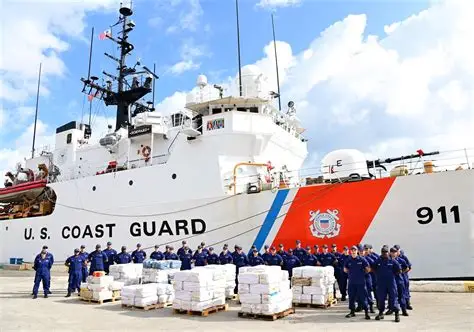
The CoE took effect on June 25, 2014, requiring vessels bound for the United States that had called at designated Nigerian ports within their previous five port calls to undergo additional security measures and enhanced scrutiny before gaining access to US waters. According to the original 2014 Federal Register notice, the Coast Guard imposed the restriction after determining that Nigeria’s legal regime, designated-authority oversight, access control and cargo-handling procedures were deficient, and that the country did not, at the time, maintain effective antiterrorism measures at its ports.
For more than a decade, the restriction meant added costs for shipping operators, including additional inspections and documentation, delays in vessel turnaround, and higher freight and insurance costs, according to Tribune Online, which cited Reuters. Industry stakeholders had long argued that the CoE undermined the competitiveness of Nigerian ports and coloured how they were perceived within the international shipping community.
What Changed
Over the past two years, the USCG conducted four comprehensive assessments of Nigeria’s national maritime security framework and port facilities in March 2024, April 2024, March 2025 and April 2026, which found significant progress in Nigeria’s implementation of the International Ship and Port Facility Security (ISPS) Code, ultimately leading to the restriction’s removal.
Oyetola attributed the outcome to sustained efforts by the Federal Ministry of Marine and Blue Economy, working through NIMASA in collaboration with government agencies, port and terminal operators, and shipping companies, aimed at strengthening Nigeria’s maritime security framework and addressing identified gaps.
“The lifting of the Conditions of Entry is a major milestone for Nigeria’s maritime sector,” Oyetola said. “It is a strong affirmation of the progress we have made in strengthening maritime security and implementing the ISPS Code across our ports and facilities.”
According to Rio Times Online, NIMASA also pointed to a sharp decline in piracy in Nigerian waters as a factor behind the reversal, tracing the shift back to the Deep Blue Project a maritime security initiative launched in June 2021 under former President Muhammadu Buhari. The outlet cited International Maritime Bureau data showing that 2021 recorded the fewest piracy incidents worldwide since 1994, with Nigeria’s own case count falling to six that year. The Gulf of Guinea had previously been a global piracy hotspot, and the decline in incidents since Deep Blue assets were deployed has been credited with lowering Nigeria’s risk profile in maritime security assessments.
Expected Benefits
Oyetola commended NIMASA Director-General Dayo Mobereola and his team for their role in the outcome, describing the lifting of the restriction as evidence of the impact of effective regulation, stakeholder collaboration and sustained investment in maritime security.
The minister said the development was expected to facilitate faster vessel turnaround, improve schedule reliability, and reduce costs tied to additional documentation, inspections and entry-related delays. He added that it should make Nigerian ports more attractive to international shipping lines and support greater trade, investment, employment and port revenues.
“We are committed to sustaining this momentum and ensuring that Nigeria remains a safe, secure and competitive destination for international shipping,” Oyetola said.
With the CoE lifted, vessels calling at Nigerian ports before proceeding to the United States will no longer be subject to the additional USCG security requirements that applied specifically under the restriction.