

Minority lawmakers say they support state police in principle but reject the voice vote used to pass the bill
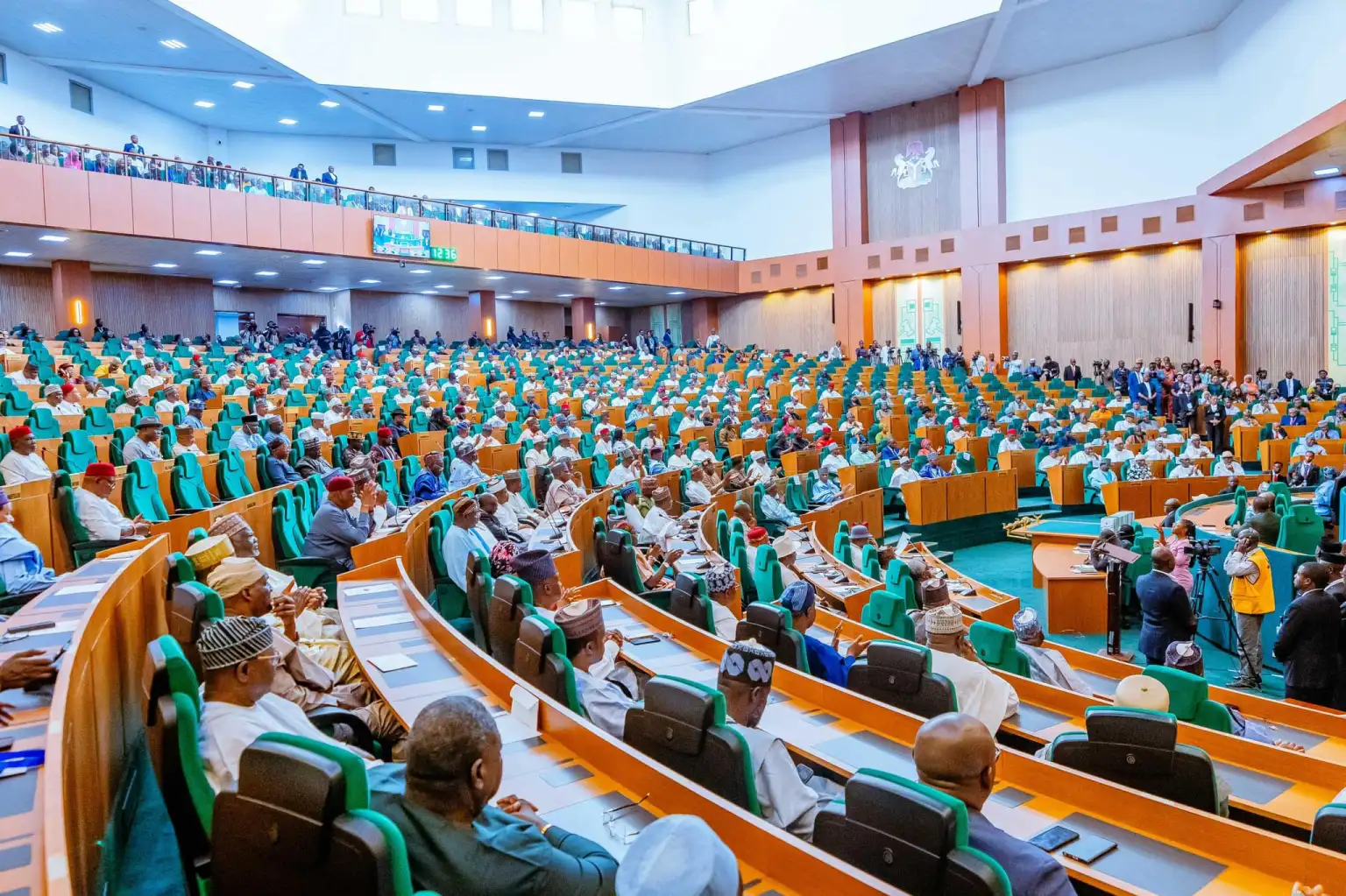
The House of Representatives has passed the Constitution Alteration (State Police) Bill, 2026, seeking to establish a constitutional framework for the creation and operation of state police services across Nigeria, prompting a walkout by the minority caucus in protest.
The bill was passed on Thursday during plenary after lawmakers considered and adopted the report of the House Committee on the Review of the 1999 Constitution, chaired by Deputy Speaker Benjamin Kalu.
The proposal forms part of the ongoing constitutional alteration process aimed at restructuring Nigeria’s security architecture and improving the country’s response to rising insecurity, including terrorism, banditry, kidnapping and other violent crimes.
Why the minority caucus walked out
Rather than subjecting each of the bill’s 26 clauses to separate consideration and voting, Speaker Abbas Tajudeen, presiding as Chairman of the Committee of the Whole, called for a voice vote, asking members in support to say “aye” and those against to say “nay,” before ruling that the “ayes” had prevailed.
The move followed a tense moment in which Benedict Etanabene, a lawmaker from Delta State, attempted to raise a constitutional point of order but was overruled after failing to cite a specific provision.
Abbas said 276 members had signed the attendance register in support of the bill, with a further 35 voting through the National Assembly’s electronic platform, bringing the total to 311, exceeding the 240-member threshold, or two-thirds of the 360-member House, required for a constitutional amendment. Of those present, 211 belonged to the ruling All Progressives Congress, while 65 represented other political parties.
Minority Leader Fred Agbedi led members of the minority caucus in a walkout, accusing the House leadership of violating constitutional and standing rule provisions requiring clause-by-clause consideration of constitutional amendment bills.
“Let it be stated that the minority caucus is not against state police. We are not against the establishment of state police,” Agbedi said. “Whatever is going to remedy the insecurity in this country, as a minority caucus, we are ready to support it.”
Minority caucus spokesman Victor Afam Ogene separately told journalists the caucus had raised the procedural objection with the leadership beforehand, and faulted the voting process for failing to comply with established parliamentary procedures.
What the state police bill provides for
Presenting a synopsis of the amendment, Kalu described the bill as a significant step towards establishing a modern, professional, accountable and effective state police system.
“This bill represents a significant and practical first step towards the establishment of state police. It lays the constitutional foundation upon which a modern, professional, accountable and effective state police system can be built,” he said.
He said the constitutional amendment would provide only the foundation for state police, while subsequent implementation legislation would address administration, recruitment, training, vetting, certification, standardisation, operational standards and intergovernmental coordination, issues he said could still be resolved during the implementation phase, noting that Tinubu had already set up a committee to examine implementation.
“We must not allow the pursuit of perfection to become the enemy of meaningful progress,” he said. He urged lawmakers to place national interest above political considerations, adding, “history will judge the parliament not only by the debates we held, but by the courageous decisions we made when our nation required bold leadership.”
The passage follows Tinubu’s decision to transmit an Executive Bill to the National Assembly after the House had earlier passed a separate state police constitutional amendment bill on 11 June, with 289 members present and only one member voting against it.
Following the president’s intervention, the House withdrew that earlier bill in favour of the revised Executive proposal, which subsequently passed first and second readings before proceeding to the Committee on Constitution Review.
The Senate had earlier passed its own version of the Executive Bill, with 87 senators present, exceeding the two-thirds threshold, after consideration by its Committee on Constitution Review, chaired by Deputy Senate President Barau Jibrin.
The bill must now be harmonised with the Senate’s version and approved by at least two-thirds of the 36 state Houses of Assembly, followed by presidential assent, before it becomes part of the Constitution.
The House has since adjourned plenary until 15 September for its annual recess.