The NDC candidate says the projects will expand access to healthcare and education, but gives no cost breakdown or implementation timeline.
Peter Obi, presidential candidate of the Nigeria Democratic Congress (NDC), has pledged to establish 10,000 primary healthcare centres and construct 40,000 primary school blocks across Nigeria if elected president in 2027.
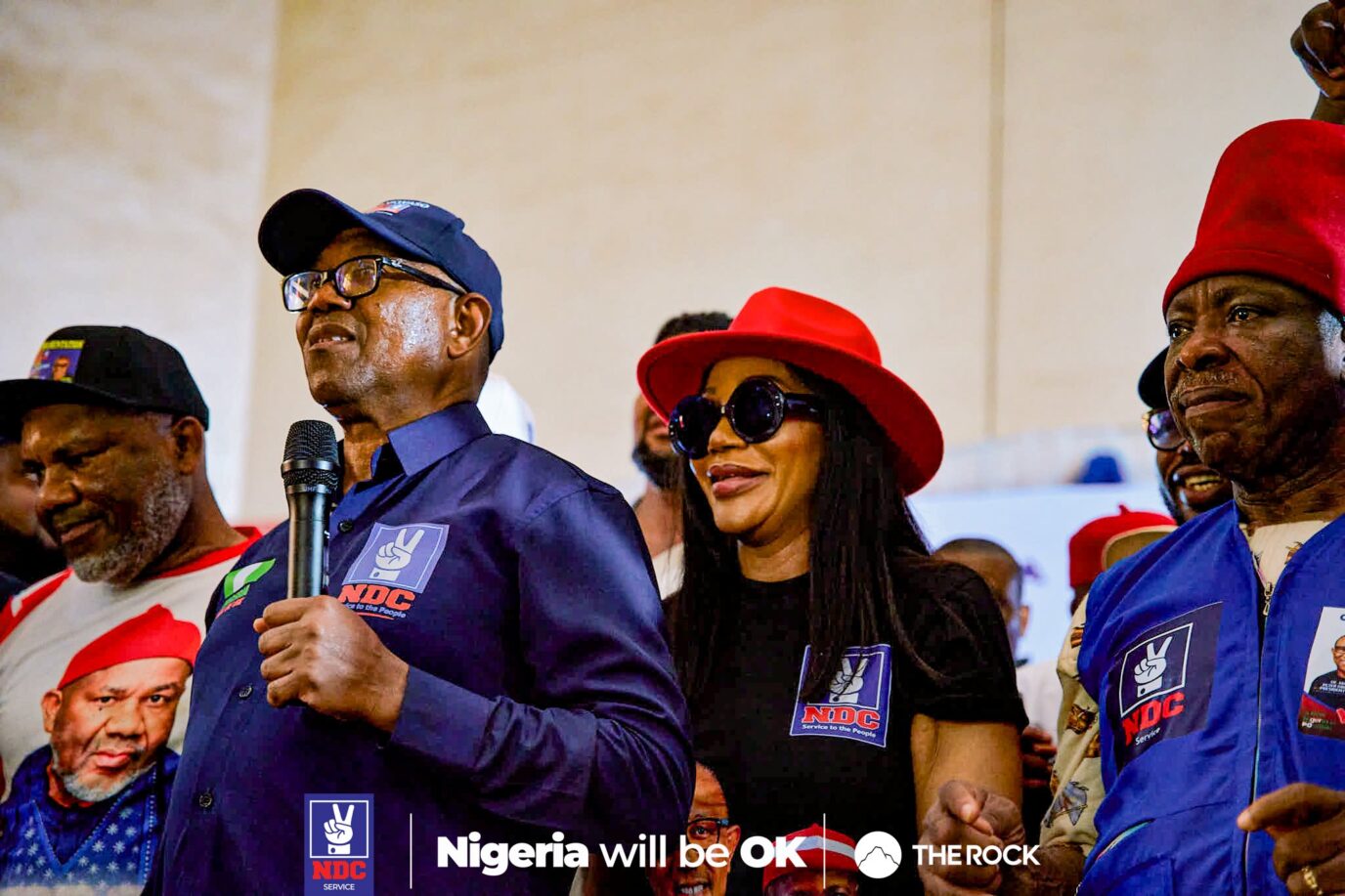
Obi made the promises on Friday during an NDC town hall meeting and homecoming event at All Saints Cathedral in Onitsha, Anambra State, where he outlined his proposed investments in healthcare, education and job creation.
The former Anambra governor said the healthcare plan would ensure that every political ward had access to a functional primary healthcare facility. He noted that Nigeria has 8,809 wards but said his proposed administration would establish 10,000 centres.
“We will ensure that there’s a functional primary health care in every ward in Nigeria. We have 8,809 wards, but we’re promising Nigerians that we’ll do 10,000 primary health care centres,” he said.
On education, Obi said his administration would tackle the out-of-school children crisis by constructing 40,000 primary school blocks.
“We have 18 million out-of-school children, and from day one, people will see the reduction because we plan to do 40,000 primary school blocks,” he said.
He described the proposed projects as part of a broader commitment to invest in human development and improve public services.
“What we’re promising you is not fake: we will invest in education, we will invest in health, and we will invest in building our society that you will be proud of,” he added.
Obi’s healthcare and education pledges
Obi’s proposed healthcare expansion comes amid ongoing efforts by the Federal Government to improve primary healthcare infrastructure and funding across the country.
In October, the Federal Government said 3,526 primary healthcare centres had been revitalised, while 14,107 functional clinics were counted nationwide. It also reported that 8,309 primary healthcare facilities were receiving direct financing through the Basic Health Care Provision Fund, with plans to extend support to more facilities.
The figures reflect different measures of healthcare provision, including facilities counted as functional and those receiving direct programme funding. However, Obi did not explain whether his proposed 10,000 centres would involve constructing entirely new facilities, upgrading existing ones or a combination of both.
He also did not provide a projected cost, funding structure or implementation schedule for the healthcare programme. Details such as staffing, medical equipment, drug supply and maintenance will be important in determining whether the proposed centres can deliver functional services rather than simply add buildings.
The education pledge also comes against the backdrop of Nigeria’s longstanding out-of-school children crisis. Obi cited 18 million children, a figure widely used in discussions of the country’s education challenge.
However, in May, Education Minister Tunji Alausa acknowledged estimates of about 18.3 million but said the figure had remained largely unchanged for nearly a decade and did not reflect the government’s ongoing effort to obtain more accurate state-by-state data.
Building classrooms alone would also not resolve the crisis. Access to teachers, learning materials, sanitation, school security and the financial pressures that keep children out of school will influence whether additional infrastructure translates into higher enrolment and retention.
Obi did not provide details of how the 40,000 school blocks would be distributed across states or how the proposed construction would be financed.
Obi promises shift from consumption to production
Beyond healthcare and education, Obi said he and his running mate, former Kano State Governor Rabiu Musa Kwankwaso, would prioritise the use of public funds for public benefit and tackle corruption.
He also reiterated his plan to move Nigeria from a consumption-driven economy to one based on production, arguing that the shift would create jobs and expand employment opportunities.
“We will have a secure Nigeria. Kwankwaso and I will fight corruption. We want to use public money for public good,” he said.
“Kwankwaso and I will create a new Nigeria and move Nigeria from consumption to production. So we can create jobs, employ our people.”
Obi secured the NDC presidential ticket in May and selected Kwankwaso as his running mate ahead of the 2027 election. The two politicians are campaigning on a joint platform that places emphasis on economic development, education, security and poverty reduction.
The latest pledges add to their campaign commitments, although further details on financing, timelines, delivery targets and accountability mechanisms will be needed to assess how the proposed projects would be implemented.