The UN’s World Social Report 2026 highlights Nigeria’s rural electrification project, which supported 125 mini-grids and over one million solar home systems, reaching more than five million people.
The United Nations has highlighted Nigeria’s rural electrification programme as a successful example of expanding electricity access through targeted subsidies and private investment.
The recognition is contained in the World Social Report 2026, released by the UN Department of Economic and Social Affairs (UN DESA). The report identifies the Nigeria Electrification Project (NEP) as an example of how developing countries can expand access to affordable energy among underserved populations.
What the Report Says About the Programme
Citing earlier World Bank data, the UN said the programme supported the establishment of 125 mini-grids and the sale of more than one million solar home systems. It said these interventions gave electricity access to more than five million Nigerians and supported over 5,000 green jobs.
The report described Nigeria’s use of subsidies for rural mini-grids as a successful policy experience in combining affordable electricity with private-sector participation. It explained that targeted financial support can lower electricity costs for poorer households while encouraging investment in underserved communities.
The figures are not new. They come from the World Bank, which supported the project with the African Development Bank. The Bank has described the NEP, which ran from 2018 to 2024, as reaching more than five million people. A later World Bank summary put the figure at 5.5 million. The figures describe the project’s results, not new connections in 2026. A follow-on World Bank-backed project is aimed at reaching 17.5 million more Nigerians.
Solar Panels on Farmland
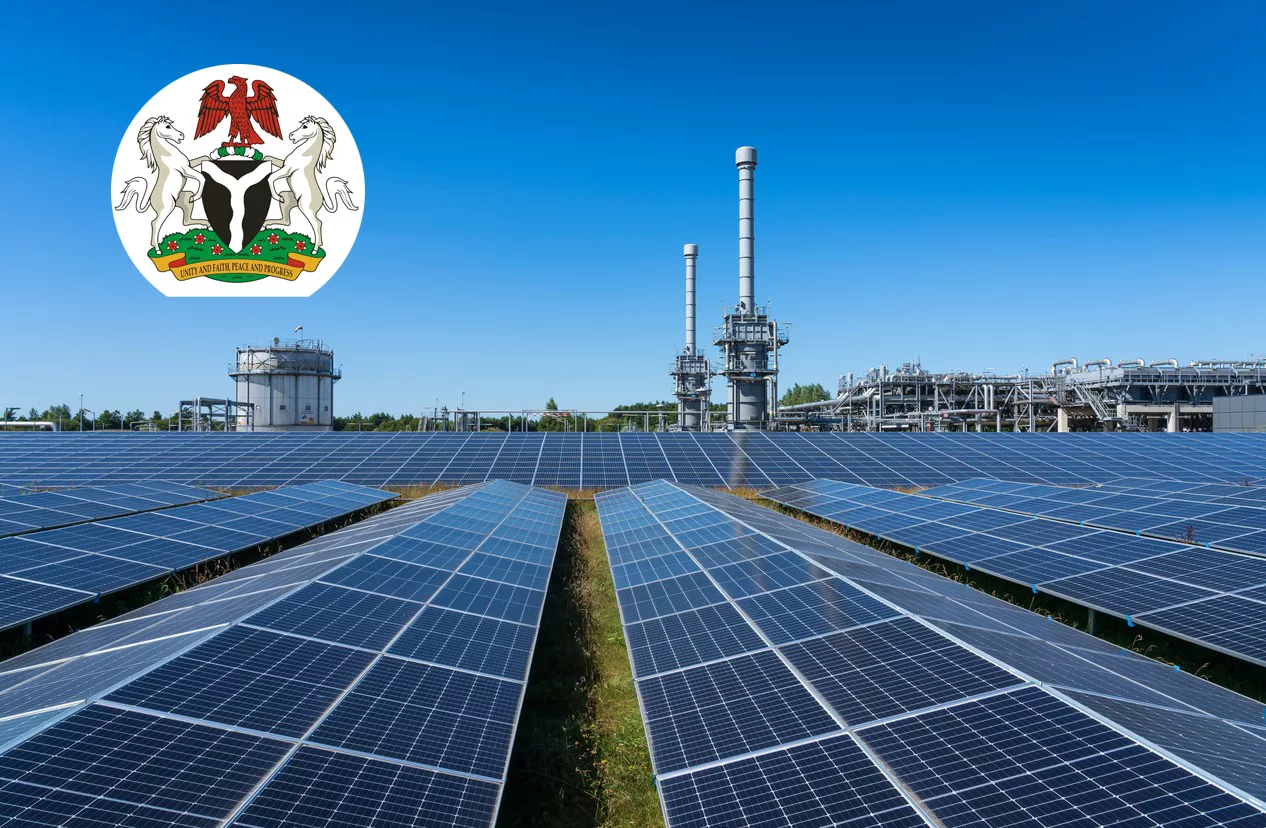
The UN also named Nigeria and Ghana as countries pioneering the integration of solar panels into agricultural land. According to the report, such initiatives could let farmers generate electricity while continuing to grow food on the same land. It said combining renewable energy with agriculture could strengthen food security, improve water management and expand economic opportunities in rural communities.
Nigeria’s Scores in the New Framework
The report also assessed Nigeria under a new framework that measures economic transformation alongside social inclusion. Nigeria recorded a transformation score of 44.30 and an inclusiveness score of 56.36, giving a combined score of 100.67 (the two figures add up to 100.66, so the difference appears to be rounding).
The assessment is part of a comparison of 168 countries across economic, digital, energy and social development from 2000 to 2024. The framework is a new dashboard on Socially Inclusive Transformation, which asks whether a country’s economic, digital and energy transformation is accompanied by inclusion. The reports reviewed do not say how Nigeria ranks among the 168 countries or what the maximum score is, so the numbers should not be read as a ranking.
The UN noted that countries with similar income or transformation levels often reach very different inclusion outcomes. It said none of the five highest-scoring countries on transformation (Malta, Ireland, the United States, Singapore and China) is among the five highest on inclusiveness (Belgium, Finland, Iceland, the Netherlands and Sweden).
Growth Does Not Guarantee Inclusion
The UN emphasised that economic growth and technological progress do not automatically ensure that vulnerable populations benefit. The report’s central argument is that social inclusion is a productive investment, and that societies cannot transform successfully when large parts of their populations lack access to quality learning, healthcare, connectivity, finance, social protection and productive employment.
The mention of Nigeria’s programme comes amid continuing gaps in electricity access. Previous World Bank estimates put the number of Nigerians without electricity at more than 80 million, nearly 40 percent of the population.