

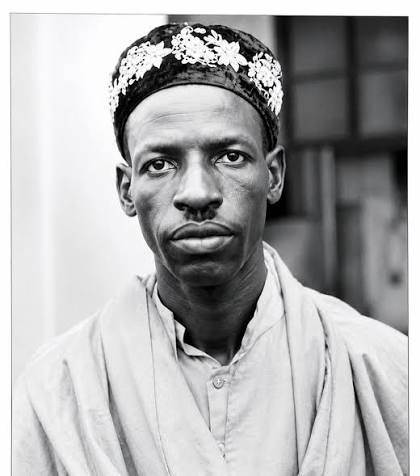
Nigeria’s independence from British colonial rule was the result of decades of political organising, protests, constitutional negotiations, journalism and popular mobilisation. Although famous names such as Nnamdi Azikiwe, Obafemi Awolowo, Ahmadu Bello, Tafawa Balewa, and Herbert Macaulay dominate many accounts of the independence struggle, several other Nigerian independence activists played important roles in building the political movements that eventually led to self-government in 1960.
Among them were Aminu Kano, Sa’adu Zungur, Gambo Sawaba, K. O. Mbadiwe and Bode Thomas. Their approaches were different: some challenged colonial rule directly, while others fought for political representation, social reform, education, women’s rights and greater participation in government.
Together, their stories show that Nigeria’s road to independence was shaped by competing political ideas and activists from different parts of the country.
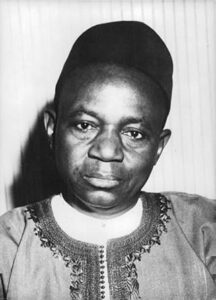
Sa’adu Zungur (1915–1958) was a Hausa poet, intellectual, educationist and political activist whose ideas helped shape progressive nationalism in Northern Nigeria. Although he died before Nigeria became independent, his political organising and intellectual influence contributed to the development of the nationalist movement.
Zungur was educated in both Arabic and English and attended Yaba Higher College in Lagos. His education exposed him to political debates about colonialism, nationalism and the future of Nigeria. He subsequently became involved in political and intellectual circles in Northern Nigeria.
One of his most important contributions was helping establish the Northern Elements Progressive Association (NEPA) in 1946. The organisation emerged as an early platform for political activism in Northern Nigeria and was notable for its radical nationalist outlook. The organisation later provided an important foundation for the emergence of the Northern Elements Progressive Union, or NEPU.
Zungur believed that political independence required more than simply transferring administrative power from British officials to Nigerian politicians. He was particularly concerned about political inequality and the power of traditional institutions in Northern Nigeria.
His relationship with the Northern People’s Congress (NPC) reflected some of these tensions. Zungur initially participated in Northern political organisations and served as an adviser on Muslim law. However, he became increasingly dissatisfied with the resistance to his reformist ideas. By 1954, he had moved closer to NEPU, the more progressive opposition movement associated with Aminu Kano.
Zungur’s importance also came from his ability to use literature and political writing to communicate nationalist ideas. Poetry and political commentary provided ways of questioning colonial rule and existing social structures at a time when political communication was still heavily shaped by colonial authorities and traditional institutions.
He was also involved in national politics beyond Northern Nigeria. Zungur served as national secretary of the National Council of Nigeria and the Cameroons (NCNC) in 1948, demonstrating the connections between Northern political activism and the wider Nigerian nationalist movement.
His political vision was particularly important because it challenged the assumption that Northern Nigerians were uniformly opposed to rapid political change. The emergence of figures such as Zungur and Aminu Kano showed that there were strong progressive and nationalist currents within Northern Nigeria.
Zungur died in 1958, only two years before Nigeria gained independence. He therefore did not live to see the country achieve sovereignty. Nevertheless, the organisations and political ideas he helped develop became part of the political environment in which independence was negotiated.
His legacy is especially important when examining the intellectual history of Nigerian nationalism. Zungur demonstrated that the struggle for independence involved not only mass politics and constitutional negotiations but also debates about education, political representation, social reform and the future structure of Nigerian society.
Sa’adu Zungur’s contribution to Nigerian independence was therefore both political and intellectual: he helped create organisations and ideas that challenged colonial rule and demanded political reform in Northern Nigeria.
By the time constitutional conferences were held in London in 1957 and 1958, Nigerian politicians from different parties and regions were participating directly in negotiations over the structure of an independent Nigeria. The National Library of Nigeria describes these conferences as important stages in preparing the federal constitution for an independent Nigeria.
Nigeria finally achieved independence on 1 October 1960.
The independence story was therefore not the achievement of one party, one region or one political ideology. It was the product of years of organising, political education, constitutional negotiations, popular mobilisation and pressure for self-government.
For that reason, remembering figures such as Aminu Kano, Sa’adu Zungur, Gambo Sawaba, K. O. Mbadiwe and Bode Thomas provides a broader understanding of how Nigerians challenged colonial rule and built the political movements that eventually made independence possible.