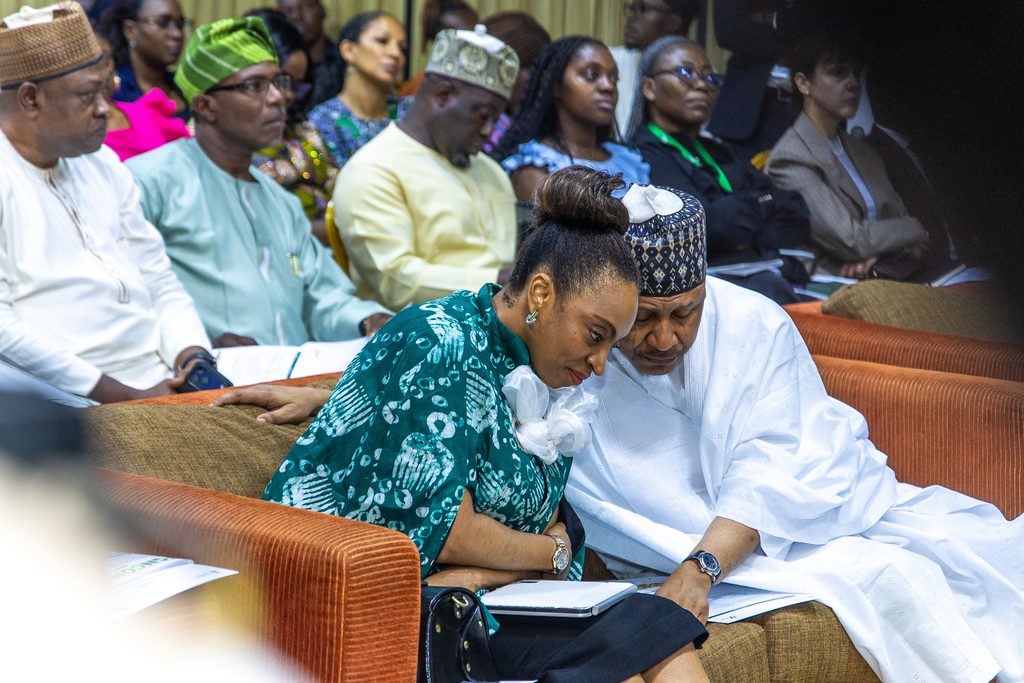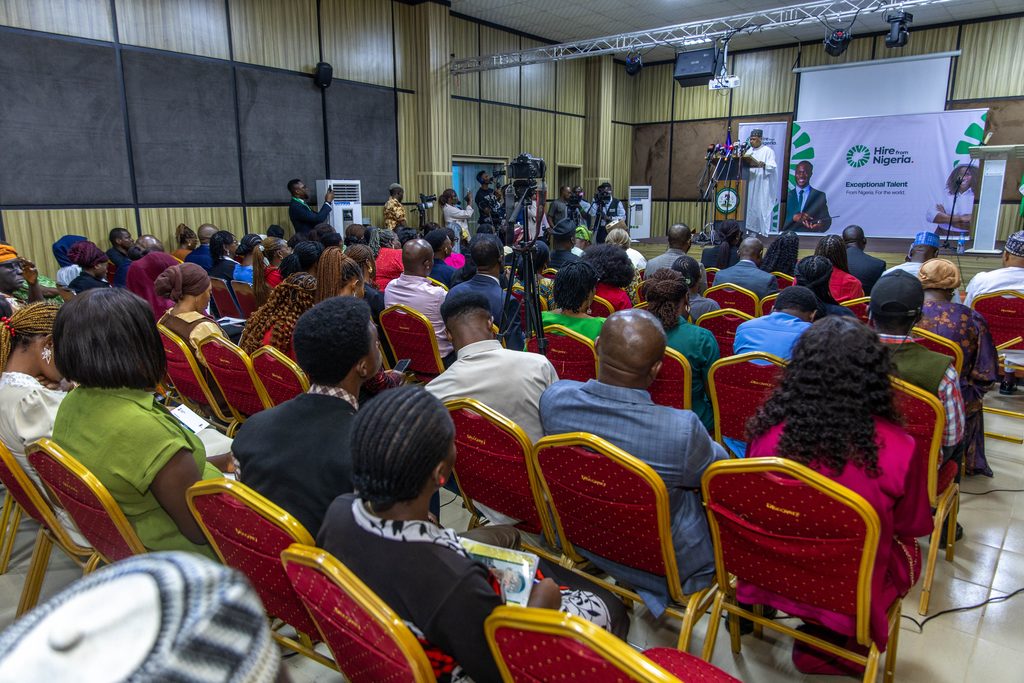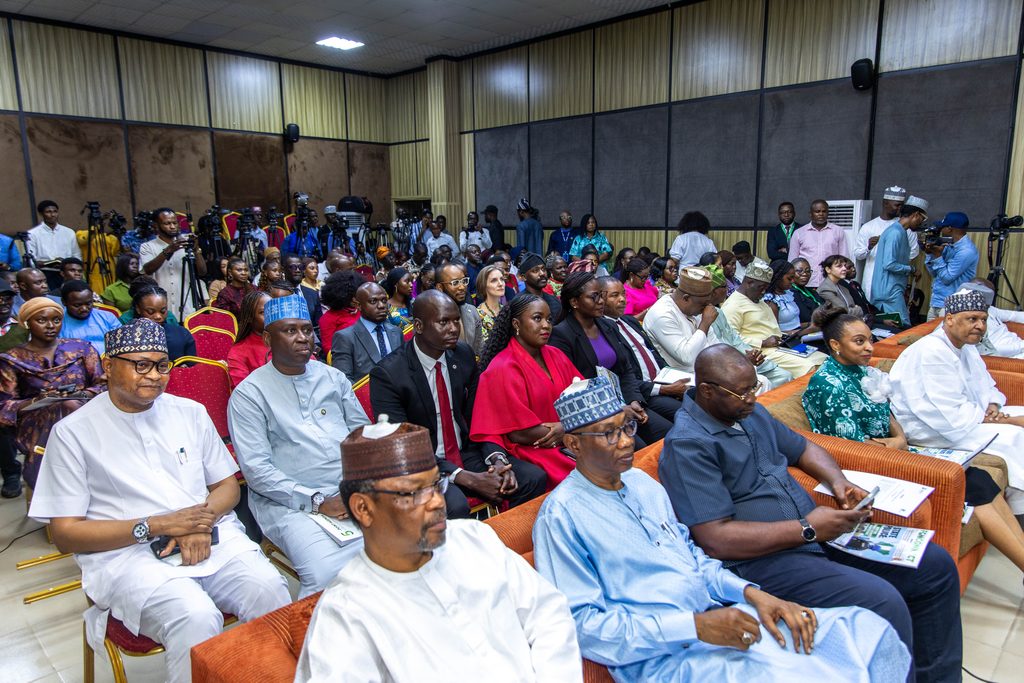


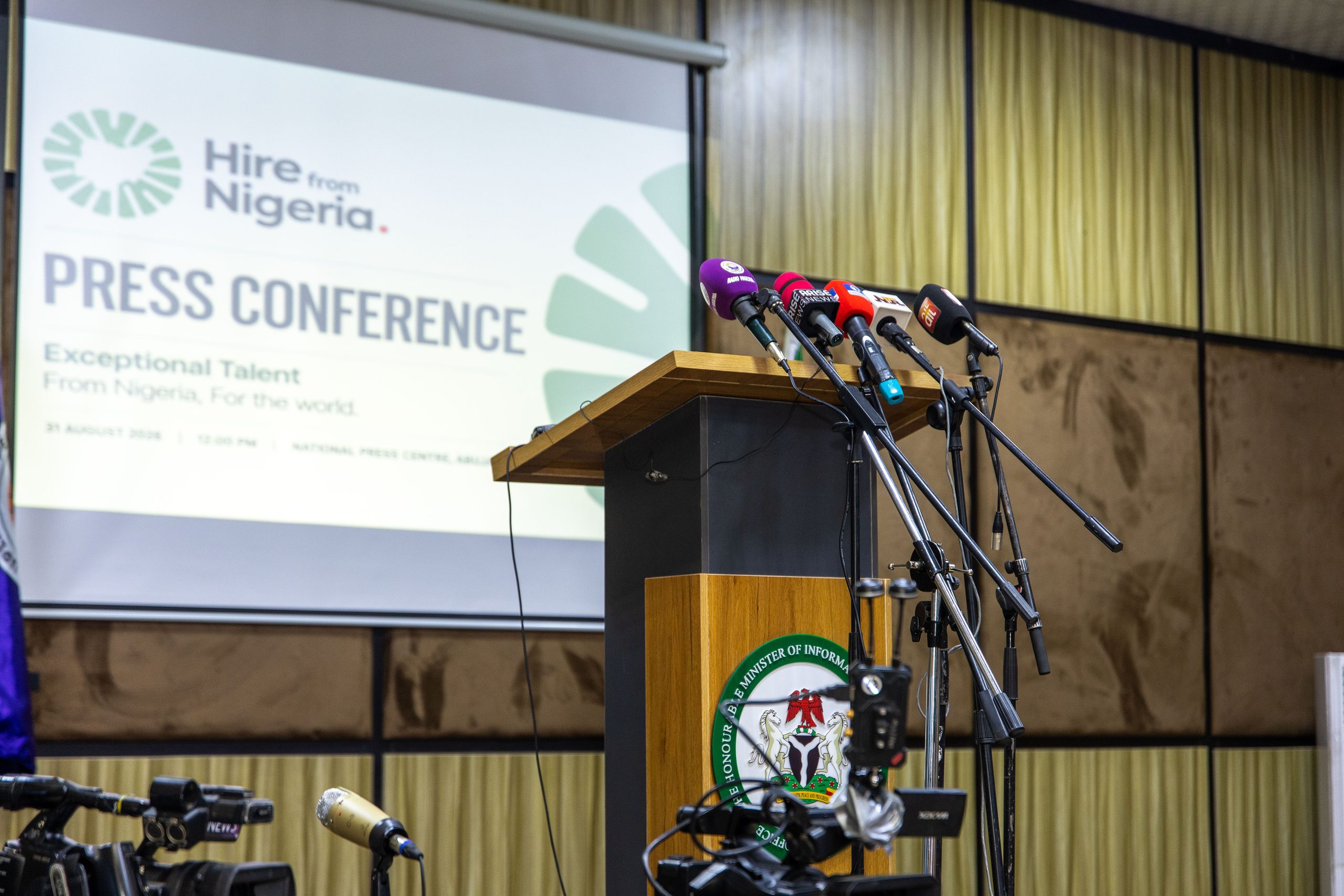
At the campaign launch in Abuja, the Industry Minister said Nigeria must turn its skilled workforce into global contracts, export earnings and jobs, with the government targeting one million export-linked jobs by 2030.
The Federal Government has launched the Hire From Nigeria campaign with a direct pitch to global employers: Nigerian talent should be seen not as a charity case, but as a commercially valuable source of skills, innovation and services.
Minister of Industry, Trade and Investment, Dr Jumoke Oduwole, made the case on Monday as she formally launched the initiative in Abuja, saying Nigeria was ready to compete for a larger share of the global services economy.
“Hiring from Nigeria is not an act of goodwill; it is a sound commercial decision that delivers capability, innovation, competitiveness and value,” Oduwole said.
The campaign, led by the Federal Ministry of Industry, Trade and Investment through the National Talent Export Programme (NATEP), is being implemented with partners including Tech4Dev, the Mastercard Foundation and the Bank of Industry’s iDICE programme.
Its central objective is to connect Nigerian talent and service providers with international employers, buyers and investors while creating a stronger pathway for skills to become jobs, contracts and export earnings.
Table of Contents
Why Nigeria is taking its talent to the world
For years, Nigeria’s export story has largely revolved around physical commodities, particularly oil, agricultural products, solid minerals and manufactured goods.
Oduwole said the global economy has changed, creating an opportunity for countries to export knowledge, skills, creativity and professional services without necessarily moving people across borders.
Nigeria, she argued, already has much of what is required to compete.
“We already have professionals, a strong services base across relevant sectors, a growing technology ecosystem and a time zone well suited to African and European markets,” she said.
The challenge, according to the minister, is converting that capacity into commercial opportunities.
“The task now is to turn this capacity into contracts by organising our talent pipeline, meeting international standards and consistently delivering quality, reliability and value.”
That shift is at the heart of Hire From Nigeria.
Rather than treating talent export as simply a question of training more people, the government is seeking to build the systems that connect trained Nigerians and Nigerian businesses to actual demand in international markets.
Evidence shows Nigeria already has an exportable talent base
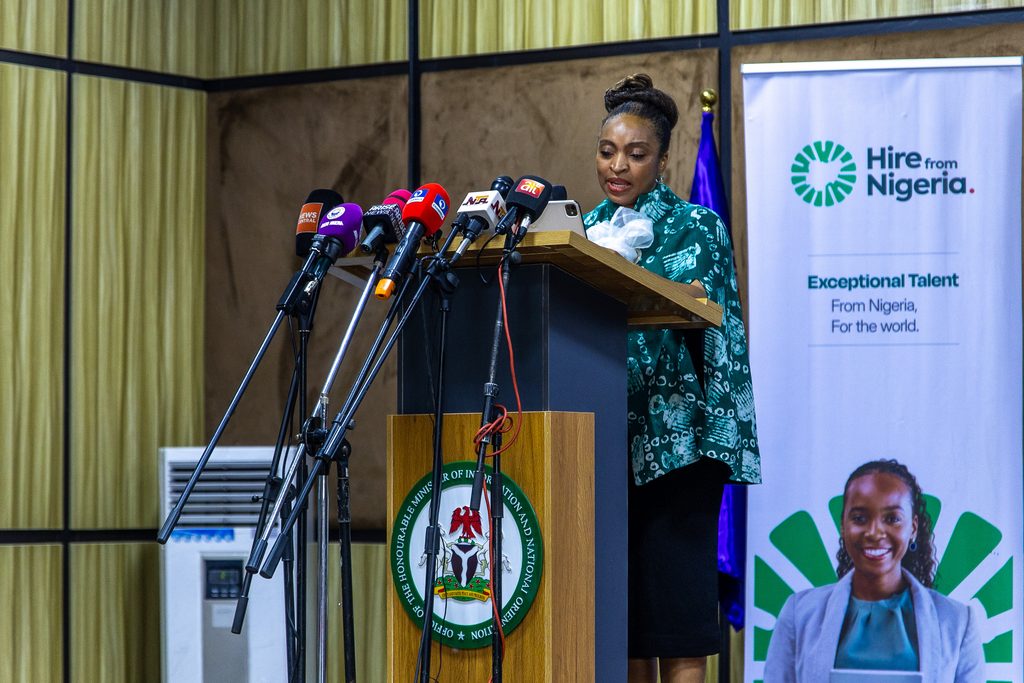
Oduwole said the government’s strategy is being informed by data gathered through Nigeria’s Digital Services Survey, conducted in partnership with the United Nations Development Programme.
The survey mapped Nigerian digital service providers across 17 sectors and found that more than 90 per cent were headquartered in Nigeria.
It also found that 41 per cent of digital entrepreneurs were below the age of 35, while established firms already served an average of 2.6 international markets.
For the minister, the figures show that the country does not need to invent a services-export industry from scratch.
Instead, Hire From Nigeria will seek to identify proven capability, remove barriers to market access and make Nigerian providers more visible and credible to global buyers.
A similar approach is being applied to women-owned businesses.
Through the Nigerian Export Promotion Council’s implementation of the Women Exporters in the Digital Economy Fund, Oduwole said US$710,000, about ₦979.8 million, had been disbursed to 128 women-owned export-oriented businesses.
She described the intervention as an example of how the government wants to move beyond training and aspiration towards capital, market access and actual export activity.
One million export-linked jobs by 2030

At the heart of the initiative is the Federal Government’s ambition to facilitate one million export-linked jobs by 2030 through the National Talent Export Programme (NATEP), with a focus on connecting Nigerian talent and service providers to international demand.
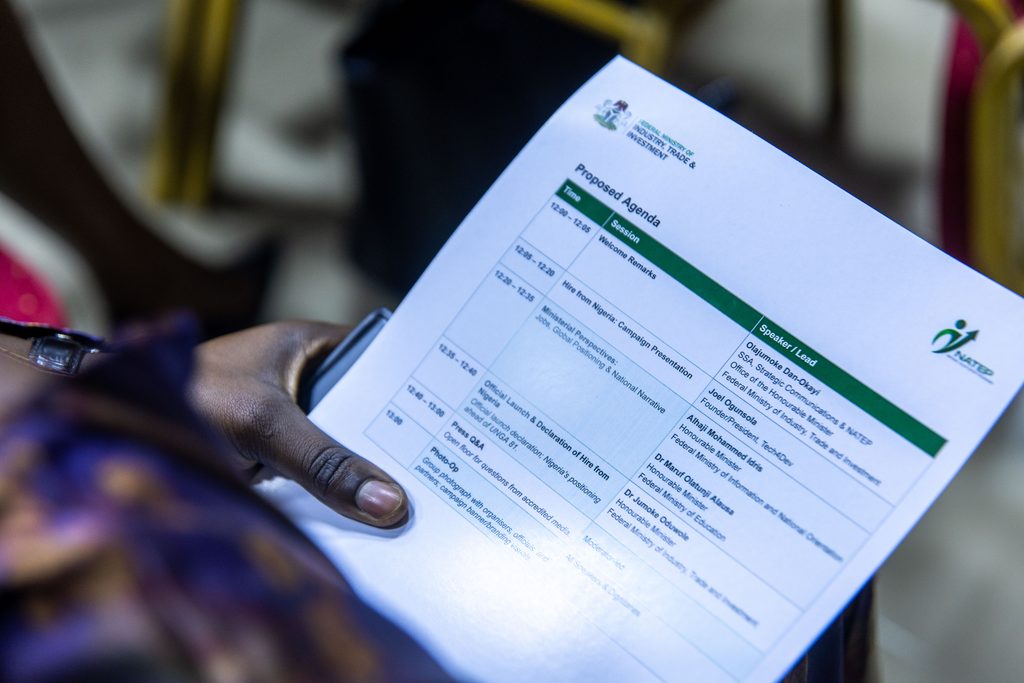
In her welcome remarks, Olajumoke Dan-Okayi, Senior Special Assistant on Strategic Communications and NATEP in the Office of the Minister of Industry, Trade and Investment, said NATEP was designed to translate Nigeria’s global talent ambitions into a practical strategy for jobs, services exports and participation in the global talent economy.
Dan-Okayi explained that NATEP was not established simply to train Nigerians, but to create the systems and market connections required to turn skills into actual economic opportunities.
She identified the National Coordination Mechanism for Services Exports (NCMSE), the Nigeria Talent Accelerator Network (NTAN) and the planned National Outsourcing Policy as some of the structures being developed to strengthen Nigeria’s position in the global services market.
According to her, the central challenge is no longer only whether Nigeria has skilled people, but whether those skills can be connected to international buyers.
“The issue is not the talent, it’s not the ambition. It’s discoverability, trust and global access,” Dan-Okayi said, outlining the three objectives of the Hire From Nigeria campaign: to make Nigeria easier to discover, Nigerian talent easier to trust and Nigerians easier to hire.
Trade minister similarly positioned the one-million-job target within a broader services-export strategy, saying NATEP was pursuing a demand-led approach designed to convert Nigeria’s human capital into contracts, export earnings and investment.
The target therefore represents an ambition of the programme, rather than jobs already created. The Federal Government says achieving it will require sustained collaboration between government agencies, training institutions, private-sector employers, technology companies and international markets.
Government wants Nigerians to work globally from Nigeria
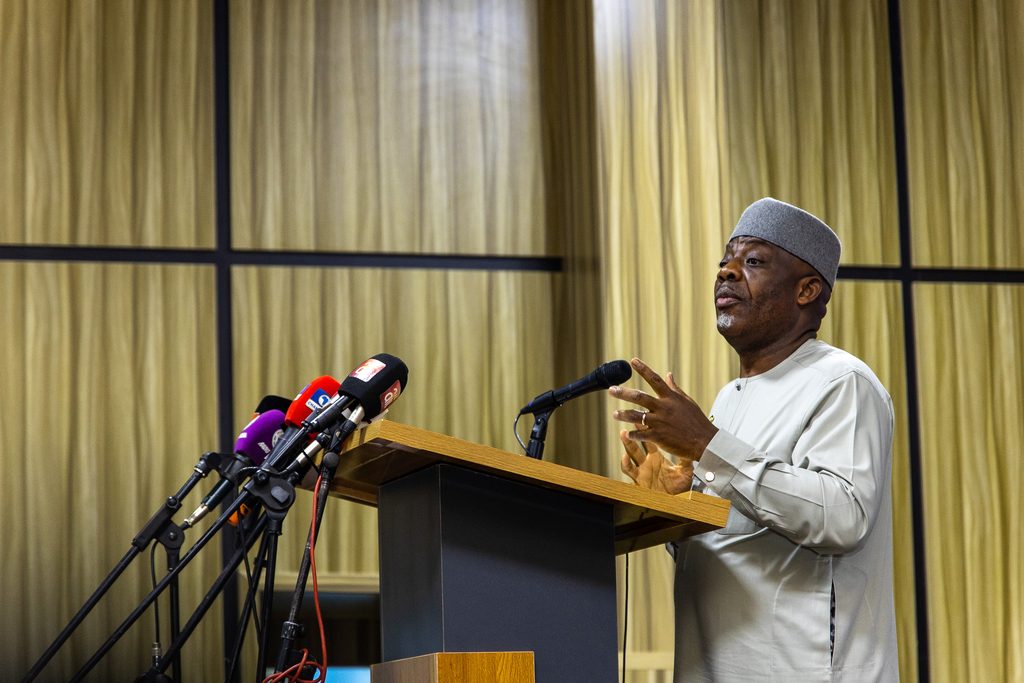
The Education Minister, Dr Maruf Olatunji Alausa, focused on what he described as the supply side of the initiative: producing Nigerians who are trained, certified and ready for international work.
Alausa said more than 200,000 Nigerians were undergoing training across more than 1,200 skills training centres, with the model increasingly focused on practical training.
He said the government was also reviewing curricula from primary to tertiary education to make learning more practical, competency-based and responsive to industry needs.
The Ministry of Education is developing a Digital Technology Academy covering areas including software development, cybersecurity, artificial intelligence, machine learning, natural language processing, cloud computing and quantum computing.
Alausa said the programme would run for between six and eight months and provide professional certifications designed to improve participants’ access to international opportunities.
Nearly 50 tertiary institutions, he added, had already been onboarded onto the AWS Online Academy.
But the minister stressed that the goal was not simply to produce more graduates.
“The objective is not simply to produce more graduates. The objective is to produce competent graduates,” he said.
His broader ambition is to move Nigeria from a country known primarily for losing skilled workers abroad to one where Nigerians can access international opportunities while remaining at home.
“We want to move from brain drain to brain gain,” Alausa said.
From discoverability to actual hiring

For Tech4Dev founder Joel Ogunsola, one of the biggest obstacles is not necessarily the availability of Nigerian talent but the difficulty of connecting that talent to global demand.
“Nigeria has the talent, the world has the demand. Our job is to bring the two together,” Ogunsola said.
He argued that talent disconnected from opportunity could become wasted potential, while the right connection between skills and demand could generate benefits for families, businesses and the wider economy.
Ogunsola identified three central jobs for Hire From Nigeria: making Nigeria easier to discover, making Nigerian talent easier to trust and making Nigerians easier to hire.
That focus on discoverability is significant because the campaign is not aimed solely at young jobseekers.
It also seeks to position Nigerian companies, professionals and service providers before international buyers looking for reliable partners.
Ogunsola urged the media to help tell that story as an economic and employment story rather than simply another government launch.
Information Ministry to take the message global
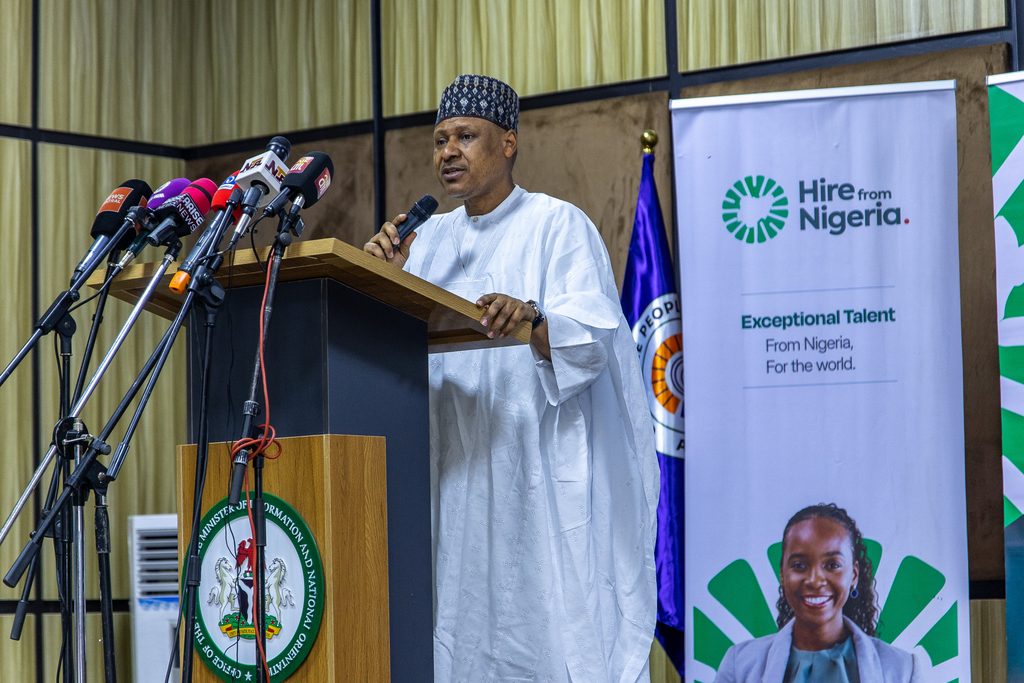
Minister of Information and National Orientation, Mohammed Idris, said the communications component would be critical to the campaign because Nigeria must convince the world that its talent exists and can meet international expectations.
He said the Federal Ministry of Information and National Orientation would deploy its communications platforms, agencies and partnerships to promote the campaign in Nigeria and internationally.
According to Idris, the global economy increasingly allows people to sell knowledge, skills and professional services across borders without physically relocating.
“A young Nigerian does not have to leave the country to participate in the global economy,” he said.
The minister said Nigerians could live and work in Nigeria while providing services to international clients and employers, creating opportunities for foreign exchange inflows, tax revenues and an expanded domestic skills base.
He also linked the campaign to the Federal Government’s wider ambition of making Nigeria a major hub for talent and services exports.
An all-of-government push
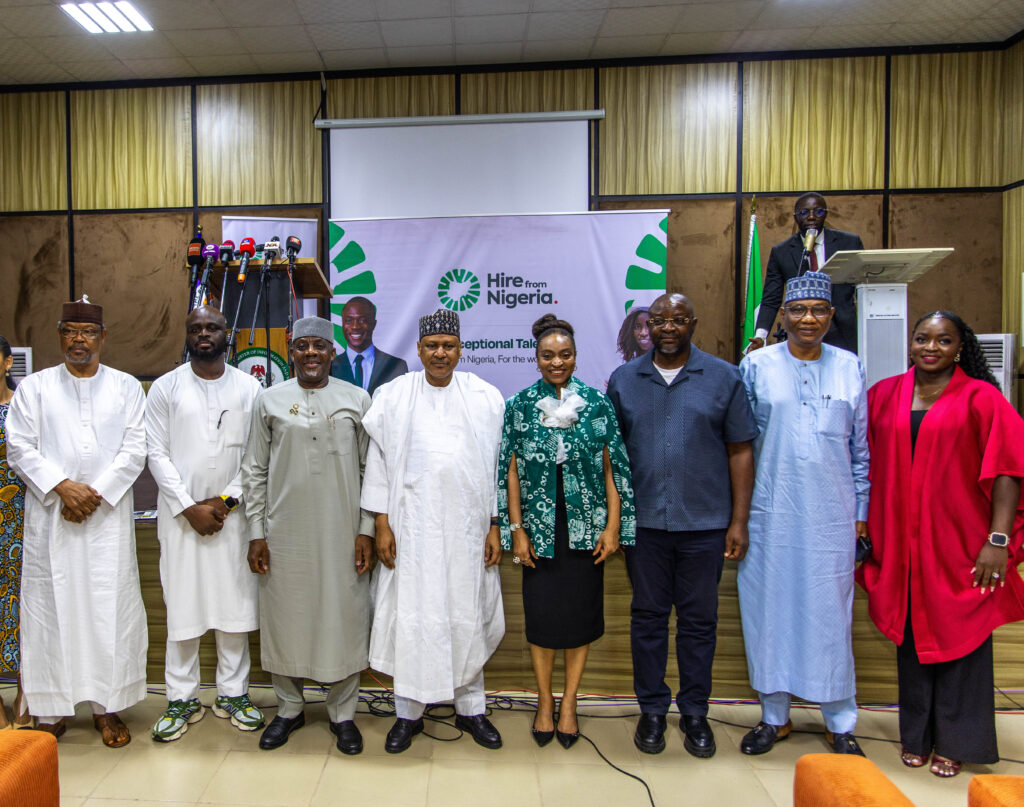
Oduwole said the initiative would require several arms of government to work together.
The Ministry of Education is responsible for strengthening the talent pipeline; the Ministry of Information and National Orientation for projecting a credible national narrative; the Ministry of Labour for supporting standards for decent work; and the Ministry of Foreign Affairs for opening international networks.
FMITI, meanwhile, will focus on connecting talent and enterprise to markets.
That structure reflects the government’s attempt to move talent export beyond a single ministry or training programme.
NATEP’s welcome remarks similarly positioned Hire From Nigeria as the market-facing expression of a broader national architecture involving the National Coordination Mechanism for Services Exports, the Nigeria Talent Accelerator Network, the National Outsourcing Policy and international market engagement.
The objective is to ensure that Nigerian talent and service providers are not merely visible internationally, but are increasingly hired, contracted and integrated into global value chains.
Taking Hire From Nigeria to UNGA 81
The launch is only the first major public step.
On September 24, the campaign is expected to move to the Nigerian House in New York as part of Nigeria’s activities around the 81st United Nations General Assembly.
The event will bring together global employers, business process outsourcing buyers, operators, investors and strategic partners.
The emphasis, according to NATEP, will be commercial: creating buyer-provider connections, developing hiring and outsourcing pipelines, and pursuing opportunities that can translate into jobs, contracts and investment.
For Oduwole, that global engagement will provide an opportunity to make Nigeria’s proposition clear.
The country is not simply asking international employers to consider Nigerian workers because they are young, numerous or in need of jobs.
It is asking them to consider Nigerian talent because it can deliver.
From exporting people to exporting value
The wider ambition behind Hire From Nigeria is therefore larger than the campaign itself.
Nigeria’s youthful population has often been discussed primarily in terms of unemployment, migration and brain drain. The government is attempting to recast that population as an economic asset capable of generating export revenue and attracting international business.
The proposition is straightforward: if a Nigerian professional can provide a service to a company in London, Germany, Singapore or elsewhere without relocating, Nigeria can capture part of the economic value generated by that work.
But achieving that will require more than publicity.
It will depend on whether Nigerian professionals and companies can consistently meet international standards, whether employers can easily find and assess them, whether payment and digital infrastructure can support cross-border work, and whether the government and private sector can convert the campaign’s visibility into actual contracts.
That is ultimately the test facing Hire From Nigeria.
At the launch, Oduwole put the government’s message to international employers in the simplest possible terms:
“When you need skilled talent, innovative thinking and reliable services — Hire From Nigeria.”
Hire From Nigeria at a glance
- Launch date: August 31, 2026
- Lead ministry: Federal Ministry of Industry, Trade and Investment
- Implementation platform: National Talent Export Programme
- Key partners: Tech4Dev, Mastercard Foundation and Bank of Industry’s iDICE programme
- Jobs ambition: One million export-linked jobs by 2030
- Digital services mapped: 17 sectors
- Digital entrepreneurs under 35: 41 per cent
- Digital service providers headquartered in Nigeria: More than 90 per cent
- Average international markets served by established firms: 2.6
- UNGA 81 global activation: September 24, 2026
- National Outsourcing Policy: Scheduled for November 2026
The launch has given Hire From Nigeria a clear proposition. The harder task now is turning that proposition into the thing the campaign ultimately promises: Nigerians being discovered, trusted, hired and paid for their skills in the global economy.
See more photos from the event: