


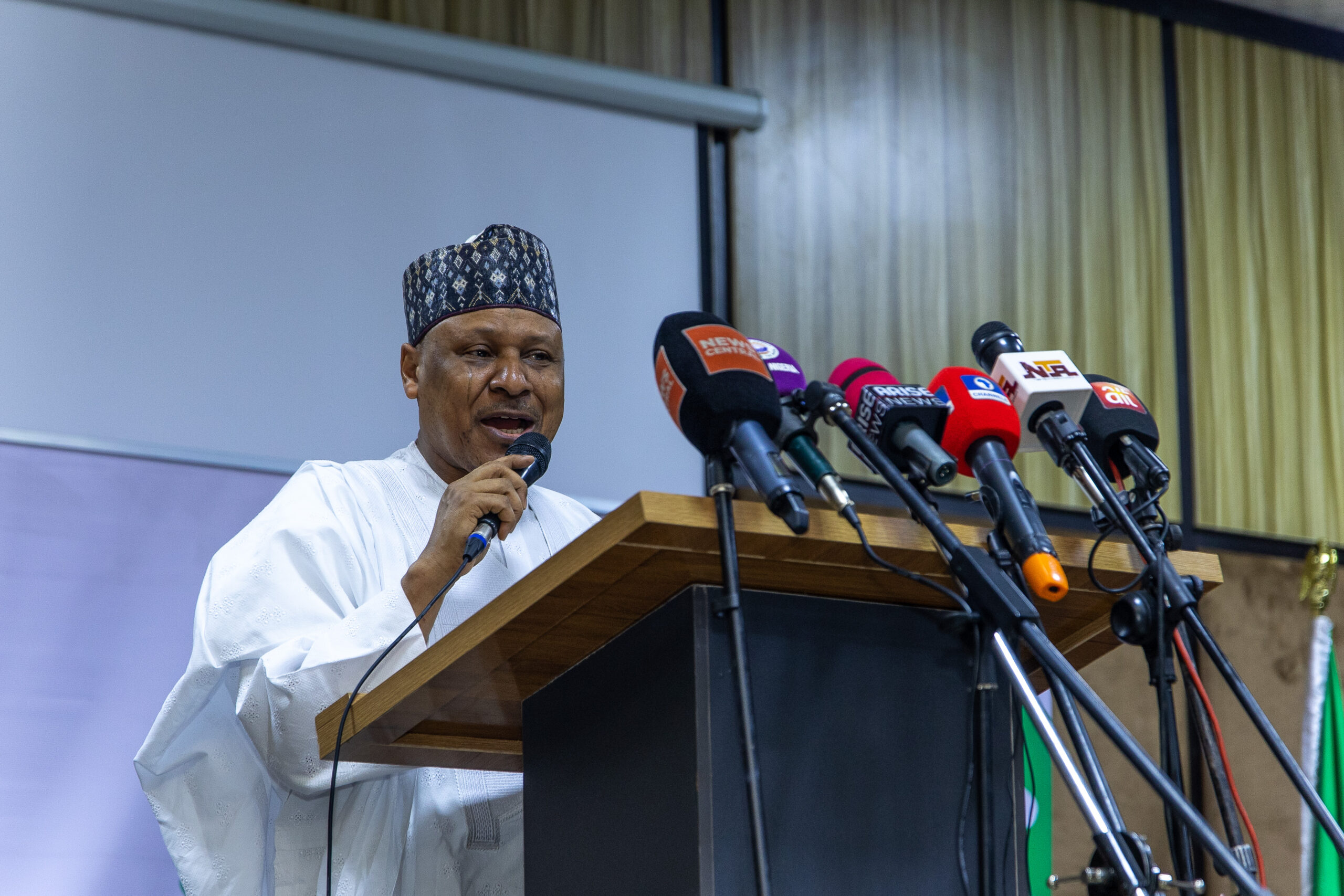
The Federal Government has launched the ‘Hire from Nigeria’ campaign as part of efforts to create one million export-linked jobs and position Nigerian professionals for the global services market.
The Federal Government has launched the ‘Hire from Nigeria’ campaign, seeking to turn Nigeria’s growing pool of skilled workers into a major source of global business, jobs and foreign exchange.
Minister of Information and National Orientation Mohammed Idris said the initiative represented a shift in how Nigeria should think about exports, arguing that the country’s human talent could increasingly be exported without Nigerians having to leave the country.
The Minister spoke on Monday in Abuja at the official press conference for the campaign, which is being implemented through a collaboration involving the Federal Ministries of Information and National Orientation, Industry, Trade and Investment, and Education, alongside the National Talent Export Programme (NATEP), Tech4Dev, the Bank of Industry’s iDICE programme and other public and private-sector partners.
“For decades, discussions about exports have focused largely on the products that leave our shores: oil, agricultural produce, solid minerals and manufactured goods,” Idris said.
“But the global economy has changed. Today, knowledge, skills, creativity and professional services can cross borders without the movement of physical goods.”
He said Nigeria’s “greatest resource” was its human talent and capacity, adding that the campaign would seek to position the country as a preferred global source of skilled talent and digitally delivered services.
Hire from Nigeria targets one million export-linked jobs
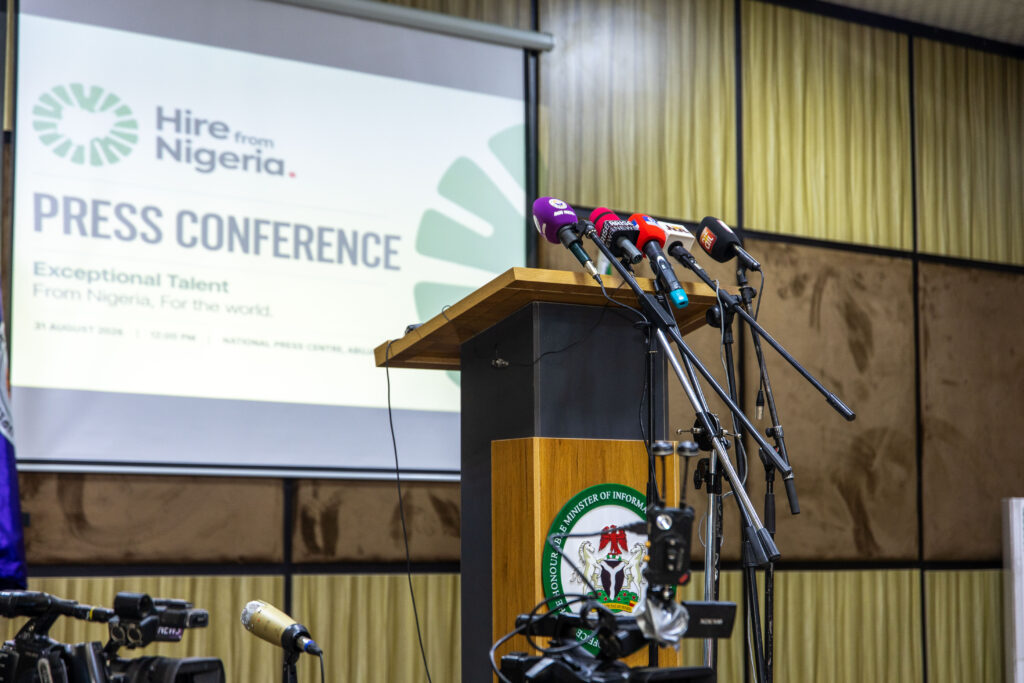
The campaign is linked to the Federal Government’s wider services-export strategy, with NATEP targeting one million export-linked jobs by 2030. The target was originally announced when NATEP was launched in 2023 as a five-year programme to position Nigeria as a global hub for talent and services exports.
Idris said Nigeria had several advantages in competing for a share of the global services market, including its large and youthful population, English-language proficiency, entrepreneurial culture, growing professional workforce and expanding capabilities in technology, creative services and business support.
He, however, said the availability of talent alone would not guarantee international demand.
“The world must know that the talent exists, and must have confidence in the quality of our professionals and businesses,” he said.
The minister said the Federal Ministry of Information and National Orientation would use its communication platforms, agencies and partnerships to promote Nigerian talent and improve its visibility among international employers, investors and businesses.
He said the campaign would also be taken to the international community during the 81st session of the United Nations General Assembly, where Nigeria plans to showcase its talent and attract global employers.
Hire from Nigeria seeks jobs without migration
Idris said the initiative was designed to enable Nigerians to participate in the global economy while remaining in the country.
He said Nigerians with the right skills, infrastructure, professional standards and access to international markets could work remotely for foreign clients and employers, generating foreign exchange inflows and tax revenues while strengthening Nigeria’s skills base.
The Minister of Industry, Trade and Investment, Jumoke Oduwole, said the campaign was part of the government’s broader effort to convert Nigeria’s demographic advantage into jobs, export earnings and investment.
Oduwole said a digital services survey conducted with the United Nations Development Programme had mapped Nigerian providers across 17 sectors, with more than 90 per cent of the identified providers headquartered in Nigeria. She also said 41 per cent of digital entrepreneurs identified in the survey were below 35 years.
She said established Nigerian firms were already serving an average of 2.6 international markets, but that the priority was now to convert the existing capacity into international contracts and export earnings.
Oduwole also said Nigeria’s first national outsourcing policy was expected to be launched in November 2026.
The Minister of Education, Maruf Tunji Alausa, said the success of the campaign would depend on Nigeria’s ability to produce workers who are ready to meet international standards.
Alausa said more than 200,000 Nigerians were being trained across more than 1,200 technical and vocational education centres, while plans were underway for a Digital Technology Academy to train more than 35,000 Nigerians in areas including software development, cybersecurity, artificial intelligence and cloud computing.
He said the programme would complement the existing 3 Million Technical Talent initiative and help connect trained Nigerians with international employment opportunities.
NATEP was launched in 2023 with a target of creating one million jobs through talent and services exports over five years. The programme was subsequently repositioned around Nigeria’s participation in the global services economy, with its current mandate focused on export-linked employment, foreign exchange earnings and economic diversification.
Idris said the government’s objective was to ensure the ‘Hire from Nigeria’ campaign became more than a publicity exercise.
“The future of Nigeria’s economy will increasingly be driven by the talent, creativity, skills and productivity of our people,” he said.
“Nigeria is ready to compete on the global stage. Nigerian talent is ready to work. And the world should look to Nigeria.”