
The country has made one of the world’s biggest gains in closing the mobile money gender gap. The harder question is whether Nigeria can turn that progress into genuine financial power for women.
There is something worth celebrating in Nigeria’s latest mobile money numbers. For once, the country is not being invited to the table merely to explain why it is late.
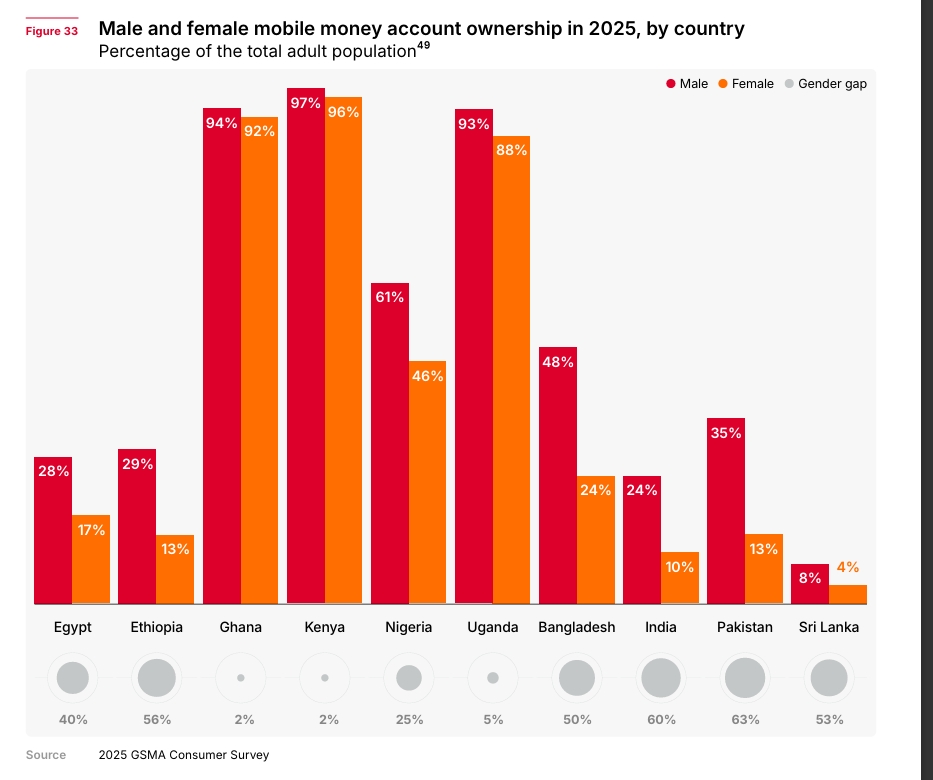
According to the GSMA State of the Industry Report on Mobile Money 2026, Nigeria recorded the biggest improvement in mobile money account ownership gender gap among the countries surveyed. The gap fell dramatically from 46 per cent in 2023 to 41 per cent in 2024 and then to 25 per cent in 2025. Almost half of Nigerian women now have a mobile money account, up by 21 percentage points in one year.
That is not a small improvement. It is the sort of number worth putting on a billboard, perhaps somewhere Nigerians can actually see it.
But before we congratulate ourselves too enthusiastically, there is another number sitting quietly beside it: 25 per cent.
That is the remaining gender gap.
And it is telling us that while Nigeria has made impressive progress, the job is very far from finished.
Nigeria’s mobile money gains deserve attention
The broader picture makes Nigeria’s progress even more interesting.
Globally, mobile money has gone from being a convenient alternative for people outside traditional banking systems to becoming a major part of the digital financial economy. The GSMA says mobile money services processed more than $2 trillion in transactions in 2025, a 23 per cent increase from the previous year. There were 2.3 billion registered accounts and 593 million active 30-day accounts worldwide.
Nigeria is clearly part of this transformation.
In 2025, 61 per cent of Nigerian men and 46 per cent of Nigerian women surveyed had mobile money accounts. That means women are not merely making up a tiny minority of users waiting for someone to remember them. Almost half have crossed the access threshold.
More importantly, Nigeria’s 21 percentage-point improvement among women was the most significant improvement in the account ownership gender gap recorded in the report.
There is a temptation to look at that and declare victory.
We should resist it.
Because access is the beginning of financial inclusion, not the destination.
Having an account is useful. Being able to use it confidently, regularly and productively is where the real transformation begins.
And that distinction matters.
The GSMA itself notes that mobile money is increasingly moving beyond basic access towards financial health, resilience and services such as credit, savings and insurance. Globally, monthly active account usage rose in 2025, although almost three-quarters of registered accounts were still inactive on a monthly basis.
In other words, opening the door is one thing. Getting people to walk through it is another.
Nigeria’s mobile money gender gap is still too wide
This is where Nigeria’s success story becomes more complicated.
A 25 per cent gender gap means that men remain significantly more likely than women to own mobile money accounts.
And the problem becomes even more obvious when we look beyond the national average.
The GSMA found that Nigeria’s gender gap in mobile money account ownership was 35 per cent in rural areas, compared with 16 per cent in urban areas.
There is the real story.
A woman in Lagos, Abuja or Port Harcourt may have relatively easy access to a smartphone, mobile networks, agents and digital financial services. A woman in a rural community may be dealing with a very different reality: weaker connectivity, fewer agents, lower income, limited digital skills and social or household restrictions on financial decisions.
So when we say Nigeria has narrowed its mobile money gender gap, we should also ask: which women?
Because national averages can be wonderfully polite. They smooth over the people still being left behind.
And Nigeria cannot afford to build a digital financial system that works brilliantly for women who are already connected while the women most in need of financial inclusion remain at the edge of it.
The barriers are not simply about technology.
The GSMA has previously identified factors including limited awareness or perceived relevance, digital skills, safety concerns, access to phones and restrictive social norms as obstacles affecting women’s mobile money ownership and use.
This is why financial inclusion cannot be reduced to handing someone an account and declaring the mission accomplished.
If a woman has an account but does not understand how to use it, cannot afford the data needed to access it, fears fraud, cannot reliably access an agent or lacks control over her own finances, the account is not quite the revolution we promised.
Mobile money must become financial power
Nigeria’s impressive improvement gives policymakers, banks, fintechs and mobile money operators something important: evidence that progress is possible.
The question now is whether they can sustain it.
That means making digital financial services more accessible in rural communities, improving digital and financial literacy, strengthening consumer protection and tackling fraud. It also means designing services around how women actually earn, save, borrow and spend rather than assuming that one generic digital product will somehow solve everything.
There is an economic argument here too.
When women gain meaningful access to financial services, they gain more than another way to transfer money. They can potentially save more securely, manage shocks, access credit, run businesses and participate more fully in the formal economy.
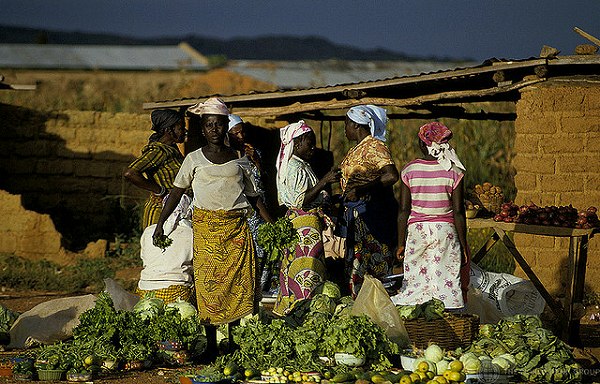
That matters in a country where millions of women participate in informal commerce and small businesses.
The mobile phone can therefore become much more than a communication device. It can become a wallet, a savings tool, a business terminal and a gateway into the formal economy.
But only if the woman holding it has the means, knowledge and freedom to use it.
That is why Nigeria’s 25 per cent gap should not be treated as a statistical embarrassment. It should be treated as a policy target.
And perhaps this is the most encouraging thing about the GSMA figures. Nigeria has already demonstrated that the gap can move dramatically.
From 46 per cent in 2023 to 25 per cent in 2025 is proof that change is possible.
Now comes the harder part.
Can Nigeria move from almost half of women having mobile money accounts to a system where women are genuinely able to use those accounts to build financial security and economic independence?
Because closing the gap on paper is good.
Closing it in people’s lives is better.
And that is where the real test of Nigeria’s digital financial inclusion story begins.