

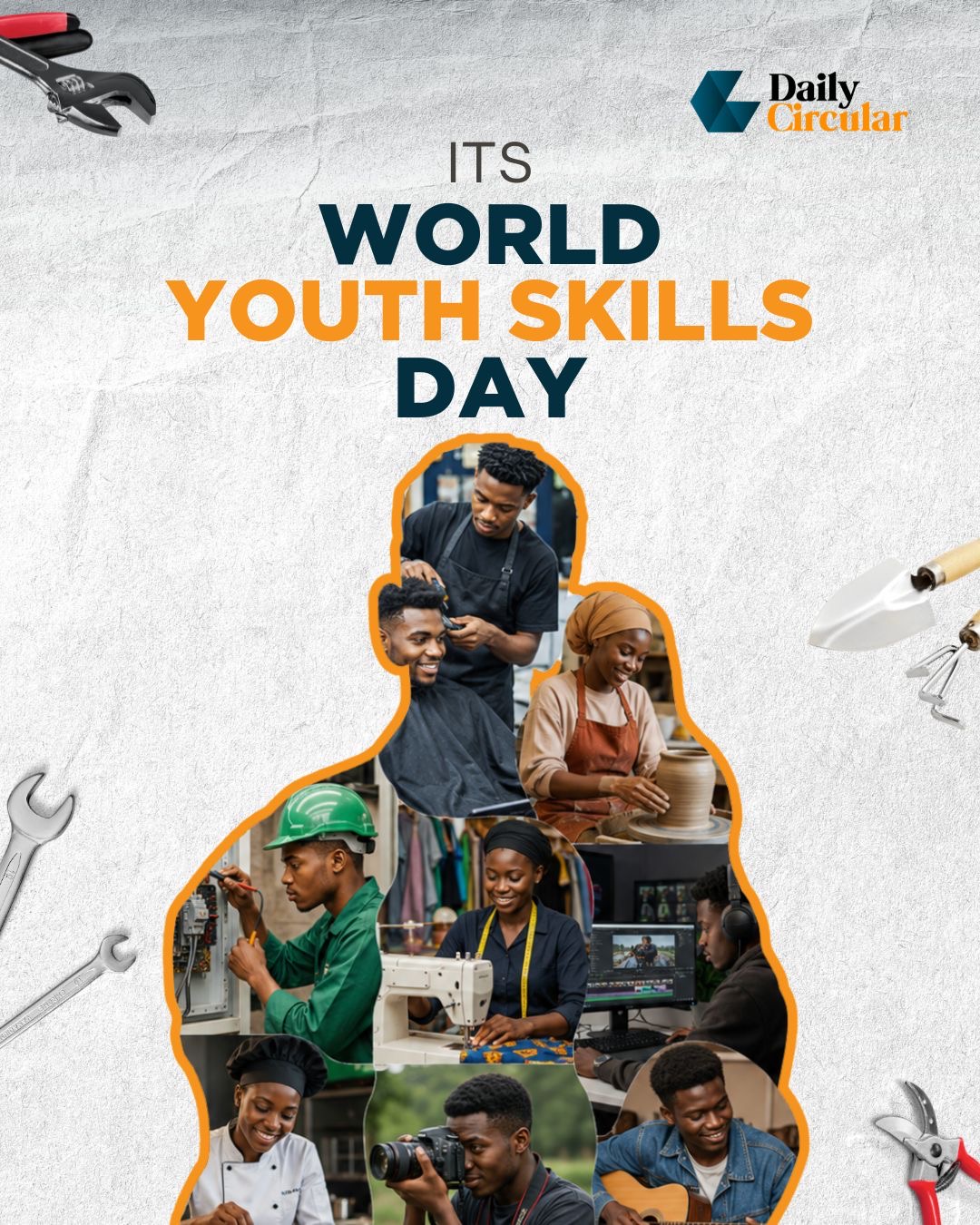
Today is World Youth Skills Day, the day the United Nations set aside every year to focus global attention on one question: are young people actually being equipped for the jobs of today and tomorrow.
This year’s theme, ‘Skills for a Shared Future’, is a reminder that skills development is not just a personal project, it is the foundation of shared prosperity and stability across entire economies.
Nowhere is that question more pressing than in the Global South. More than 1.2 billion people between the ages of 15 and 24 are alive today, and most of them live in low and middle income countries. That should be an economic advantage. Instead, nearly 28 percent of young people in low income countries are neither in education, employment, nor training, and the World Economic Forum’s Youth Pulse 2026 report found that two in three young people believe AI will shrink the entry level jobs they were counting on to start a career.
The good news is that the geography of opportunity is shifting. Remote work, digital platforms, and online global labor markets now let a skilled young person in Lagos, Manila, or Nairobi compete for work that once required relocating to London or New York. The catch is that this new access is conditional. It rewards specific, learnable skills, and rewards them unevenly.
Here are the ten that matter most right now:
1. Practical digital literacy
Not theoretical computer science, but the working fluency to navigate cloud tools, manage files across devices, troubleshoot basic connectivity issues, and use collaboration software confidently. This is the baseline that everything else on this list depends on, and it remains the widest gap. Internet usage still sits far higher in wealthy nations than in low income ones, which means digital literacy has to be taught deliberately rather than assumed.

2. AI tool fluency
Young people are already ahead here in one sense. Close to 60 percent report using AI tools regularly to build their skills, with most of the rest experimenting occasionally. The gap is not enthusiasm, it is depth. Knowing how to prompt a chatbot is different from knowing how to use AI tools to analyze data, draft professional documents, or automate repetitive work in a way that makes a young person more valuable to an employer, not more replaceable by one.
3. English or a second global business language
Language proficiency is repeatedly identified as one of the deciding factors in who benefits from remote, cross-border work and who gets left out of it. This does not mean abandoning local languages. It means treating a working level of English, French, Spanish, or Mandarin, depending on the region, as a career asset with measurable returns.
4. Freelance and remote work readiness
Global online labor markets let young people access international clients without migrating, but succeeding on freelance platforms requires its own skill set: writing a proposal that gets noticed, pricing work fairly, managing a client relationship without in-person contact, and delivering on deadlines across time zones. This is rarely taught formally, yet it is often the fastest route into international income for a young person outside major job markets.

5. Financial literacy and money management
Budgeting, saving, understanding credit, and navigating mobile money or digital banking tools are foundational to converting income into stability. In many Global South economies, informal and gig work is the norm rather than the exception, which makes financial literacy less of a nice to have and more of a survival skill.

6. Entrepreneurial and small
With formal job creation lagging behind population growth in several regions, including manufacturing sectors facing weak job creation and high informality, self-employment is not a backup plan for many young people, it is the plan. Basic skills in pricing, cash flow, marketing on social media, and registering or formalizing a small business can be the difference between a side hustle and a sustainable livelihood.
7. Green economy skills
The transition to renewable energy, sustainable agriculture, and climate resilient infrastructure is creating jobs that did not exist a decade ago, from solar installation to sustainable supply chain work. Youth Pulse 2026 also found that climate concerns continue to shape how young people consume, invest, and lead, suggesting green skills are not just an economic opportunity but one youth themselves are motivated to pursue.

8. Vocational and trade skills through TVET
Technical and vocational education and training remains one of the most direct paths to employment, particularly where university degrees are expensive or disconnected from local labor market needs. Programs increasingly emphasize demand-led training, meaning skills taught are matched directly to what local employers and industries are actually hiring for, rather than a generic curriculum.
9. Communication and cross-cultural collaboration
Once a young person is competing for international clients or remote roles, the ability to communicate clearly across cultural and professional norms becomes a skill in itself. This includes written communication, video call presence, and the confidence to collaborate with colleagues or clients who may never meet them in person.
10. Adaptability and continuous earning
Perhaps the most important skill is the least tangible: the habit of continuously updating what you know. A recent global survey found that a large majority of students do not feel prepared for an AI enabled workplace. That gap will not close with a single training course. It closes with young people who treat learning as ongoing rather than something that ends at graduation.
The real barrier is not ambition
None of these ten skills are out of reach for young people in the Global South. The evidence suggests the opposite: youth are already early and enthusiastic adopters of AI and digital tools. What is missing more often is access, meaning reliable connectivity, affordable devices, quality instructors, and training programs actually aligned to local job markets rather than imported from elsewhere.
Closing the global skills gap will take more than individual effort. It will take the kind of coordinated investment in infrastructure and demand-led training that a handful of national programs are beginning to test. But for young people building their own path today, this list is a practical place to start.