

When the National Assembly opens its doors to the public this week, one of the busiest venues on the programme will not be a chamber or a committee room. It will be the National Assembly Library. Over three days, the Library is hosting a series of sessions designed to bring policymakers, security officials, business leaders and ordinary citizens into the same room to talk about how Nigeria’s legislature is doing its job.
What is NASS Open Week 2026?
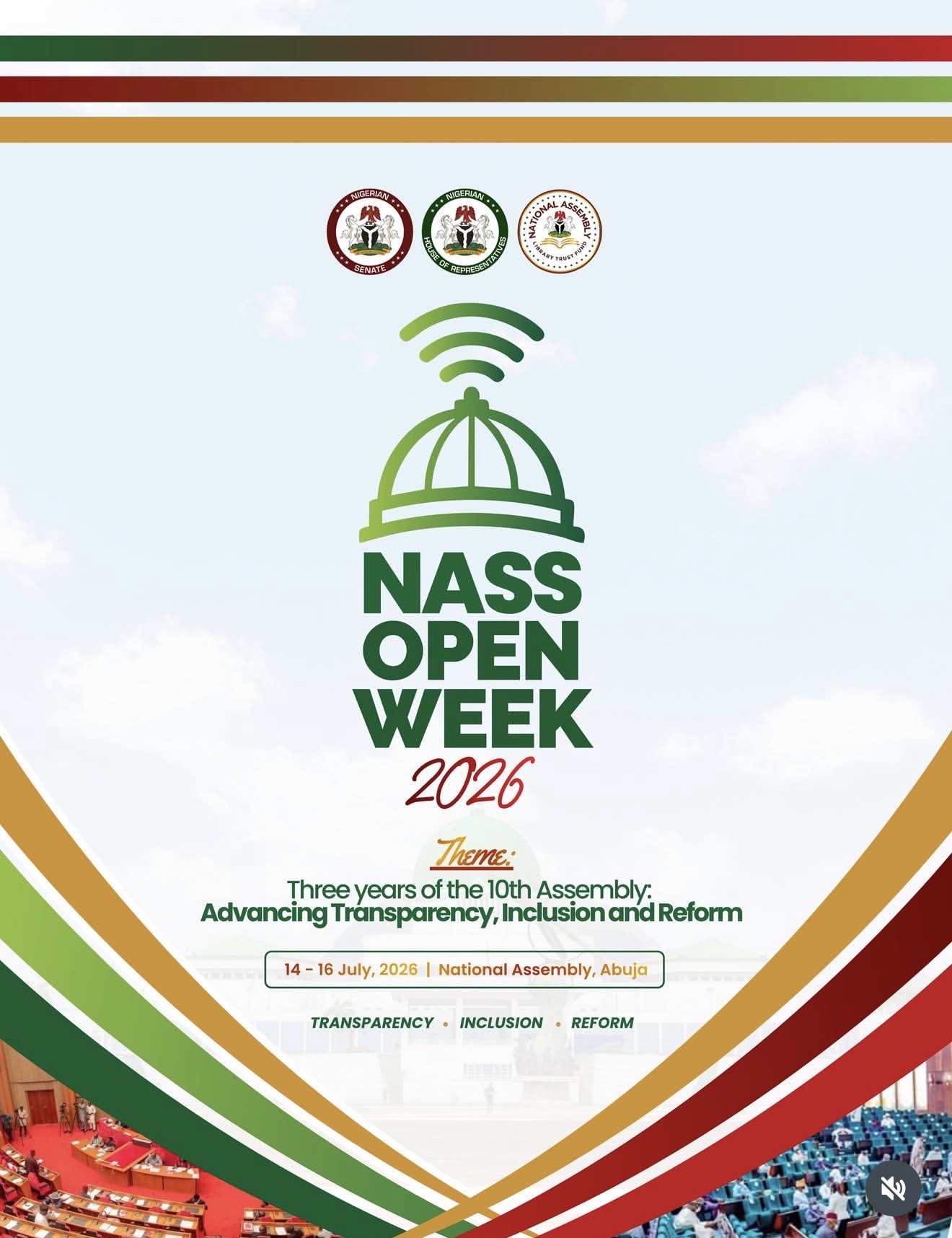
NASS Open Week 2026 runs from 14 to 16 July under the theme “Three Years of the 10th Assembly: Advancing Transparency, Inclusion and Reform.” It marks three years since the current National Assembly, led by Senate President Godswill Obot Akpabio and Speaker Abbas Tajudeen, took office. The week gives the public a structured window into how the legislature works and what it has produced so far.
Why the National Assembly Library is central this year
The Library’s role in NASS Open Week goes beyond ceremony. As the institution responsible for legislative research and knowledge management within the National Assembly, it has positioned itself as a venue for frank policy conversation, the kind that does not always happen in formal plenary sessions.
Three sessions anchor its programme this year:
Oversight and Delivery Exchange
The first session asks a question that comes up often in Nigerian governance debates: does legislative oversight actually change anything on the ground? Themed “How Oversight Delivers Results,” it brings together lawmakers and governance specialists to look past the paperwork of oversight, including hearings, reports and summons, and ask whether it translates into better run public institutions and policies that get properly implemented.
National Security Roundtable
Security features prominently on the agenda too. The National Security Roundtable, themed “Towards a Safer Nigeria,” gathers legislators, security officials, traditional rulers and analysts to take stock of the country’s security challenges. Given how central insecurity has been to public frustration in recent years, the session is expected to focus less on rhetoric and more on specific legislative steps that could realistically improve the situation, from new laws to funding decisions and stronger oversight of security agencies.
Legislative Business Breakfast
Rounding out the Library’s programme is the Legislative Business Breakfast, themed “Driving Reform Through Partnership.” This session is aimed squarely at the relationship between lawmakers and the private sector. Business leaders, development partners and academics will sit down with legislators to discuss how closer cooperation between government and industry could support economic reform. It is a conversation that matters, given how often businesses complain about policy unpredictability.
A shifting role for the National Assembly Library
Taken together, the three sessions say something about how the National Assembly Library sees its own mandate today. It was originally built as a repository, a place to store bills, reports and legislative records. Rt. Hon. Henry Nwawuba, Executive Secretary of the National Assembly Library Trust Fund, argues the institution has grown into something more active: a space where policy ideas are tested and debated before they harden into law.
That shift matters partly because Nigeria’s legislature, like many others, has faced persistent criticism over transparency and how much ordinary citizens understand about what lawmakers actually do. Open format events like these, where the public, media and civil society groups are invited to sit in rather than simply read about outcomes afterward, are one attempt to close that gap.
Who can attend
The sessions are open to policymakers, diplomats, development partners, academics, civil society representatives and the media, with details available through the National Assembly Library’s official channels.
The bigger picture
Whether the conversations produce anything concrete is a separate question from whether they happen at all. For a legislature marking three years in office and facing scrutiny over its record on transparency and reform, opening its research arm to public debate is at least a visible attempt to show its work rather than just announce it.