



Afreximbank’s new S&P rating and expanding PAPSS network mark a turning point for African trade finance.
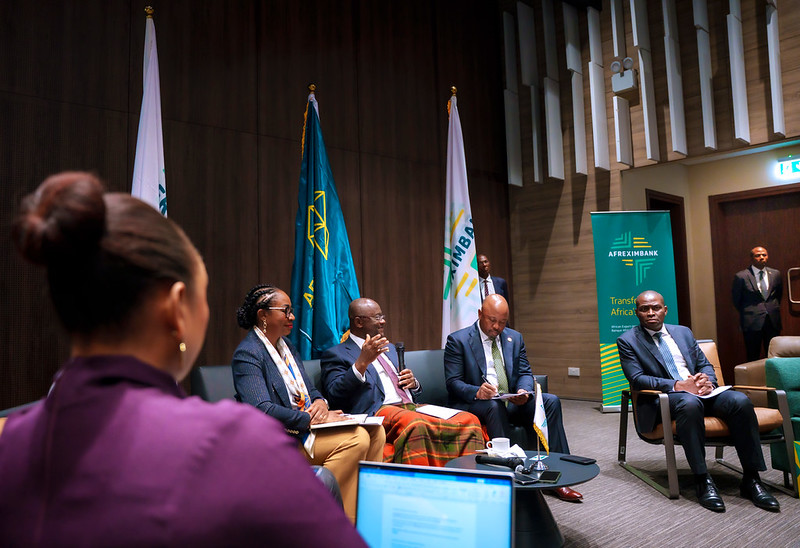
Cairo-headquartered Afreximbank has been assigned a fresh long-term issuer credit rating by S&P Global Ratings, nearly twelve years after the agency last assessed the pan-African lender, President and Chairman of the Board of Directors Dr George Elombi told journalists at a mid-year media briefing in Abuja.
The bank received a triple B plus long-term rating and an A minus two short-term rating, both with a stable outlook, one notch above the Baa two rating it holds with Moody’s. The upgrade places Afreximbank firmly in investment grade territory, a category it had not occupied with S&P since 2014, when the bank first disengaged from the agency over a fundamental disagreement about the relevance of trade finance to African development.
Afreximbank’s S&P Rating: Twelve Years In The Making
Dr Elombi explained that the bank’s earlier exit from S&P’s coverage was not a rejection of scrutiny but a dispute over methodology. At the time, he said, S&P held the view that trade finance could not meaningfully drive development on the continent, a position the bank considered fundamentally at odds with its founding treaty.
“Rating is a normal exchange. It is like your exam at school. Today you have seventeen over twenty, another day it drops, then you go back up,” Dr Elombi said, explaining why the bank stayed engaged with S&P even after disagreeing with its 2014 assessment.
Over the following decade, Afreximbank’s balance sheet expanded roughly sixfold, with total assets climbing from seven billion United States dollars in 2015 to over forty two billion dollars by the end of 2025. Shareholders’ equity grew from one point three billion dollars to eight point four billion dollars over the same period, according to figures S&P cited in its assessment. The bank’s total assets and contingencies stood above forty eight billion dollars at year end.
The new S&P rating followed a turbulent stretch with Fitch Ratings, which downgraded Afreximbank to speculative grade in January over disagreements about the bank’s role in Ghana and Zambia’s sovereign debt restructurings. Afreximbank subsequently severed its relationship with Fitch, which withdrew its ratings entirely.
What The S&P Rating Means For Borrowing Costs
An investment grade rating typically lowers a borrower’s cost of capital and widens its pool of institutional investors, including pension and insurance funds that are often barred from holding sub-investment grade debt. Dr Elombi said the rating would translate into cheaper funding for the bank and, by extension, lower lending rates for African businesses and governments that borrow through Afreximbank.
Responding to questions on credit risk, Dr Elombi confirmed that close to eighty per cent of the bank’s loan portfolio goes to private sector institutions rather than sovereign governments, a structure S&P cited as a strength given financial stress facing many African states. He said the bank’s loans are heavily collateralised, though he argued that rating agencies routinely discount the value of African collateral because of perceived operating risk on the continent, a practice he described as an unfair notch down that does not reflect the bank’s actual loan performance.
On concerns about liquidity, which some rating agencies flagged as a weakness, Dr Elombi said Afreximbank had deliberately diversified its funding sources away from Western capital markets toward African central bank deposits and Asian and Middle Eastern lenders, a shift he said was mischaracterised as a weakening rather than a strengthening of the bank’s position.
PAPSS Expansion Continues Despite Slow Uptake
Alongside the rating discussion, Dr Elombi gave an update on the Pan-African Payment and Settlement System, the cross-border payment infrastructure Afreximbank developed with the African Union to underpin the African Continental Free Trade Area. He said the system now connects more than one hundred and ninety commercial banks and payment switches across twenty eight African countries, though he acknowledged the pace of adoption has been slower than hoped.
Central banks in several regions initially resisted joining PAPSS out of concern the system would encroach on regulatory functions, Dr Elombi said, and some governors outside West Africa viewed the platform’s early governing structure, built around the West African pilot, as favouring that sub-region. The bank has since adjusted the PAPSS governing council to include representatives from other regions.
A PAPSS card allowing users to spend local currency across the continent without conversion is in development, with the operating company recently set up and management newly hired, Dr Elombi said. He added that the African Currency Marketplace, another PAPSS product, already allows African firms and airlines to swap local currency holdings directly rather than routing transactions through the United States dollar.
When asked about competition from stablecoins and cryptocurrency, particularly given Nigeria’s high adoption rate for cross-border crypto payments, Dr Elombi said Afreximbank does not view digital currencies as a threat to PAPSS, arguing that trust in stablecoins depends on the assets backing them and that payment infrastructure would remain relevant regardless of the currency used to settle transactions.