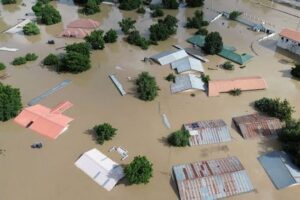


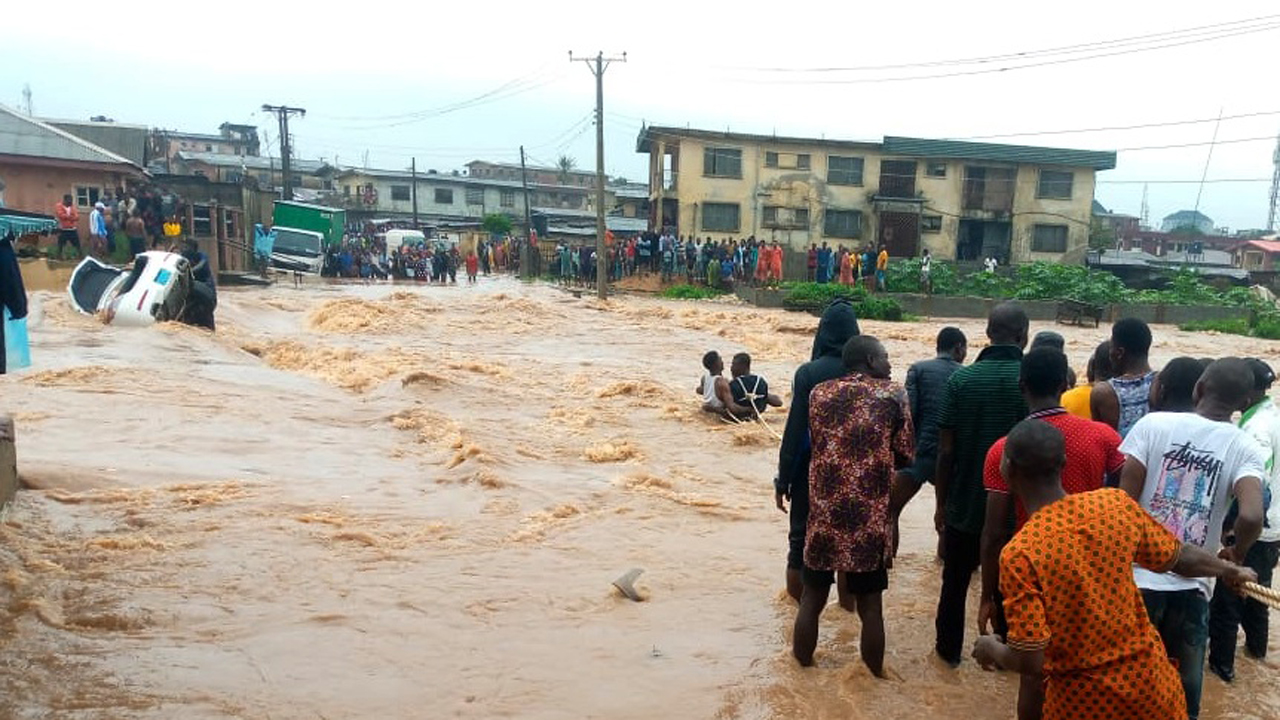
Heavy rainfall submerged roads, homes and vehicles across Lagos on Sunday, with flooding reported in Mushin, Gbagada, Lekki, Victoria Island and at least nine other states.
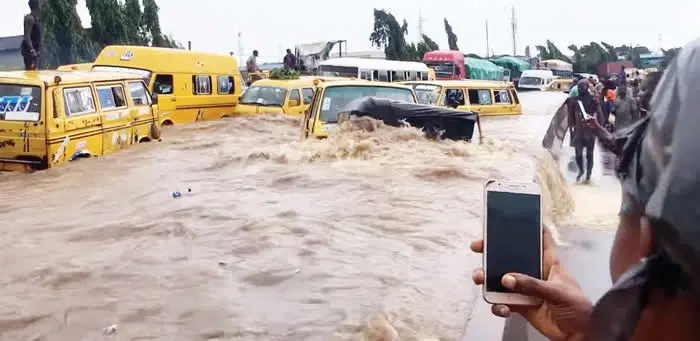
Heavy rainfall on Sunday left large parts of Lagos submerged, with residents wading through floodwaters, vehicles trapped in mud and homes flooded as the city bore the brunt of what meteorologists had predicted would be an exceptionally intense rainy season.
Videos shared on social media showed submerged expressways, debris-clogged drainage channels and refuse heaps blocking the free flow of stormwater across multiple communities on both the island and mainland.
Areas Affected by Lagos Flooding
The Lagos flooding cut across a wide swathe of the metropolis, affecting Mushin, Gbagada, Surulere, Ijesha, Ilupeju, Shomolu, Ikeja, Ikorodu, Oshodi, Victoria Island and parts of Lekki. Residents reported scooping water from their living rooms through the night, with some saying the situation persisted into Monday.
The scale and spread of the flooding highlighted the city’s longstanding vulnerability to heavy rainfall a combination of low-lying coastal terrain, rapid urban expansion and chronically blocked drainage infrastructure.
Government Response
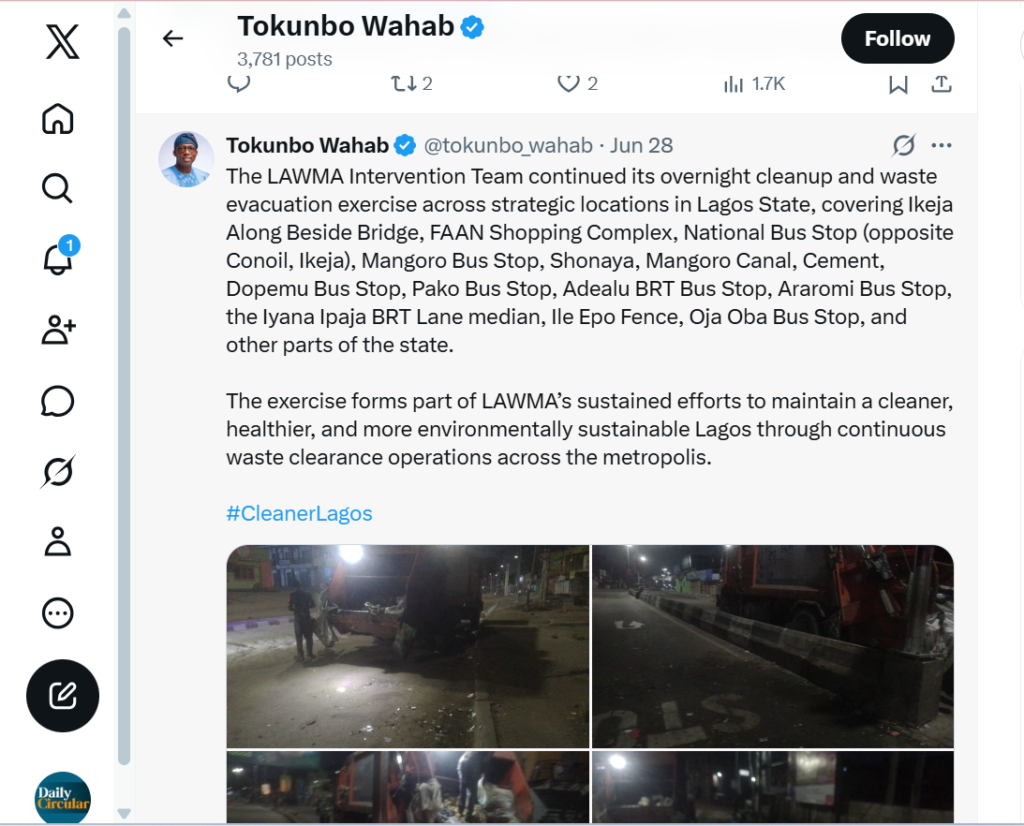
Lagos Commissioner for Environment and Water Resources Tokunbo Wahab responded to resident complaints through a series of posts on X, confirming that the Lagos Waste Management Authority had been mobilised.
“The LAWMA Intervention Team has been notified and will attend to the situation immediately. We appreciate your vigilance and continued support in helping us keep Lagos clean,” Wahab wrote in response to one of the videos circulating online.
The commissioner also placed responsibility on residents, stressing that flood management cannot rest with government alone. “Achieving a cleaner Lagos is a shared responsibility, and your contribution is truly appreciated. Together, through our collective efforts, we can build a cleaner, healthier, and more sustainable city for everyone,” he said.
NiMet Had Warned of Above-Normal Rainfall
Wahab traced the severity of the Lagos flooding to forecasts issued earlier in the year by the Nigerian Meteorological Agency. “NiMet had earlier forecast that 2026 would witness above-normal rainfall, with Lagos expected to experience a greater impact due to its coastal geography and low-lying terrain,” he said.
He added that the rainy season had unfolded as predicted. “As predicted, the rainy season has been longer, with prolonged and intense rainfall experienced across many parts of the country.”
The commissioner also noted that the flooding was not confined to Lagos. “It is also important to note that the flooding currently being experienced is not peculiar to Lagos State. Similar incidents have been recorded in Ogun, Osun, Abia, Kogi, Anambra, Akwa Ibom, Enugu, Adamawa and several other northern states,” Wahab said.
Drainage Clearance and Enforcement Ongoing
The state government said it had stepped up drainage clearance operations, enforcement against illegal structures obstructing waterways and other flood mitigation interventions ahead of and during the rainy season.
Wahab urged residents to stop blocking drainage channels with waste and called for broader civic cooperation. “Given NiMet’s forecast, the risks associated with heavy rainfall remain significant,” he said. “Government will continue to do its part, but safeguarding lives and property also requires the cooperation and collective responsibility of every resident.”
The Lagos flooding adds to a growing national pattern of climate-related displacement and infrastructure stress, with at least nine other states reporting similar incidents as Nigeria moves deeper into what forecasters have described as an above-normal 2026 wet season.