

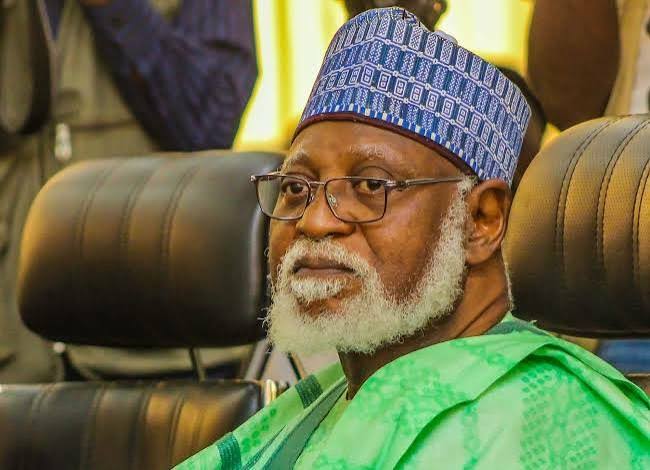
Former South African President Thabo Mbeki has paid tribute to General Abdulsalami Abubakar as one of Africa’s defining democratic voices, delivering a keynote address at a ceremony marking the former Nigerian Head of State’s 84th birthday on Saturday, at the Presidential Banquet Hall, Aso Rock Villa, Abuja.
The event, themed “The Legacy of a Statesman,” doubled as the public presentation of three books documenting General Abubakar’s life and service: his autobiography, Call of Duty; Nigeria’s Grand Patriot: General Abdulsalami Alhaji Abubakar, GCFR; and Mediating for Peace in Africa: A Festschrift in Honour of Gen. Abdulsalami A. Abubakar, GCFR, CSG. The Abdulsalami Abubakar African Resource Centre (AAARC) was also unveiled at the occasion.
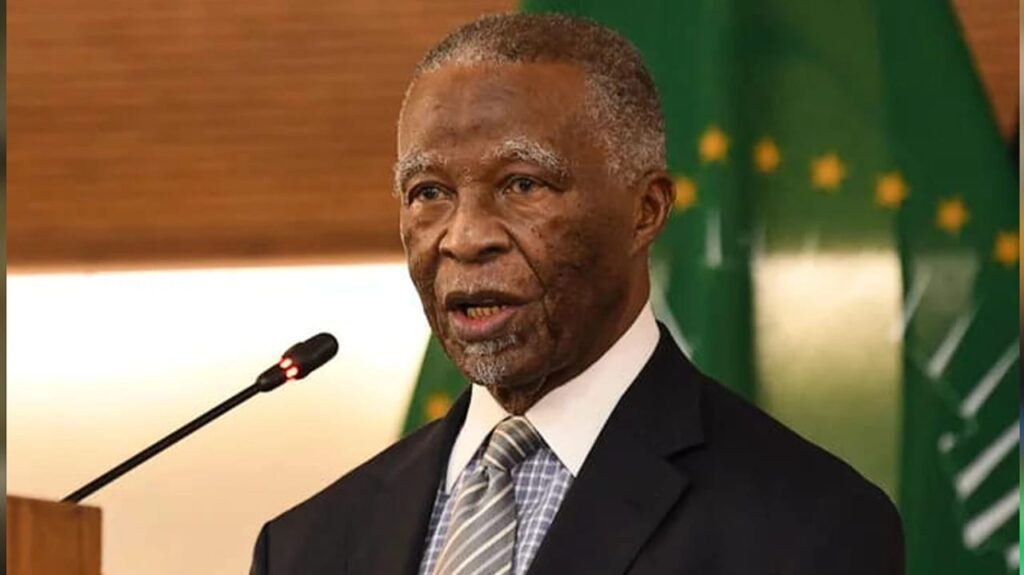
Speaking via a written address — he was unable to attend in person following the death of his youngest sister — Mbeki reflected on General Abubakar’s 1998–1999 transition to civilian rule as a watershed moment in African democratic history, and called on present and future leaders across the continent to draw lessons from his legacy.
President Bola Tinubu, represented by Vice President Kashim Shettima, also addressed the gathering, which brought together former heads of state including Generals Yakubu Gowon and Ibrahim Babangida, as well as former Presidents Olusegun Obasanjo and Goodluck Jonathan.
Read Mbeki’s full address:
KEYNOTE ADDRESS
Democratic Transition and Peacebuilding in Africa:The Legacy and Contributions of General Abdulsalami Abubakar, GCFR’By H.E. Thabo Mvuyelwa Mbeki, Former President of South Africa, On the Occasion of the Launch of Three Books in Commemoration of the 84th Birthday of His Excellency, General Abdulsalami A. Abubakar, GCFR, CSG, on June 13, 2026, at the Presidential Banquet Hall, Aso Rock Villa, State House, Abuja.Chairman of the Occasion, Your Excellency, General Yakubu Gowon, GCFR;Your Excellency Bola Ahmed Tinubu, GCFR, President of the Federal Republic of Nigeria;Your Excellency Kashim Shettima, GCON, Vice-President of the Federal Republic of Nigeria;President, Chief Olusegun Obasanjo, GCFR;President Ibrahim Badamasi Babangida, GCFR; President Goodluck Ebele Jonathan, GCFR;Distinguished participants at this important occasion; Friends, ladies and gentlemen:First of all, I sincerely apologise that I cannot be with you in person at this happy occasion when we salute a brother, friend, colleague and distinguished leader, His Excellency General Abdulsalami Abubakar,GCFR, CSG.Unfortunately, today we laid to rest our youngest sister who passed away during a car accident a week ago. As the eldest in our family, I could not be absent as we laid her to rest. Esteemed Chairperson, permit me also to express my sincereappreciation for the honour of delivering this Keynote Address incelebration of the life and service of my brother and fellow African. The celebration of great patriots such as His Excellency, General Abdulsalami Abubakar, is a worthy tribute to whom honour is due. The choice of the topic of my address is apt and timely as the narrative about the worksand service of this officer, patriot and honourable gentleman must not be left to historical chance.As part of my role today, I am delighted to speak on the subject ofdemocratic transition and governance as well as peace-building in Africa. This subject concerns all of us deeply, for it lies at the very heart ofAfrica’s aspirations.The infamous Berlin Scramble for Africa Conference took place 140 years ago. As all of us throughout Africa fought over the decades to defeat this rape of our Continent, we discussed what we would do with our countries once we achieved our liberation from colonial oppression.We can, for instance, see this in the decisions taken at the Sixth Pan African Conference in 1945.This reflexion continued even during the years when our countries had gained their liberation.It is out of this process, informed both by deep reflexion and actual experience that was born the determination that these two issues of democratic rule and peace and stability must be two of the pillars on which we place all of independent Africa.Accordingly, the issues of democratic rule and peace and security are fundamental to the fulfilment of all our aspirations as Africans. Without a clear understanding of democracy, and the nexus between peace,security and development, it will be impossible to put in placeprogrammes which would lead to Africa’s unity and renaissance.This we must also say, that the scramble for Africa was not just ahistorical event or episode that came and went, but it is a reality which continues to calibrate our relations with multiple powers and interests. It is imperative that in all our dealings especially in the realm ofgovernance and organisation of our societies, we must be conscious and alert to the pitfalls that keep being placed on our paths awaiting any miscalculations or deviations on our part from the true path of Pan-Africanism.It is in this respect that I shall speak on democratic governance andpeace-building in Africa, and delineate the contributions and legacy of His Excellency, General Abdulsalami Abubakar, GCFR,CSG, former Head ofState and Commander-in-Chief of the Armed Forces of the Federal Republic of Nigeria.We are, of course, also performing many other important functions at this gathering today. The launching of three seminal books on the lifeand times of General Abubakar is the main reason why we are here. It is also an occasion to recollect and celebrate our good fortune as Africans in the continuous construction of our Continent’s political culture and institutions. We are also renewing our pact with destiny and committing ourselves to the advancement of our dignity and esteem as Africans.We cannot do any of this in a vacuum. We must do so in the context of sound and credible scholarship and research. Writing books and leaving behind us correct narratives and testimonies for present and futuregenerations matters greatly. The paucity of scholarship and research leaves room for distortion and misrepresentation which leads to the adoption of wrong policies.The accumulation and distribution of knowledge about where we came from, how we attained our present condition, where we are going, and how to shape our future for the better, must be approached by all of us as a labour of love.The recognition of the symbiotic link between knowledge and action, the nurturing of a relationship between our development and the protection of the environment, and the art of linking our past, present and future as one organic whole, are all necessary elements of the outlook we must cultivate to achieve the progress the millions of our people seek and demand.I therefore salute the authors of the three books being launched today, including the man of the moment, General Abdulsalami Abubakar who has contributed a very informative autobiography – Call of Duty. Icongratulate the authors most sincerely for enriching us through their talents and the fruits of their intellectual labours, including through the two tomes, ‘Nigeria’s Grand Patriot: General Abdulsalami AlhajiAbubakar, GCFR’ and ‘Mediating for Peace in Africa: A Festschrift in Gonour of Gen Abdulsalami A. Abubakar, GCFR, CSG’. I urge others to emulate their selfless service to Africa and their commitment to the truth and the education of future generations.It also behoves me to congratulate my dear brother, friend andcompanion in Pan-Africanism, His Excellency General Abdulsalami Abubakar, GCFR, on attaining the ripe age of 84. More than beingblessed with attaining such an age, we must celebrate his lofty stature as an eminent African Statesman, a global leader, an accomplished andprincipled soldier, a family man and a man for all seasons, who hasdedicated his life to peace, the cultivation of harmony in his country and beyond and achieving shared development throughout Africa.At this moment, also permit me to reiterate our condolences as well pay tribute to one of our brothers, President Muhammadu Buhari, GCFR. May his gentle and kind soul rest in peace. Their ages did not permit bothPresidents Abubakar and Buhari to participate in the struggle againstcolonialism, for the emancipation of our countries from alien domination.They were however given the privilege in later life to participate in the consolidation of the independence gained by our forebears as well ascontribute to the struggle for the total liberation of Africa, which focused in particular on the armed struggles to end colonial domination andapartheid in Southern Africa.We have, today, assembled in a gathering like this in part to look back on our accomplishments as a people that came out of colonial bondage and racial marginalisation. From the decisive year of 1957 when the former Gold Coast gained her independence and became the Republic of Ghana, to the year 1994 when white minority Apartheid domination was defeated in South Africa, our Continent has gone through importanttransformations. These have tested the strength and resilience of our people in some instances and exposed our vulnerabilities and weaknesses in some others.The idea of democratic governance and its practice have been evolving and changing in different ways in all the countries of Africa. The diversities of our societies and the different outlooks towards modernity and its challenges have ensured that no single construct or meaning can be given to the democratic process in our Continent. In this context, we must also accept the fact that Africa is not an island unto itself, left adrift or untouched by the evolution of norms and the growth of perceptions about how societies are governed and countries are organised elsewhere in the world.However, as we recognise the reality that democratic governance might take different forms in each of our countries, we have to understand andaccept that central to democratic governance is the principle and practice that – the people shall govern!Being part of the human family and the larger global community, we must learn to imbibe what works for others and discard those things that retard our progress as nations. It is along this trajectory that I try to link the life and times of General Abdulsalami Abubakar, by way ofdelineating his contributions to the attainment of these objectives during his lifetime.The three books that we are launching today testify to the richness of the life of Abdulsalami Abubakar and his odyssey as a soldier, husband,father, leader and a statesman of global repute. Given some of Africa’s history since independence, it would be natural to expect that a man of his background from the military profession who rose to become a General and Head of State while in a soldier’s uniform, would not beassociated with the idea of democracy. Perhaps, he would be more readily associated with peacebuilding in the sense of preventing wars and conflicts or ending them. However, thebeauty lies in the fact that he performed both duties with a keen sense of justice and history, responsibility and distinction, leaving many in awe of his ability to organise a political transition in his country as quickly as he did, immediately after assuming power as Head of State. We arefortunate that we have the three books we are launching today which explain in detail how all this happened. Without doubt, a sincereappreciation of the yearnings of the people and profound wisdom about the fundamental needs of this dear country, Nigeria, prevailed on him to take the correct path of the earliest possible transition to democracy.His legacy offers strategic lessons for Africa’s continued struggle towards good governance, peace, and sustainable development. His tenure from 1998 to 1999 as Head of State is significant not only for its brevity, but also for the cascading impacts that it created in the history of democratic transition in Africa. He not only swiftly paved the way towardsdemocratic governance in Nigeria, but also laid the foundations forsubsequent peaceful transfers of power in Nigeria for which not only you Nigerians, but the rest of us Africans are immensely proud.By recognising this achievement, we are not only acknowledging a fact of history, but indeed also paving the way for the consolidation of our aspirations for peace and inclusive development all over our Continent. It would be immensely beneficial if from today’s event future generations of Nigerians and other Africans would derive useful lessons about the vitally important issue of leadership. Reflecting on leadership legacies,especially in the context of democratic transitions and peacebuilding, we equip ourselves as well as future generations with knowledge and inspiration to build a better Africa. This can come only with emulation and the extension of knowledge in the form of books and other written records.Admittedly, Africa’s history and indeed its political evolution, have been characterised by periods of military rule, one-party-States,authoritarianism and protracted struggles for democratic governance. The Continent has witnessed cycles of electoral disputes, governance failures, and conflicts that have often undermined development.The protracted conflicts in several parts of our Continent can beattributed to failures in leadership, bad governance and the restricting of the civic democratic space for citizens. It is a fact that many African nations have struggled with the aftermath of colonial rule, where weak institutions and power struggles led to military takeovers and political instability.However, this argument cannot continue to be a justification for our failure to maintain the course of democratic governance and theobservance of its universal rules. As I have posited earlier, we in Africa cannot isolate ourselves from the currents of world history, political evolution and recalibration. We must perceive, identify and engage thetrends and interests that shape the ever-changing dynamics in the world.Africa’s victory over colonial domination started more than six decades ago. Over this period of time, countries in other parts of the world have made progress by leaps and bounds, while many of us in Africa remained fixed in the controversies of succession and regime elongation.Meanwhile, electoral conflicts and disputed results continue to pose significant challenges to democratic consolidation.Africa also continues to grapple with persistent conflicts, ethnic divisions, and governance crises that have threatened peace and tranquillity in many countries. The Sahel region in all its vastness is undergoing some dramatic changes occasioned by, among others, the struggle to defeat neo-colonialism, institutional weaknesses, governance deficits andconstraints associated with stunted development. The issue of Western Sahara is still not resolved.The Horn of Africa and the Great Lakes Region are still besieged with difficulties and humanitarian disasters. Both Sudan and South Sudan are tied up in violent centrifugal processes. Resource-rich and population endowed countries on the Continent are experiencing challenges of governance, while they strive to overcome these through various policy interventions.However, it is not all doom. We have seen success stories in democratic consolidation and post-conflict recovery. My country South Africa’stransition from Apartheid to democratic, non-racial rule, Liberia and Sierra Leone’s post-war stabilisation, and Senegal and Ghana’s thriving democracies stand as beacons of hope for all of us.The Regional Economic Communities have played crucial roles in mediation, conflict resolution, and electoral support, proving that Africa can generate and sustain the will and find solutions to address itschallenges.It is in this context that we see the contributions and legacy of General Abdulsalami Abubakar in Africa’s democratic transition and consolidation of peace. Some of the defining moments in Africa’s political history and democratic transitions, were as a result of the roles he played in leading various election observation missions and peace negotiations across the continent.He played defining roles in peace negotiations in Liberia, Sierra Leone, The Gambia, Congo Kinshasa, Sudan and Niger. He was also invited by my President Nelson Mandela of blessed memory to assist him in the reconciliation efforts in Burundi. Recently he was also involved in the negotiation efforts between ECOWAS and Niger in the aftermath of the military takeover of power in that country.I was privileged that I worked with him, as well as the late President Pierre Buyoya of Burundi, may his soul rest in peace, as together withother colleagues, for a decade we worked as Envoys of the African Union, with the people of Sudan and South Sudan exactly on matters ofdemocracy, peace and stability and development.During these several years of rendering service to Africa and the world, General Abubakar worked closely with ECOWAS and the AU to foster dialogue and stability. He was invited to several countries to offer advice and proffer solutions to conflicts and foster negotiations. For instance, in 2018 he was invited to Switzerland for dialogue on election relatedconflicts and violence in Africa.Back home, his response to the political uncertainties that followed the sudden demise of General Sani Abacha, the then Head of State, General Abubakar the then Chief of Defence Staff demonstrated great wisdom, foresight, and Statesmanship.Following his appointment as Head of State by the Provisional Ruling Council, he recognised the urgent need for stability and democraticgovernance and hence chose to commit to a short transition period. He placed the interests of his country first and overcame the temptation and allure of power. His administration immediately upon coming into office, set about providing a Constitution for Nigeria alongside the necessary electoral and governance reforms, leading to free and fair elections in 1999. He ensured the strengthening of institutions necessary forsustaining democratic rule in Nigeria thereby paving the way for enduring civilian governance.The example set by General Abubakar in Nigeria offers several key lessons for African leaders and institutions. His commitment todemocracy, peace and stability must stand out as his greatest legacy. The constitutional framework and electoral institutions that he helped to create still serve as the bedrocks of Nigeria’s democracy. Without doubt, he has laid the foundation for the sustenance of a democratic ethosanchored on the credibility of elections, respect for constitutional term limits, and adherence to democratic principles which have now become the norm in Nigeria.The duty of advancing democratic transition and building peace andsecurity in Africa must be a generational endeavour involving present and future leaders of the Continent. In doing so, we must imbibe the legacies of leaders like General Abubakar and read about their lives as we find them in books such as the three that we are launching today. Educating our youth and instilling in them the duties of patriotism andgood conduct must entail holding up the examples of leaders like General Abubakar, to build and perpetuate the active interest and participation of the youth.We must therefore consciously invest in shaping the disposition and minds of our young people to be conscious of their responsibility to their countries and to Africa. Only in this way can we perpetuate the spirit of Pan-Africanism and continue to profit from the examples and legacies of leaders like General Abubakar.This must include familiarisation of the youth with the African Continental policy positions binding on all Member States of the African Union onmatters of democratic governance and peace, security and stability. These policies are included in such important documents as ‘The AfricanCharter on Democracy, Elections and Governance’ as well as the ‘Protocol Relating to the Establishment of the Peace and Security Council of the African Union’.In celebrating General Abdulsalami Abubakar on this special occasion, we recognise and affirm that his contributions to democracy and peace in Africa will continue to inspire future generations. His selfless service,commitment to national unity, and exemplary leadership remain a model for others to follow.In conclusion, dear brother Abdulsalami Abubakar, I congratulate you once again on your 84th birthday and commend the launch of these three books, which will serve as valuable resources for scholars, policymakers, and aspiring leaders across Africa.As a call to action, let us carry forward your vision of an Africa wherepeace, democracy, and progress define our collective future, through the work of institutions such as the Abdulsalami Abubakar Institute for Peace and Sustainable Development (AAIPSDS) in Minna, and the proposed African Resource Centre (ARC) in Abuja. Permit me to end my Address with a quote by my own leader Nelson Mandela (Madiba) who once said, “Real leaders must be ready to sacrifice all for the freedom of their people.”May we all remain committed to this noble perspective.Your Excellencies and dear friends, thank you for your attention.