

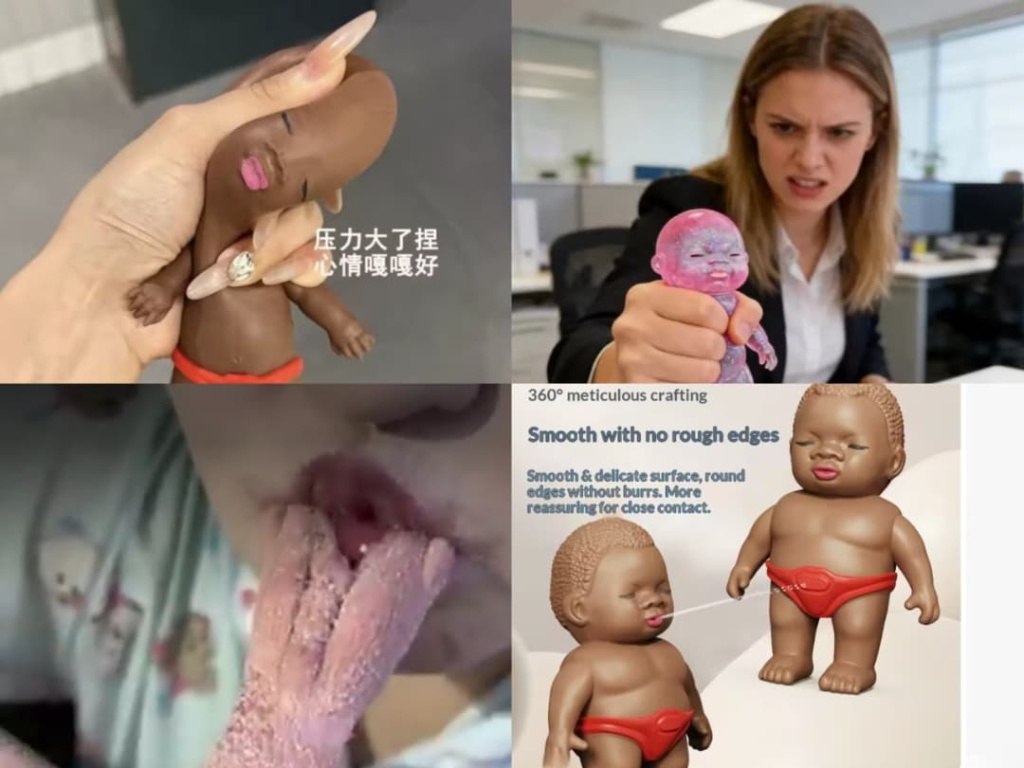
Natasha Doll: A squishy toy, a disturbing trend, and the long, uncomfortable history behind why the Black version is always the one that gets hurt.
If you have been on social media recently, you may have already seen it. If you have not, here is what is happening: a squishy stress-relief toy shaped like a Black baby has gone viral on Chinese platforms Douyin and Rednote. It is called the “Natasha” doll.
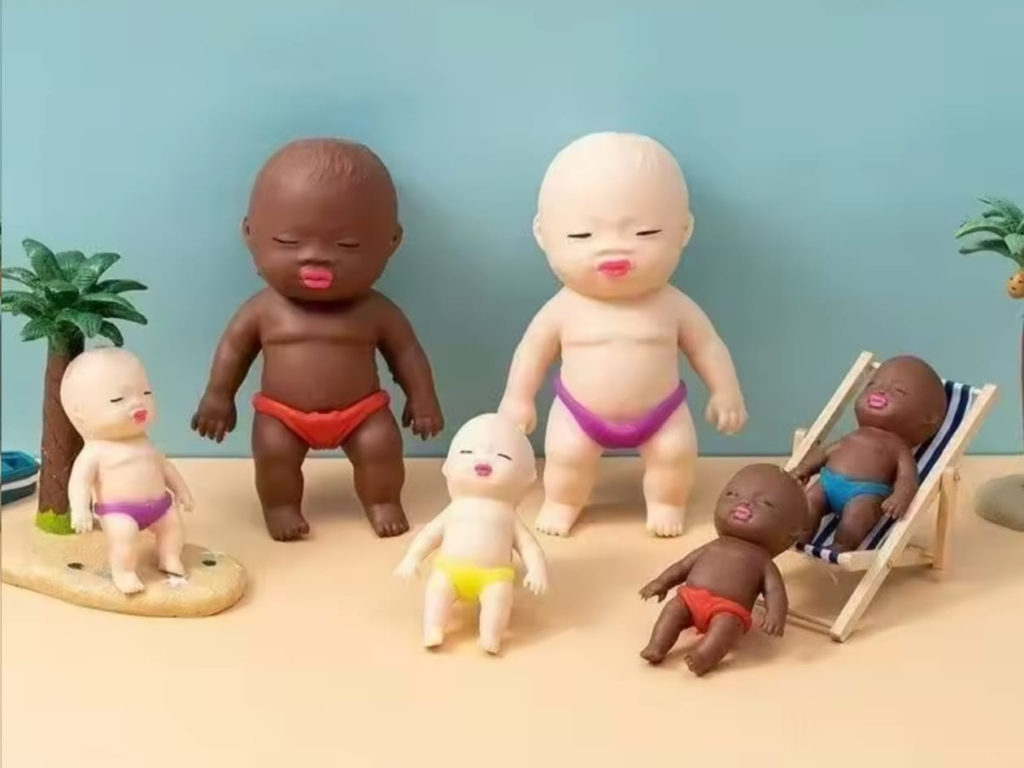
The doll originated in March 2026 when a Chinese internet user created it as a personal coping object, filming herself treating it like a baby. Once a video of the doll being smashed to the ground went viral, others followed, and the trend took off. The toy is made from slow-rising memory foam or soft rubber and can be squeezed, twisted, or stretched before returning to its original shape. It comes in multiple skin tones. The Black version is the one people cannot stop brutalising.
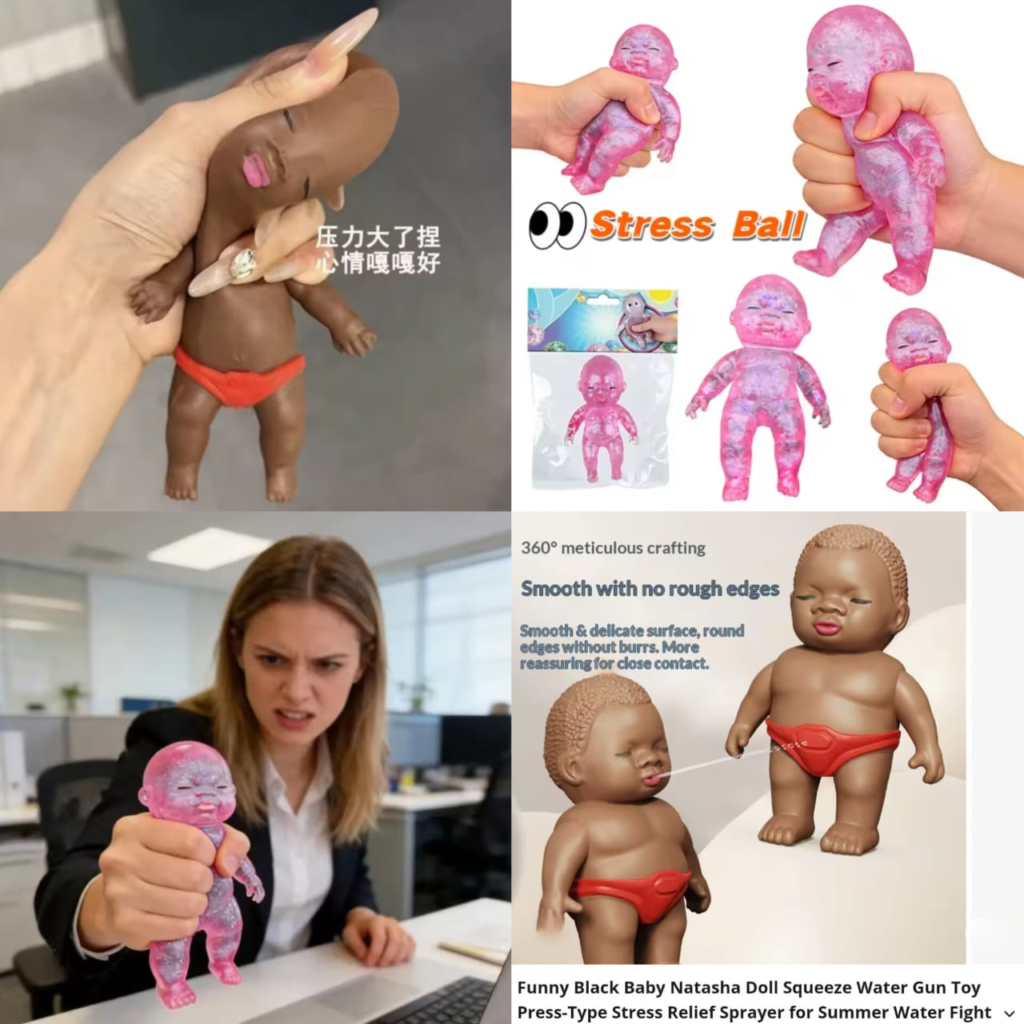
Let us start with the baseline absurdity before we get to the outrage.
A grown adult, stressed from the demands of daily life, reaches for relief and lands on a baby doll? Not a gym membership. Not a walk. Not a conversation. A rubber baby that they can squeeze, punch, stomp on, and pour boiling water over, then post the footage online for applause. That alone should give us pause.
But then you notice which baby.
Videos show users punching, stomping on, running over, and repeatedly flattening the face of the dark-skinned doll. Some creators have reportedly gone so far as to pour boiling water over it. The content is framed as entertainment. Stress relief. A trend.
When the obvious question was raised, why specifically the Black one, an answer emerged that sparked a second wave of outrage. A white baby, some users explained, would look too “human,” and people would feel bad hurting it. Critics were unsparing. One netizen responded: “That explanation made it more racist than if no explanation was given at all.” They were right. The justification did not defend the trend. It confirmed the thinking underneath it.
There is something particularly telling about the fact that the chosen medium for this dehumanisation is a baby. Not a faceless object. Not an abstract shape. A baby. The deliberate choice of the most innocent, most defenceless form of human life, rendered Black, and handed to adults as something to destroy for fun, is not accidental. It is not edgy humour. It is a very clear statement about whose humanity is considered optional.
Psychologists and content creators have warned that the trend could normalise aggression and negatively impact young viewers. That concern is valid, but it barely scratches the surface of what this moment reveals.
This is not new. It is not isolated. Anyone paying attention to China’s relationship with Black people knows the pattern well.
In 2020, African nationals in Guangzhou were systematically removed from their homes and forced into quarantine during the Covid-19 pandemic, a singling out that African leaders and organisations denounced as xenophobic and racist. Among those evicted were mostly Igbo Nigerians, who held valid visas, had paid their rent, and had no contact with anyone infected with the virus. The foreign ministers of Uganda, Kenya, Ghana, and Nigeria all summoned Chinese ambassadors in protest. China’s response was the same line it always reaches for: zero tolerance for racism. Then nothing changed.
Before Guangzhou, there was the 1988 Nanjing incident, when anti-Black tensions exploded and a mob of Chinese protesters ran African students out of town. African newspapers called it “yellow discrimination.” The Organisation of African Unity secretary general called it “apartheid in disguise.” Before that, there was a 2017 detergent advertisement in which a Black man was stuffed into a washing machine and emerged Chinese.
The Natasha doll is the latest chapter in a long book.
What makes this moment particularly worth sitting with is the context in which it is happening. China is Africa’s largest bilateral trading partner. Chinese investment is woven into infrastructure across the continent, roads, railways, ports, telecoms. Nigerian governments have courted this relationship, defended it, and in some cases compromised domestic interests to maintain it.
And yet, on Chinese social media, a Black baby is being used as a punching bag for entertainment.
There is a word for the gap between how a country presents itself to your government and how it treats your people: contempt. Not cultural difference. Not ignorance. Contempt. Anti-Black racism was rife on Chinese social media well before this trend, and it continued despite the state’s repeated claims of zero tolerance, giving the appearance of malignant neglect, at best.
African leaders owe their citizens more than diplomatic silence every time this pattern repeats itself. The summoning of ambassadors in 2020 produced apologies and assurances. The assurances expired quietly. Here we are again.
The Natasha doll is a stress toy. But what it relieves, apparently, is the discomfort of pretending that Black lives register as fully human. That is not a trend. That is a worldview. And it deserves to be named as one, regardless of how many trade agreements are currently on the table.
What This Means: The Natasha doll controversy is not an internet curiosity. It is a data point in a documented pattern of anti-Black sentiment in China, one that African governments have repeatedly failed to hold accountable beyond symbolic protests. As China deepens its economic footprint across Africa, the continent’s leaders face a straightforward question: at what point does the relationship demand that the dignity of African people be treated as a non-negotiable condition, not an afterthought?