


Every week, we throw 10 questions at someone whose mind we find fascinating — the thinkers, founders, innovators, policymakers, builders, and culture-shapers quietly changing how we see the world and inspiring us to do things not just differently, but better-differently. First thoughts only.
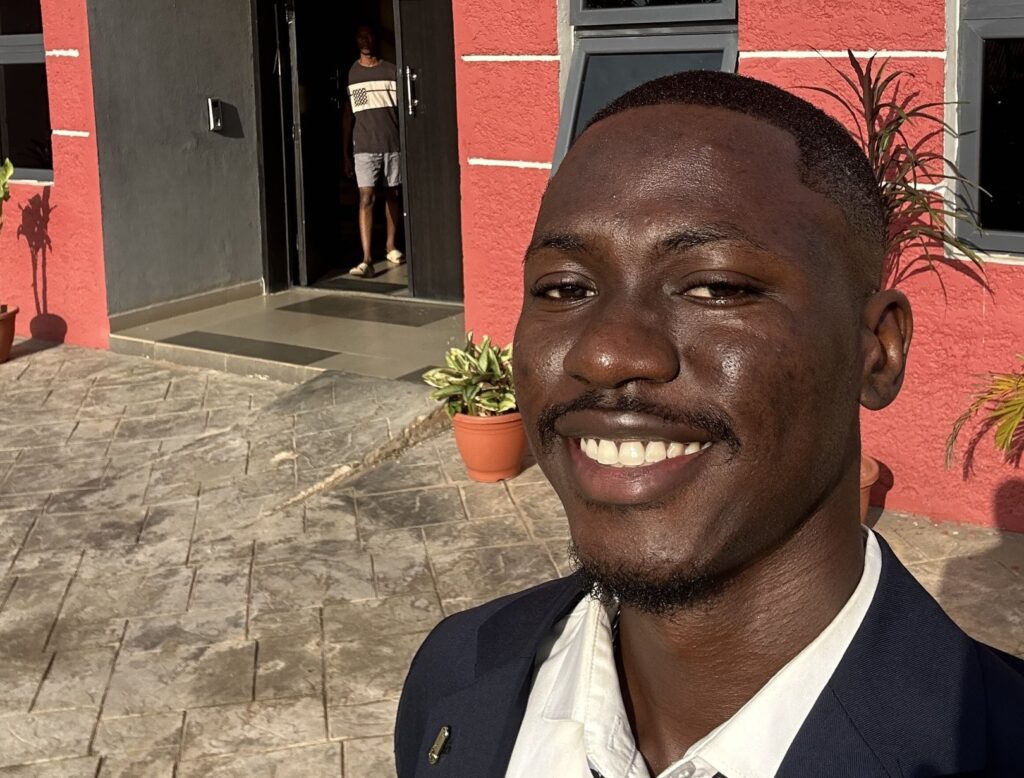
This week, meet Adetokunbo Ogunnoiki, a 24-year-old Mathematics graduate from the University of Ibadan who looked at one of Nigeria’s most ignored public health problems and decided to build a solution. Not complain. Not wait. Build.
His app, LooPoint, helps Nigerians find clean, accessible public toilets in real time. What started as a personal frustration with campus hostels in Ibadan has grown into a pitch that went viral on X, landed him in a room with a Lagos State Commissioner, a Special Adviser, and a Director of Sanitation, and sparked a conversation the country has been quietly needing for years.
He is not a policy expert or a public health official. He is a software engineer who lived the problem, understood it deeply, and moved anyway.
What does it take to see dignity in a problem everyone else walks past?
Read as Adetokunbo shares his thoughts on building in public, solving overlooked problems, and why you lose 100% of the shots you never take:
- Who is Adetokunbo Ogunnoiki — the Adetokunbo before the viral post, before the meeting with the Commissioner, and everything that followed?
I’m a 24-year-old Software Engineer and Mathematics graduate from the University of Ibadan, hailing from Ijebu, Ogun State. While many people my age are still figuring out their next step, I turned my attention to one of Nigeria’s most overlooked public health challenges. That is open defecation and the crisis of access to clean, functional public toilets. Driven by a deep conviction that real problems deserve real solutions, I built LooPoint to give Nigerians something as simple as it is essential: the ability to find a clean toilet when they need one.
- You studied Mathematics at the University of Ibadan, not Computer Science or Engineering — how does a mathematics background shape the way you approach a problem like this?
Mathematics really goes beyond addition and subtraction, it entails critical thinking skills that are needed in solving problems —both in the classroom and outside of the four walls of a classroom. These skills help me when it comes to approaching problems and coming up with the best solutions for certain problems.
- What made you look at a public toilet problem and see a tech solution, where most people just see something to complain about or avoid?
It really was about solving a problem I had at the time. In school the toilets in the public hostels were so bad you couldn’t breathe in them. As someone that likes being comfortable while in the toilet, this was a problem for me. So I used to go around school to find the cleanest toilets to use, and that habit made me have a mental memory of open and clean toilets [available] in school. I decided to build it into an application to help others find those places when in need.
- You tested this on the UI campus before taking it public — what did that pilot teach you that no pitch deck or brainstorming session could have?
It taught me that this is a problem that has always been overlooked or not taken seriously. The truth is, you’d see how much of a need this is when you are in an emergency.
- Your X post went viral before any official backing — what did you put in that post, and did you expect it to move the way it did?
When I saw the commissioner’s initial tweet(insert hyperlink), I knew I need to use that as an opportunity to pitch LooPoint to him. It was just meant to explain the simple solution to a problem and how we can do that in Lagos State. So no, I didn’t expect it to go viral as much as it did but I guess people recognise a good software solution just from an impromptu pitch.
- You had a limited period of time to make a presentation to a Commissioner, a Special Adviser on e-GIS, and a Director of Sanitation — how did you prepare, and what did you decide to lead with?
For me, the preparation didn’t start the day of the presentation. It started from my personal experience with the problem. Dealing with poor toilet conditions on campus is what pushed me to build LooPoint in the first place, so this isn’t something I have to cram or rehearse.
If you wake me up at any time and ask me to talk about LooPoint, I can because I’ve lived the problem, and I deeply understand the need for the solution.
So when it was time to present, I didn’t try to overcomplicate anything. I simply spoke from a place of clarity and conviction, focusing on the problem, why it matters, and how LooPoint can realistically solve it.
- Your co-founder Ademola is a Mechanical Engineering student — how does that dynamic work, and what does he bring to the table that you cannot?
Ademola complements me in a way that makes LooPoint stronger as a whole. While I focus more on the product, logic, and technical structure, he brings a strong systems and execution mindset from engineering, along with a natural strength in strategy and operations.
He’s very good at asking, “How does this actually work in the real world?” which is critical. That balance between building the solution, and making sure it can scale and function practically, is what makes our partnership effective.
- Geo-mapping public toilets sounds straightforward until you think about data accuracy, real-time updates, and user adoption — what implementation challenges are you dreading the most?
I’d say the biggest challenge is real-time updates. It’s one thing to show the closest toilet, but it’s another thing to tell you if it’s actually clean when you get there.
Because the app is built around proximity, the first option you see is usually the closest, so you need to trust that information.
That’s why we’re focusing on real-time reviews. Ideally, once someone uses a toilet, they can quickly rate it before leaving, so the next person has an idea of what they’re walking into.
So yeah, the challenge is getting consistent, reliable updates from users but that’s also the core of what we’re trying to solve with LooPoint.
- What does success look like for this platform in two years — not in terms of headlines, but in terms of what a regular Lagosian actually experiences differently?
Success for me in the next two years is simple —really simple, it’s everyday relief for the average Lagosian.
Right now, according to UNICEF, over 46 million Nigerians still practice open defecation, and even in cities like Lagos, access to clean and usable toilets is still a major problem.
In fact, despite thousands of public toilets, the government has admitted that it’s still not enough to meet the needs of the population.
So what does that mean in real life?
It means someone leaving home at 5am for work and already dealing with bad smells at bus stops or motor parks.
It means being stuck in traffic or coming home late and not having a clean, safe place to urinate.
It means people resorting to unsafe, undignified options because they simply don’t know where to go or the options they find are unusable.
In two years, I want LooPoint to reduce that friction to the barest minimum.
I want a Lagos where, no matter where you are, you can pull out your phone, find the nearest toilet, and trust that it’s clean and accessible.
That’s what success looks like to me not just putting toilets on the map, but restoring a level of dignity and ease to everyday life.
- A lot of young Nigerians have ideas but talk themselves out of going public with them. What made you post that proposal on X anyway, and what would you say to the ones still sitting on something?
Honestly, you just have to do it. You lose 100% of the shots you don’t take.
When I made that post, I wasn’t sure what would happen, but seeing people engage with it, and validate the idea gave me confidence that I was onto something real.
I think a lot of people are scared of putting their ideas out because they feel someone might steal it, but the truth is, nobody can build it exactly the way you would. You have experienced the problem, you understand it [best].
So just start. Put your work out there. I strongly believe in building in public because that one step can open doors you didn’t even know existed and I am grateful it happened for me.
Connect with Adetokunbo Ogunnoiki on X: @tokunboxyz